OpenAI saw disappointing results working with Apple to integrate ChatGPT in Siri, according to court documents filed [PDF] in its ongoing legal fight with Elon Musk's company SpaceXAI (xAI at the time the lawsuit was filed).
Apple added ChatGPT to Siri in December 2024, but users had to go through a multistep opt-in process, which added a layer of friction. By January 2025, OpenAI said the integration was "off to a slow start" and the company cut its forecast for the number of incremental logged-in weekly active users that it expected to get from the partnership.
Much of the filing is redacted, but OpenAI said that by the time Musk's companies filed an antitrust lawsuit against Apple and OpenAI, "it was clear that Apple's integration of ChatGPT was dramatically underperforming." In a later section of the filing, OpenAI said again that the Apple integration was "persistently underperforming," leading to a March 2026 conversation between Apple and OpenAI that is redacted.
OpenAI asked Apple for a two-year exclusivity period, but Apple refused. The agreement between the two companies explicitly said the deal was non-exclusive and Apple had the right to "integrate products or services that provide the same or similar functionality as [ChatGPT]." Apple told OpenAI that it planned to integrate one provider and then add more, and it made similar statements publicly when announcing the feature. Apple also signed a deal with Google, and Apple's newest models are based on Gemini.
OpenAI's filing disputes many of the claims in the xAI lawsuit. Musk alleged OpenAI and Apple had an exclusive deal and that the agreement harmed xAI's growth and customer acquisition. OpenAI says the contract proves there was no exclusive deal, and even if there were, xAI can't prove harm because the ChatGPT Siri integration just didn't draw many new ChatGPT users.
Even if the Court assumes that Apple users who elect to use ChatGPT through Apple Intelligence are foreclosed from OpenAI's rivals (which they are not), the amount of foreclosure caused by the Agreement is indisputably de minimis. While Plaintiffs' experts declined to calculate foreclosure shares, OpenAI's expert, Dr. Catherine Tucker, calculated the share of GenAI consumers who accessed ChatGPT through Apple Intelligence across multiple metrics using the same data and market definition relied upon by Plaintiffs' experts. On these assumptions, Dr. Tucker found foreclosure shares of [REDACTED] across all metrics, consistent with OpenAI's internal view that Apple Intelligence saw minimal usage.
Musk's companies dropped their claims against Apple earlier this month, leaving OpenAI as the sole defendant in the lawsuit. OpenAI's filing asks the court to toss out xAI's claims prior to the trial planned for January 2027.
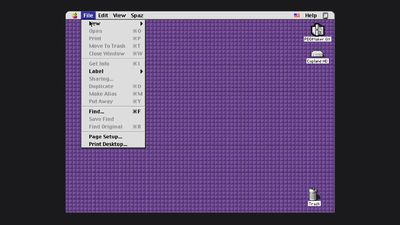
In the mid–1990s, Apple worked on an operating system called Copland, which was announced but never commercially released because of project management issues and feature creep. Parts of Copland were eventually included in Mac OS 7.6 and Mac OS 8, but it was so problematic as a whole that Apple nixed it before it was finished.
Michael Steil, who works to reverse engineer vintage hardware and software, was recently able to get Copland running in emulation. He modified the open-source Power Mac emulator DingusPPC, and he said it took 11 patches to get Copland up and running. He has a browser version of Copland you can try on his website, and shared the patches needed to boot Copland.
During Copland's development, Apple released three beta versions. The last beta was D11E4, which is what Steil got to work. He said Copland is "notoriously hard to run on real hardware," and wasn't previously available in emulation.
After Apple canceled Copland in August 1996, it looked outside the company for a new operating system. That led to the purchase of NeXT in 1997 and the return of Steve Jobs. NeXTSTEP, NeXT's operating system, was the precursor to Mac OS X.
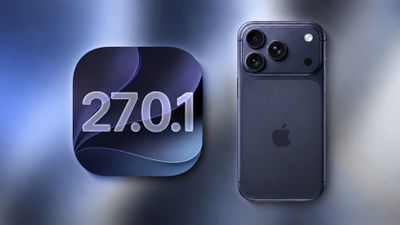
After releasing iOS 27 last week, Apple is already testing a follow-up iOS 27.0.1 update for iPhones, according to MacRumors logs.
iOS 27.0.1 will likely be a minor update with bug fixes and/or security patches.
Shortly after Apple launches new iPhone models, some software bugs are usually discovered as the devices get into the hands of millions of customers around the world. This year, some iPhone 18 Pro users are experiencing Face ID issues, so it is likely that iOS 27.0.1 will include some Face ID-related bug fixes or enhancements at a minimum.
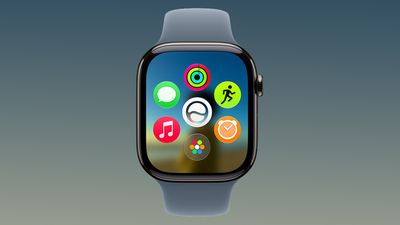
watchOS 27.0.1 is already available for the Apple Watch Series 12 and Apple Watch Ultra 4. That update fixes an issue where those models may restart unexpectedly.
We do not know exactly when iOS 27.0.1 will be released to the public, but keep an eye out for the update over the next few days or weeks.
watchOS 27.0.1 can be downloaded through the Settings app on the watch or the Apple Watch app on a connected iPhone. Software can only be installed when the Apple Watch is on the charger and has over 50 percent battery.
Apple's release notes say the update fixes bugs, including an issue that could cause the Apple Watch to restart unexpectedly.
Disney today increased the prices on several of its Disney+ and Hulu streaming plans, with the increase coming exactly one year after Disney's last price hike.
Premium ad-free plans are $2 to $2.50 more expensive per month, while Disney's ad-supported Disney+ and Hulu plans are $0.50 higher per month. The ad-supported Disney+ and Hulu bundle has not changed in price, and that's what Disney is steering customers toward.
Disney+ (Ads) - $12.49, up from $11.99
Disney+ (No Ads) - $21.49, up from $18.99
Hulu (Ads) - $12.49, up from $11.99
Hulu (No Ads) - $21.49, up from $18.99
Disney+, Hulu Bundle (Ads) - $12.99, no change
Disney+, Hulu Bundle (No Ads) - $21.99, up from $19.99
Disney+, ESPN, Hulu Bundle (Ads) - $21.99, up from $19.99
Disney+ (No Ads), Hulu (No Ads), ESPN Select (Ads) - $32.99, up from $29.99
Disney+, Hulu, HBO Max Basic (Ads) - $21.99, up from $19.99
Disney+, Hulu, HBO Max Basic (No Ads) - $34.99, up from $32.99
Bundles with ESPN or HBO Max are also $2 to $3 more expensive. Buying a standalone Disney+ or Hulu plan is just $0.50 cheaper per month than getting a bundle, both with ads and without. Disney is pushing bundles because it has been merging Hulu content into the Disney+ app to create an all-in-one experience.
When Disney+ launched in November 2019, it was priced at $6.99 per month. It did not have ads at the time, with Disney introducing its first ad-supported plan in 2022. Pricing for the no-ad option has increased more than 200% in nearly seven years.
Apple's streaming TV service launched right around the same time as Disney+ for $4.99 per month. Today, the Apple TV service is $14.99 per month, also a 200% increase. Other streaming services like Netflix and HBO Max raise prices regularly too.
Disney's higher prices go into effect for new subscribers today, and for existing subscribers on their next monthly bill.
Apple Sports was updated today with support for more soccer leagues, including the Australian A-League Men, Egyptian Premier League, Israeli Premier League, and South African Premiership.
In addition, Apple said tennis fans can now follow tournament draws in real-time in the app, with brackets for Grand Slams and 1000-level tournaments. This includes matchups and results at a glance for each round.
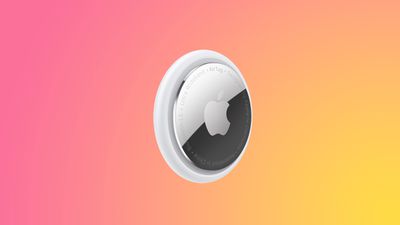
Apple's AirTag 2 has returned to $79.99 this week on Amazon, down from $99.00. This deal is on the 4-Pack of the AirTag 2, and it's a match of the record low price for the accessory.
Note: MacRumors is an affiliate partner with Amazon. When you click a link and make a purchase, we may receive a small payment, which helps us keep the site running.
We're also tracking a smaller deal on the AirTag 2 1-Pack, available for $24.00, down from $29.00. This is another record low price on the AirTag 2.
The new AirTag is equipped with a second-generation Ultra Wideband chip, enabling the Precision Finding feature to work up to 50% farther away from an item compared to the previous-generation model.
If you're on the hunt for more discounts, be sure to visit our Apple Deals roundup where we recap the best Apple-related bargains of the past week.
Deals Newsletter
Interested in hearing more about the best deals you can find in 2026? Sign up for our Deals Newsletter and we'll keep you updated so you don't miss the biggest deals of the season!
Apple's smarter, more capable version of Siri is expanding to the HomePod, according to details found by code sleuth pdfu. According to pdfu, HomePod Software 27 includes the system behind Siri AI, called "Linwood," along with new status lights in the Siri AI colors.
Since HomePod Software 27 is out and Siri AI isn't available on existing HomePods, it's possible support will be limited to new HomePod models.
Get ready for Siri AI on HomePod.
audioOS 27 includes Linwood, the system behind Siri AI, plus a new look and sound for Siri on HomePod. May require new hardware.
The new status lights emphasize white, blue and orange, matching Siri AI's palette on other devices.
🔊 Sound on pic.twitter.com/jZKzLx946y
— pdfu (@itspdfu) September 23, 2026
Rumors suggest Apple is working on an updated HomePod mini, and the main upgrade will be a faster processor. Apple is expected to equip it with an S9 chip or newer, and it's possible the HomePod mini could even get the latest S11 chip that's in the Apple Watch Series 12.
The Apple Watch Series 9 and later support Siri AI, though a connected iPhone with Apple Intelligence is required for the Siri functionality. The next HomePod mini models are expected to work in the same way, offering some Siri AI and Apple Intelligence features when used with a compatible iPhone.
The HomePod mini isn't expected to get a redesign, but along with an updated processor, Apple could add its N1 networking chip, a newer Ultra Wideband chip, and updated colors.
The Apple TV 4K is also expected to get a processor capable of supporting Siri AI, and Apple is working on a dedicated home hub with Siri AI integration. All of the new products, HomePod mini included, could launch as soon as October. Apple is also working on an updated full-size HomePod, but it isn't clear when it will launch.
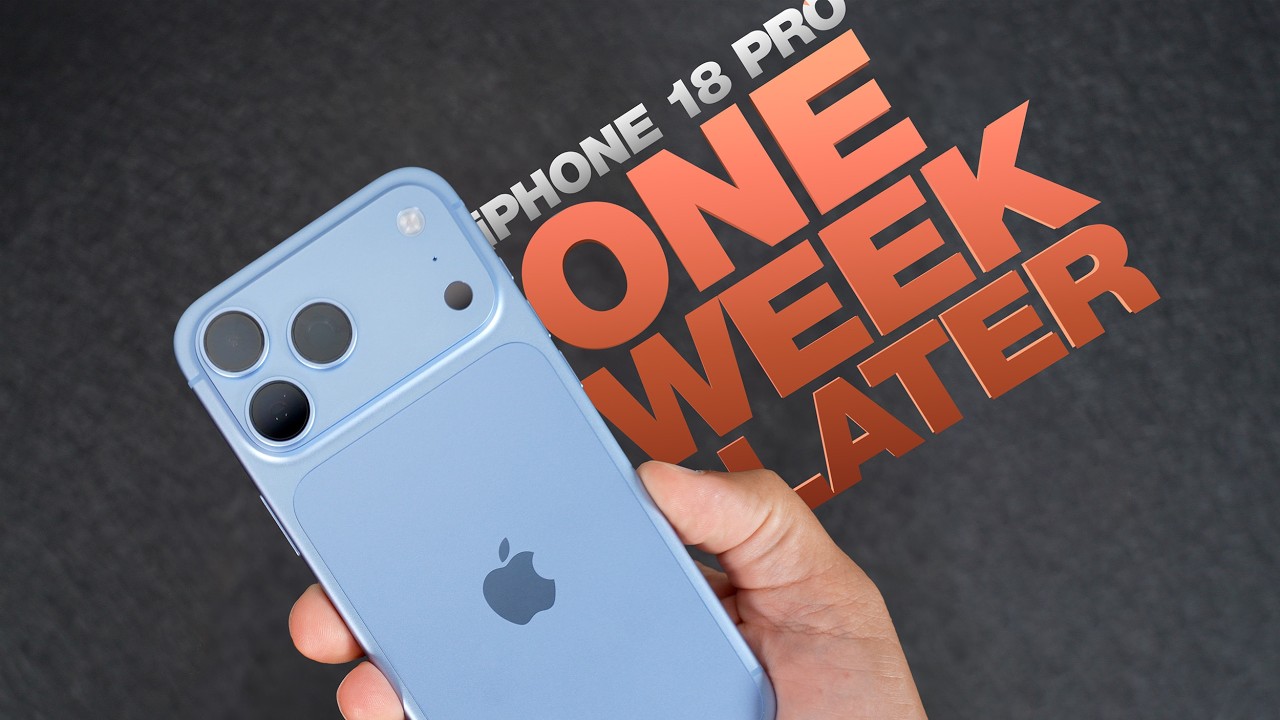
The iPhone Air and iPhone 18 Pro are just $100 apart at Apple's current prices, but they offer different advantages. The Air puts a 6.5-inch display in an exceptionally thin, light body. The newer Pro adds a more versatile camera system, longer battery life, and faster performance.
The iPhone Air launched in 2025 at $999, but Apple now sells the 256GB model for $1,099. The iPhone 18 Pro starts at $1,199 for the same storage capacity, while the iPhone 18 Pro Max starts at $1,299. Our guide helps to answer the question of how to decide which of these iPhones is best for you.
Both have an Always-On OLED display with ProMotion, Ceramic Shield 2 on the front, an 18-megapixel Center Stage front camera, Wi-Fi 7, and support for Apple Intelligence. Their size differences are as follows:
iPhone Air
iPhone 18 Pro
iPhone 18 Pro Max
Height
6.15 inches (156.2 mm)
5.91 inches (150.0 mm)
6.43 inches (163.4 mm)
Width
2.94 inches (74.7 mm)
2.83 inches (71.9 mm)
3.07 inches (78.0 mm)
Depth
0.22 inches (5.64 mm)
0.34 inches (8.75 mm)
0.34 inches (8.75 mm)
Weight
5.82 ounces (165 grams)
7.44 ounces (211 grams)
8.78 ounces (249 grams)
Here are the other key differences:
iPhone Air
iPhone 18 Pro and iPhone 18 Pro Max
6.5-inch display, 2736 by 1260 pixels
iPhone 18 Pro: 6.3-inch display, 2622 by 1206 pixels iPhone 18 Pro Max: 6.9-inch display, 2868 by 1320 pixels. All three displays have 460 pixels per inch.
Smaller Dynamic Island that supports up to three simultaneous Live Activities
A19 Pro chip with 5-core GPU and 16-core Neural Engine
A20 Pro chip with 7-core GPU and dual 16-core Neural Engine
Next-generation vapor chamber cooling for better sustained performance
Apple C1X cellular modem
iPhone 18 Pro: Apple C2 modem iPhone 18 Pro Max: Qualcomm Snapdragon X80 modem in the U.S., C2 in other markets
Sub-6 GHz 5G
Sub-6 GHz and mmWave 5G on U.S. models
Single 48-megapixel Fusion Main rear camera, 26 mm, with fixed ƒ/1.6 aperture and sensor-shift optical image stabilization
48-megapixel Fusion Main rear camera, 24 mm, with second-generation sensor-shift optical image stabilization and ƒ/1.48, ƒ/1.8, ƒ/2.8, and ƒ/4.0 variable-aperture settings
48-megapixel Fusion Ultra Wide and 48-megapixel Fusion Telephoto cameras
1x and optical-quality 2x zoom options; up to 10x digital zoom for photos
0.5x, 1x, optical-quality 2x, 4x, and optical-quality 8x zoom options; up to 40x digital zoom for photos
Macro photography, spatial photos, and LiDAR Scanner
True Tone flash
Adaptive True Tone flash
Photographic Styles 2
Photographic Styles 3 with texture and grain controls
Smart focus tracking
Pro controls for aperture, shutter speed, white balance, and a histogram
HEIF and JPEG photo capture
HEIF, JPEG, and DNG photo capture, including ProRAW; Apple Reference Image capture where available
Rear-camera 4K Dolby Vision video up to 60 fps
Rear-camera 4K Dolby Vision video up to 120 fps with the Fusion Main camera
Cinematic mode up to 4K Dolby Vision at 60 fps, with effects that can be applied after capture
Spatial video; ProRes up to 4K at 120 fps with external recording; ProRes RAW; Apple Log 2; Academy Color Encoding System; and genlock support
1080p slow-motion video up to 240 fps
1080p slow-motion video up to 240 fps and 4K Dolby Vision slow-motion video up to 120 fps
Stabilized time-lapse video
Stabilized time-lapse video up to 4K Dolby Vision; macro video, including slow motion and time-lapse
Up to 6x digital zoom for video
Up to 24x digital zoom for video
18-megapixel Center Stage front camera with 4K Dolby Vision video up to 60 fps
18-megapixel Center Stage front camera with additional Pro controls, Photographic Styles 3, smart focus tracking, ProRAW, Cinematic mode, and ProRes recording
Audio Mix
Audio Mix with new voice algorithms and music isolation
Up to 27 hours of video playback or 22 hours streamed
iPhone 18 Pro: Up to 36 hours of video playback or 33 hours streamed iPhone 18 Pro Max: Up to 45 hours or 40 hours streamed
Compatible with the iPhone Air MagSafe Battery, which raises Apple's video-playback estimate to 40 hours with the accessory attached
Up to 50% wired charge in 30 minutes with a 20W or higher adapter
Up to 50% wired charge in around 15 minutes with a 60W-capable adapter that supports Adjustable Voltage Supply
Up to 50% charge in 30 minutes over MagSafe with a 30W or higher adapter
Up to 50% charge in 30 minutes over MagSafe with a 35W or higher adapter
MagSafe and Qi2 wireless charging up to 20W
MagSafe and Qi2 wireless charging up to 25W
USB-C with USB 2 data speeds up to 480Mb/s; wireless video output through AirPlay
USB-C with USB 3 data speeds up to 10Gb/s; DisplayPort video output up to 4K HDR
Single built-in speaker; Spatial Audio playback with compatible AirPods
Stereo speakers and Spatial Audio playback
Built-in microphones
Four studio-quality microphones
eSIM only, including in countries where physical SIM cards remain common
eSIM only in the U.S. and certain other markets; nano-SIM and eSIM support in many other countries, including the U.K.
256GB, 512GB, or 1TB storage
256GB, 512GB, 1TB, or 2TB storage
Space Black, Cloud White, Sky Blue, and Light Gold
Black, Silver, Glacier, and Burgundy
At every storage capacity the Air and iPhone 18 Pro share, the Pro costs $100 more when bought from Apple in the U.S.:
256GB
512GB
1TB
2TB
iPhone Air
$1,099
$1,299
$1,699
iPhone 18 Pro
$1,199
$1,399
$1,799
$2,399
iPhone 18 Pro Max
$1,299
$1,499
$1,899
$2,499
At Apple's current prices, the iPhone 18 Pro is clearly the stronger choice for most buyers. It costs just $100 more than the Air at every shared storage capacity, yet adds excellent Ultra Wide and Telephoto cameras, a variable-aperture main camera, longer battery life, stereo speakers, faster charging, vapor chamber cooling, a newer chip, and more.
The iPhone Air makes a stronger case in the hand than it does on a specification sheet. It is 46 grams lighter than the iPhone 18 Pro, has a slightly larger display, and feels unlike any other iPhone. With its polished titanium frame and frosted glass back, it looks more classy and premium than the iPhone 18 Pro in many respects. If appearance, thinness, weight shape how much you enjoy using a phone every day, choosing the Air can be worthwhile despite its camera, speaker, and battery limitations. The Pro Max offers a 6.9-inch screen and even longer battery life, but weighs 84 grams more than the Air.
Retail pricing can change that calculation. The Air has seen substantial discounts, including an unlocked 256GB model for $899.99 earlier this year. If you find a new iPhone Air for around $900 while the iPhone 18 Pro remains $1,199, the roughly $300 saving makes the Air much more compelling if you can live with one rear camera and shorter battery life.
Timing matters, too. Bloomberg's Mark Gurman expects the next iPhone Air in spring 2027, and an Ultra Wide camera has reportedly reached advanced testing. Analyst Jeff Pu expects a smaller Dynamic Island and A20 Pro chip. Separately, leaker "Digital Chat Station" has claimed it will have a 3,500mAh battery, up from the current model's 3,149mAh, while The Information has reported that it could gain vapor chamber cooling. If the current Air's camera, battery life, or sustained performance gives you pause, waiting could address those concerns; a steep discount is more persuasive if the current model already meets your needs.
Apple Podcasts Subscriptions will soon support video, allowing creators to offer subscriber-exclusive episodes, ad-free video, early access, and bonus content, Apple today announced.
The feature will be available to audiences in more than 170 countries and regions across Apple devices and the web. Apple says it is working with podcast hosting providers on integration, with details from participating partners coming in the months ahead.
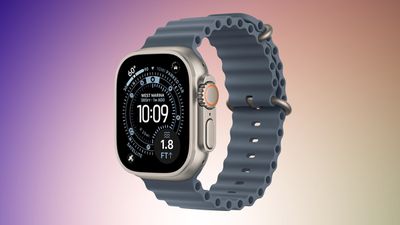
Amazon has knocked the price of the previous generation Apple Watch Ultra 3 to $599.97, down from $799.00. This $199 markdown is available in the Natural color with Anchor Blue Ocean Band, and as of writing this is the only model we're tracking at this new all-time low price.
Note: MacRumors is an affiliate partner with some of these vendors. When you click a link and make a purchase, we may receive a small payment, which helps us keep the site running.
Additionally, there's a $199 markdown on the Black Apple Watch Ultra 3 with Black Milanese Loop (Large) on Amazon. You can get this model for $699.97, down from $899.00. Both of these models have an estimated delivery date of September 25-27 if ordered today.
These Ultra 3 deals arrive in the wake of the recent launch of the Apple Watch Ultra 4, which does have some smaller discounts on Amazon right now. You can get both the Natural and Black colors for $779.99 in several band options, down from $799.00.
Update: The deal on the Ocean Band has expired, but the Milanese Loop is still available.
If you're on the hunt for more discounts, be sure to visit our Apple Deals roundup where we recap the best Apple-related bargains of the past week.
Deals Newsletter
Interested in hearing more about the best deals you can find in 2026? Sign up for our Deals Newsletter and we'll keep you updated so you don't miss the biggest deals of the season!
Apple added a new iPhone Handoff feature to iOS 27 that allows you to switch between two iPhones while using the same phone number on each device. T-Mobile and Deutsche Telekom are the first carriers to offer iPhone Handoff, and Apple said Verizon and EE will add support later this year, but AT&T is noncommittal about the feature.
A spokesperson for AT&T told CNET that the carrier sees "potential" in iPhone Handoff, but the company remains focused on "existing eSIM activation and transfer options." In other words, it sounds like AT&T has no imminent plans to support iPhone Handoff, but it also did not explicitly say that it will never offer the feature.
From the report:
"While we see that there could be potential in capabilities like iPhone Handoff," the spokesperson replied, "our focus remains on delivering innovations that make life simpler and keep customers connected with confidence." They then pointed to "existing eSIM activation and transfer options across compatible devices."
In the U.S., T-Mobile is charging $5 per month for iPhone Handoff.
"iPhone Handoff is available on any iPhone with iOS 27 via iPhone settings and ready to use from day one on the new iPhone 18 Pro lineup and iPhone Duo," said T-Mobile.
Deutsche Telekom is charging €6.95 per month for iPhone Handoff, but only on plans that do not already include multi-SIM functionality.
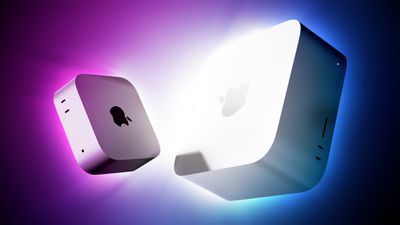
Amazon has the first post-launch discounts on Apple's brand new Mac mini and Mac Studio, with up to $49 off select models. One of the best deals is on the M5 Max Mac Studio with 36GB RAM and a 512GB SSD, on sale for $2,449.99, down from $2,499.00.
Note: MacRumors is an affiliate partner with Amazon. When you click a link and make a purchase, we may receive a small payment, which helps us keep the site running.
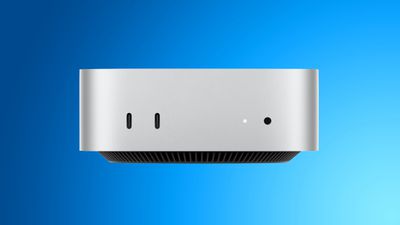
Regarding the Mac mini, you can get the 16GB RAM/256GB SSD Mac mini for $879.99, down from $899.00, and the 16GB RAM/512GB SSD model for $1,069.99, down from $1,099.00.
In terms of upgrades, Apple said the Mac mini with the M6 chip delivers up to 40% faster CPU performance, up to 4× faster performance for AI tasks in particular, up to 2× faster graphics performance, and up to 2× faster storage speeds compared to the previous-generation model with the 10-core M4 chip, 32GB of unified memory, and 2TB of storage.
You can match your new Mac mini or Mac Studio with Samsung's 4TB T7 Shield Portable SSD, which is available for $464.99 today only at B&H Photo, down from $1,144.99. This is a massive $680 discount on the SSD, a notable markdown amid the storage price hikes happening this year.
If you're on the hunt for more discounts, be sure to visit our Apple Deals roundup where we recap the best Apple-related bargains of the past week.
Deals Newsletter
Interested in hearing more about the best deals you can find in 2026? Sign up for our Deals Newsletter and we'll keep you updated so you don't miss the biggest deals of the season!
Apple is testing an iPhone setting for users in China that lets them add apps to a list that prevents them from accessing the device's motion sensors. Apple hasn't explicitly said what the setting is in response to, but Chinese apps sometimes show "shake-to-open" ads on launch, and they can be triggered by merely picking up an iPhone, walking, or going over a bump in a car, resulting in unwanted redirects.
Users in China speculate this is why iOS 27.2 beta 2 includes the new "Restrict Motion Data" option in Settings that blocks app access to accelerometer and gyroscope data. For now, the option appears tied to mainland China App Store accounts, and we don't expect it will be available to iPhone users more broadly when iOS 27.2 is released later this year.
After you install macOS 27 Golden Gate, Apple automatically downloads a multi-gigabyte AI model to your Mac the next time it's connected to the internet. Unlike previous versions of macOS, you can't prevent it. Siri AI, and by extension Apple Intelligence, are now a mandatory part of your system.
For macOS 27 Golden Gate, Apple says the latest Apple Intelligence features require up to 14GB of on-device storage on Macs with an M3 chip or later and at least 12GB of unified memory, and up to 8GB of storage for other Apple Intelligence-enabled Macs. But in our experience, AI model storage allocation appears to be considerably higher on some Macs than others.
On an M4 Pro Mac mini running macOS 27, for example, MacRumors saw 20.67GB handed over for Apple Intelligence, according to the Storage section in System Settings. ArsTechnica recorded an even higher figure of 22.42GB on an M3 MacBook Air after a fresh installation of macOS 27.0 beta 7. Both of these systems will be using Apple's AFM 3 Core Advanced on-device model, which requires an M3-or-newer Mac with 12GB or more of RAM.
This doesn't explain why Macs that don't meet the minimum requirements for Apple's most advanced model are still losing unusually large amounts of storage to Apple Intelligence. ArsTechnica reported the same screen showed around 14GB on an M1 MacBook Air and a MacBook Neo, and yet both of these models fall into a category for which Apple lists a requirement of up to 8GB.
Other Mac users have posted similar higher-than-expected readings. For example, one Reddit user shared a screenshot from the macOS 27 Release Candidate showing Apple Intelligence gobbled up 30.16GB on their machine. Another user quoted 24.35GB for Apple Intelligence after installing macOS 27 on a MacBook Pro with M3 Pro chip.
Device
Apple Intelligence storage
iPhone 18 Pro, iPhone 18 Pro Max, iPhone Duo
Up to 14GB
iPhone 17 Pro, iPhone 17 Pro Max, iPhone Air
Up to 14GB
Other compatible iPhones: iPhone 15 Pro and Pro Max, all iPhone 16 models, iPhone 17, and iPhone 17e
Up to 8GB
iPad with M4 or later and at least 12GB of unified memory; Mac with M3 or later and at least 12GB of unified memory; Apple Vision Pro (M5)
Up to 14GB
Other compatible iPad, Mac, and Apple Vision Pro models
Up to 8GB
Compatible Apple Watch models
Up to 1.5GB on the watch
iPhone 15 and 15 Plus, iPhone 14 and earlier, and iPhone SE
Not supported
Figures taken from Apple's support document
Apple's support document does not explain whether its "up to 14GB" requirement is directly comparable with the Apple Intelligence "Storage" category in System Settings, or why some Macs display substantially higher numbers. (For what it's worth, we haven't seen the same ballooning figures on iPhones and iPads running iOS 27 and iPadOS 27.)
It's not just academic, either. While using Apple Intelligence is optional, downloading its on-device models is not. Apple in macOS 27 and iOS 27 removed the toggle to disable Apple Intelligence, so users unequivocally have to set aside space for Apple's models. In an era where memory and storage costs are rising because of AI, the irony of this situation cannot be lost. It doesn't make it any less frustrating, though.
If you're on a Mac, you can check your own reading in System Settings ➝ General ➝ Storage by clicking the information button beside macOS. Let us know your findings in the comments.
As confirmed by the website "Expand Mac mini," NAND storage in the new Mac mini models with the M6 and M5 Pro chips is soldered to the logic board, whereas the previous models with the M4 and M4 Pro chips have removable storage that can be upgraded.
In other words, the new Mac mini does not support aftermarket storage upgrades.
"Expand Mac mini" offers plug-and-play SSD modules that are functionally equivalent to Apple's proprietary modules, yet hundreds of dollars cheaper. As a result, customers were able to save a significant amount of money by configuring their Mac mini with the minimum 256GB capacity that was available on Apple's online store and later installing a higher-capacity aftermarket module. With the new models, that is no longer possible.
"We will keep looking for an opening, but support for the M6 and M5 Pro now looks unlikely," the "Expand Mac mini" website said, in a blog post.
Mac mini models with the M1 chip and M2/M2 Pro chips also had NAND soldered to the logic board, so the M4/M4 Pro configurations having removable storage has proven to be a one-off exception for now. Apple has not commented on the reversal.
In addition, all new Mac mini configurations with 256GB of storage reportedly have a single NAND chip, rather than a pair of 128GB chips. As a result, 256GB configurations have slower SSD speeds compared to configurations with 512GB of storage or more that do have dual NAND chips, according to AAPL Ch.'s testing with Blackmagic's Disk Speed Test benchmark tool.
Mac mini Configuration
Read Speed
Write Speed
M6, 512GB
6,371.5 MB/s
6,577.4 MB/s
M6, 256GB
3,216.8 MB/s
3,000.2 MB/s
M4, 256GB
2,792.5 MB/s
2,014.5 MB/s
The new 256GB model's Disk Speed Test scores were roughly half that of models with 512GB of storage or more. The average customer is unlikely to notice the difference, but power users will appreciate knowing that they need to opt for at least 512GB of storage in order to achieve the fastest SSD speeds possible.
Fortunately, even with 256GB of storage, it appears that the new Mac mini has meaningfully faster SSD speeds compared to the previous 256GB model.
Mac mini models with M2/M2 Pro and 256GB of storage also had a single NAND chip, so the M4/M4 Pro configurations proved to be a one-off exception for this too.
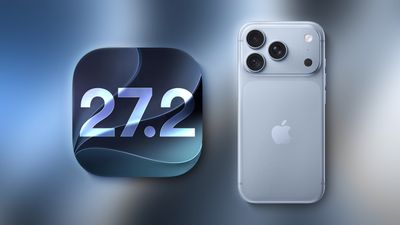
Apple today seeded the first betas of iOS 27.2, iPadOS 27.2, macOS Golden Gate 27.2, tvOS 27.2, and watchOS 27.2. The software comes a day after Apple provided the second betas to developers.
To get the new betas, you can sign up on Apple's beta testing website. After you're signed up, the betas can be installed through the Software Update section in the Settings app on each device.
iOS 27.2 includes the redesigned Health app that Apple introduced at its September iPhone event. It features new Insights and Longevity tabs with more insight into health and fitness data. There's also a Health Age feature that uses your metrics to determine your fitness age vs. your actual age.
In the Apple TV app, there are new profile options, and Siri AI is now available in French, Japanese, Korean, Portuguese, and Spanish.
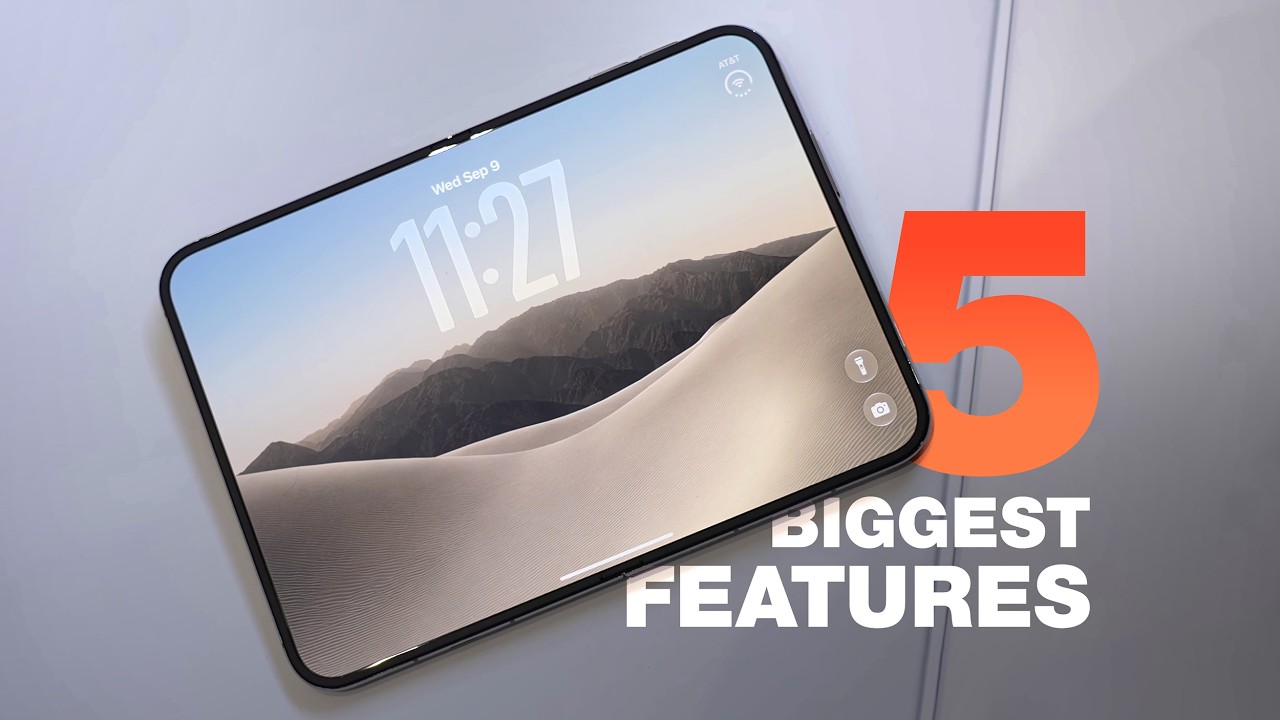
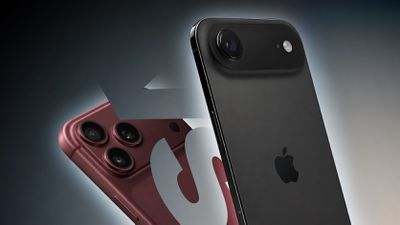
Apple's first foldable iPhone, with a book-style design featuring a 5.4-inch outer display and a 7.6-inch inner display with a minimal crease down the middle.





 Note: MacRumors is an affiliate partner with Amazon. When you click a link and make a purchase, we may receive a small payment, which helps us keep the site running.
 Apple Podcasts Subscriptions will soon support video, allowing creators to offer subscriber-exclusive episodes, ad-free video, early access, and bonus content, Apple
  Note: MacRumors is an affiliate partner with some of these vendors. When you click a link and make a purchase, we may receive a small payment, which helps us keep the site running.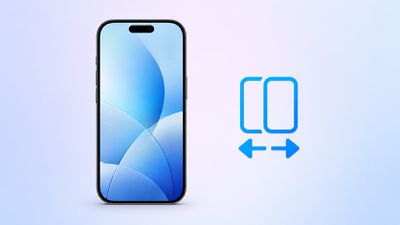
 Note: MacRumors is an affiliate partner with Amazon. When you click a link and make a purchase, we may receive a small payment, which helps us keep the site running.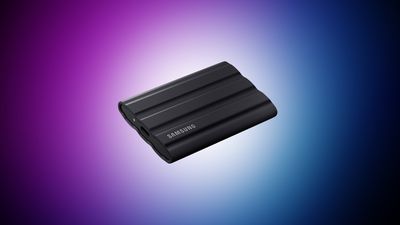
 Apple is
 The annual percentage yield (APY) for the