If you installed macOS 27 Golden Gate, here's a way to find out when your Mac was manufactured. Apple has restored access to information that effectively disappeared when it randomized its serial numbers a few years ago.
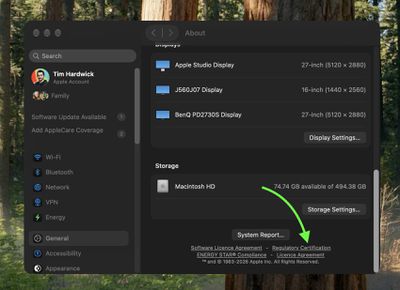
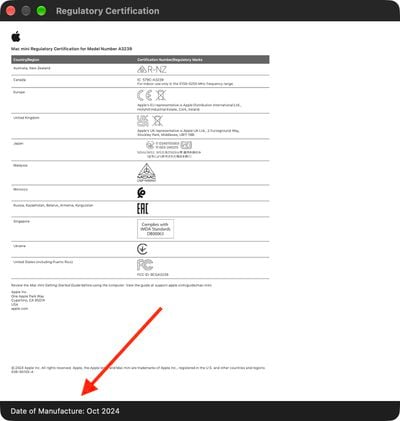
On your Mac, go to System Settings ➝ General ➝ About, then click "Regulatory Certification" under the System Report button. The certificate will show with a new "Date of Manufacture" field at the bottom.
You used to be able to decode the serial number on an Apple device to find out when and where it was made. That changed in 2021, when Apple began adopting randomized serial numbers without encoded manufacturing details.
That left owners of newer Macs with no similarly straightforward way to determine when their machine was made – until macOS 27 arrived.
The spot was made by MacRumors forum member pdfu. Another forum member said that the displayed date they saw on their certificate corresponded to their Mac's logic board rather than the date the complete machine was assembled. That logic board had been replaced though, suggesting that's where the date of manufacture is stored.
The regulatory certification first appeared during the macOS 27 beta cycle and it hasn't, to our knowledge, been highlighted by Apple.
With macOS Golden Gate, Apple phased out several legacy features and services, cutting support for older devices and accessories. More cuts are coming in macOS 28 as Apple continues to root out lingering Intel features.
Here's everything that's been dropped.
Support for Intel Macs - macOS Golden Gate is the first version of macOS that runs only on Apple silicon Macs. Intel Macs can't run it and are limited to macOS Tahoe. Apple still plans to offer security updates through fall 2028.
Boot Camp Assistant - Since macOS Golden Gate doesn't run on Intel Macs, it doesn't support Boot Camp. Apple silicon Macs require virtualization software like Parallels or VMware Fusion to run Windows.
Rosetta 2 (Temporarily) - Upgrading to macOS Golden Gate removes Rosetta, but if you have an app installed that requires it, you can reinstall it. macOS Golden Gate is the last version of macOS that will have full Rosetta support.
Apple Filing Protocol - Apple deprecated AFP back in macOS Sequoia 15.5, and there is no AFP client at all in macOS Golden Gate.
Time Capsule Backups - With no support for AFP, Time Capsule no longer works with Macs running macOS Golden Gate. Time Capsule requires AFP or SMBv1, but Time Machine backups now use the SMBv2 or SMBv3 protocol.
AirPort Utility - AirPort Utility is no longer included when you install macOS Golden Gate. If you had the app before updating, you can still use it, but Apple makes no guarantee that it still works. AirPort Utility lets users manage AirPort base stations like the AirPort Extreme and AirPort Express.
macOS 28, which is expected in fall 2027, will largely drop support for Rosetta 2. Most apps that rely on Rosetta will not open on Macs running macOS 28, though Apple is making an exception for some legacy games that are unmaintained.
In macOS Golden Gate, you'll see a warning when using any app that relies on Rosetta, so you're aware that the app won't continue to work in the future without a developer update. You can also see which apps are affected by going to Settings > General > About > Intel-Based Apps and then clicking on Details.
Apple today updated its TestFlight app for iOS, iPadOS, macOS, and visionOS to version 4.4.0, adding support for features introduced in the latest software updates and products.
TestFlight for iPhone supports landscape orientation ahead of the iPhone Duo's October launch, though the option is available on all iPhones. TestFlight can now be resized when using iPhone Mirroring on a Mac running macOS 27 with an iPhone running iOS 27.
Apple says the update also includes unspecified stability improvements and bug fixes.
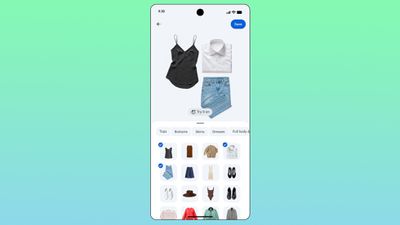
Google today said its digital wardrobe option is available in the Google Photos iOS app in the U.S., India, and Brazil.
Google first announced the feature back in April, but it was limited to Android users until now. The wardrobe option uses AI to pull images of clothing from the Google Photos library, organizing them into a digital closet.
Users can put items together to create outfits and virtually try them on.
The app shows clothing items in a new Wardrobe section in the Collections tab. Clothing can also be viewed in specific categories like tops or bottoms. Items of clothing can be mixed and matched, and the results can be shared with friends or saved to a moodboard.
Google Photos is also getting 15 new templates for Remix, a feature that uses AI to transform images.
Apple Music is teaming up with Goldenvoice to livestream the Head Trip music festival that's taking place in Indio, California, on October 10 and 11.
Head Trip will feature Calvin Harris, Fisher with Chris Lake, Peggy Gou with Four Tet, Swedish House Mafia, Skrillex, Dom Dolla with Kettama, and more. Tickets to the in-person event started at $499 but have sold out, and only passes starting at $589 are available now.
Music fans who don't want to pay that much or travel to the California desert can instead watch the livestream for free through Apple Music.
"Head Trip brings together an extraordinary lineup of artists who are shaping dance and electronic music culture right now," says Stephen Campbell, Global Head of Dance, Electronic Music & DJ Mixes at Apple Music. "Our goal at Apple Music has always been to bring fans closer to the artists, scenes, and dance floors driving this culture forward. Teaming up with Goldenvoice on Head Trip gives us an incredible opportunity to take the energy of this one-of-a-kind festival beyond Indio, giving fans around the world the chance to experience these performances on Apple Music."
Sets from the main stage of the event will be livestreamed across both days of the festival, according to Digital Music News. More information about Head Trip can be found on the festival website.
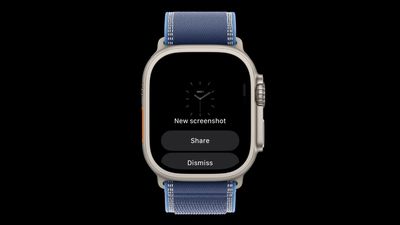
watchOS 27.2 could introduce a feature that lets Apple Watch screenshots be previewed with options to share or delete, similar to how screenshots work on the iPhone.
Signs of the feature were found in watchOS 27.2 by code explorer pdfu. The option is hidden behind a feature flag that's not enabled, but it could be introduced in a later watchOS 27.2 beta.
A new screenshot experience is coming to Apple Watch, inspired by iPhone.
Hidden behind a feature flag in watchOS 27.2, it lets you preview, share, or delete a screenshot right after taking it. pic.twitter.com/MT5wmDjRnq
— pdfu (@itspdfu) September 24, 2026
Right now, taking a screenshot on the Apple Watch sends it directly to the iPhone Photos app with no confirmation screen. It's easy to accidentally take a screenshot since it only requires pressing the Digital Crown and side button at the same time.
On the iPhone, taking a screenshot shows either a full-screen preview or a thumbnail preview depending on your settings, but both options let you save, share, or delete the screenshot with a couple taps.
Screenshots on Apple Watch are disabled by default but can be turned on through the Settings app on the watch or the Apple Watch app on iPhone. An option to save or delete screenshots would add more control than a simple on or off toggle.
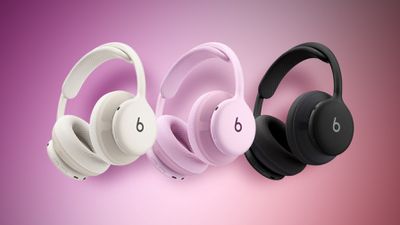
The new Beats 360 headphones are available for purchase at many Apple Stores around the world as of today. Retailers like Best Buy and Target also have some stock available in stores.
Apple's Beats brand announced the headphones earlier this week after teasing them for several months. The Beats 360 are over-ear headphones with a design similar to the AirPods Max and interchangeable ear cushions so you can swap colors.
Compared with the Beats Studio Pro, the Beats 360 have up to 1.75x more noise cancellation and improved sound quality. Features like Personalized Spatial Audio, Transparency mode, and Adaptive EQ are supported, as are fast pairing and automatic device switching. They have IPX4 sweat and water resistance, making them suitable for the gym.
The Beats 360 work with two kinds of cushions. The Performance Knit memory foam cushions are breathable and meant for working out, while the UltraPlush cushions have a softer, more pillowy feel. The Beats 360 ship with the Performance Knit cushions, and the UltraPlush can be purchased separately.
Beats 360 are priced at $349.99, and for a limited time, Apple is selling add-on ear cushions for a discounted $9.99 price through October 31. Headphone colors include Black, Cloud, Pink, and Sky. The Performance Knit cushions come in Black, Cloud, Pink, Sky, Navy, and Volt, while the UltraPlush come in Black and Cloud.
Apple says Child Accounts are easier to set up in iOS 27 and more intuitive to use. Improved controls allow parents to choose the types of apps children have access to, while Ask to Buy lets kids request new apps and games.
Ask to Browse gives parents a way to block or allow the websites children visit in Safari, plus parents can decide who kids can call and message. Communication Safety in Messages and FaceTime detects and blocks both violence and nudity in images and videos.
Time Allowances and Schedules let parents customize what children can access by the day, hour, and activity, with options to limit apps during school hours. There are one-tap controls to pause access entirely during family events like dinnertime or allow unlimited screen time.
Apple's updated parental controls come as the company deals with regulatory pressure over child safety in countries like the UK, U.S., and Australia. The UK has called for device-level controls that keep kids from viewing and sharing inappropriate images, while the U.S. Kids Internet and Digital Safety Act is now in the Senate. Australia has already prohibited children under 16 from creating accounts on certain social media apps.
Apple's new child safety features became available on September 14 with the launch of iOS 27, iPadOS 27, and macOS Golden Gate. Every device in a Family Sharing group needs to be running the latest software for the Screen Time update to work.
Apple kicked off its recent wave of product announcements on August 25, when it introduced a new Mac mini with M6 and M5 Pro chips, a new Mac Studio with M5 Max and M5 Ultra chips, and an updated version of the Apple Polishing Cloth.
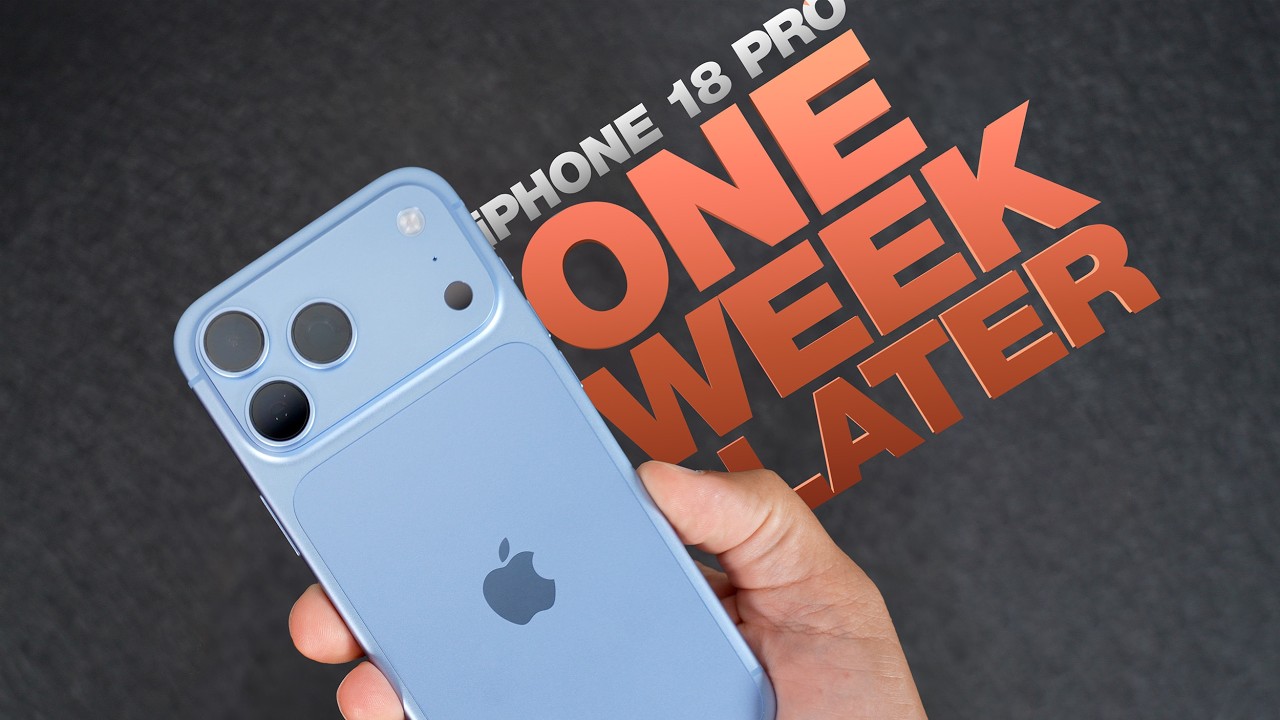
As usual, September then arrived with many new Apple products. Already this month, the company has unveiled the iPhone 18 Pro, iPhone 18 Pro Max, iPhone Duo, Apple Watch Series 12, Apple Watch Ultra 4, AirPods 5, and Beats 360. Apple also debuted a new Wrist Strap accessory, along with an updated Apple Watch magnetic charging cable.
In case you missed anything, here is our previous coverage of 12 new products and accessories announced by Apple over the past month:
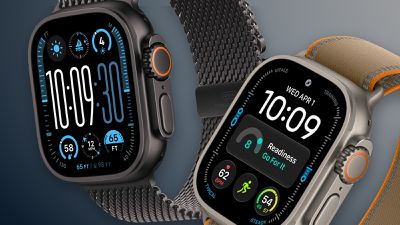
The Apple Watch Ultra 4 arrives three years after the Ultra 2. Across those two generations, Apple added satellite connectivity, a larger display, new health sensors, and longer battery life. Are those changes enough to justify replacing an Ultra 2 or paying more for the newest model?
Both watches retain a 49mm titanium case, an Action button, a siren, a 3,000-nit display, dual-frequency GPS, and support for recreational diving to 40 meters. The Apple Watch Ultra 4 starts at $799 in the U.S. Apple has discontinued the Ultra 2, although its refurbished store currently lists it from $589. Here are the key differences between the two models:
Wide-angle LTPO3 OLED display with 1Hz always-on refresh
410 by 502 pixels; 1,185 sq mm display area
422 by 514 pixels; 1,245 sq mm display area (5% larger)
S9 chip
S11 chip
2GB RAM
4GB RAM
Electrical heart sensor and third-generation optical heart sensor
Health Sensing System with new electrical and always-on optical heart sensors
Background heart-rate measurements
Background heart-rate measurements every five seconds
Heart-rate variability (HRV) measurements
More frequent measurements of overall HRV and Recovery HRV
Overnight Vitals view
Overnight and daytime Vitals views
Readiness app
Step tracking
More accurate all-day step tracking and a Steps watch-face complication
LTE and UMTS cellular connectivity
LTE and 5G cellular connectivity
Emergency SOS, Messages, and Find My via satellite
Audio Intelligence: Sound Recognition, automatic music identification, Live Rewind, and Siri Recap
Up to 36 hours of normal use
Up to 50 hours of normal use
Up to 72 hours in Low Power Mode
Up to 84 hours in Low Power Mode
Up to 12 hours of standard outdoor workout tracking
Up to 18 hours of standard outdoor workout tracking
Up to 17 hours of outdoor workout tracking in Low Power Mode with full GPS and heart-rate readings
Up to 25 hours in Extended Workout mode with full GPS and heart-rate readings
Up to 35 hours of outdoor workout tracking with fewer GPS and heart-rate readings
Up to 45 hours in Max Extended Workout mode, with GPS readings every second
Charges from 0 to 80% in about one hour
Charges from 0 to 80% in about 45 minutes
Natural titanium: 61.4 grams; black titanium: 61.8 grams
Natural titanium: 63.0 grams; black titanium: 63.1 grams
Dual-frequency GPS supporting GPS, GLONASS, Galileo, QZSS, and BeiDou
Dual-frequency GPS supporting GPS, Galileo, QZSS, and BeiDou
Now discontinued
Starts at $799
Is It Worth Upgrading From Ultra 2 to Ultra 4?
Most Apple Watch Ultra 2 owners should keep their watch if its battery still covers their usual days and workouts. It supports watchOS 27 and Siri AI, and continues to get new features through software updates.
The new Health Sensing System is the strongest reason to upgrade an Ultra 4. It measures heart rate every five seconds throughout the day and collects HRV data more frequently, enabling Recovery HRV, daytime Vitals, and the Readiness app. If you will use those insights to adjust your training or better understand changes in your daily condition, the Apple Watch Ultra 4 offers a substantially improved health-tracking experience.
The S11 chip strengthens the case to upgrade. Alongside twice the memory, it enables more accurate all-day step counts, a Steps complication, and Audio Intelligence. Sound Recognition can alert you to important surrounding sounds on your wrist, while music recognition can identify songs automatically.
Satellite connectivity and longer battery life add further reasons to switch, especially if you spend time beyond cellular coverage or record long workouts. Apple's ratings increase from 36 to 50 hours of normal use and from 12 to 18 hours of standard outdoor workout tracking. The slightly larger display and faster charging are welcome improvements, but the new sensing and chip-enabled features make the bigger difference.
Should You Buy an Ultra 2 or Ultra 4?
For most people buying an Apple Watch Ultra now, future-proofing is the strongest reason to choose the latest model. Its S11 chip, 4GB of RAM, and Health Sensing System already enable Readiness, more detailed recovery metrics, and Audio Intelligence features. Live Rewind and Siri Recap are due later in 2026. If you plan to keep your watch for several years through successive software updates, that newer hardware makes the $799 model easier to justify.
The Apple Watch Ultra 2 remains a credible value option at a substantial discount. At Apple's current $589 refurbished price, it costs $210 less than a new Ultra 4 while retaining the same design and core features. Choose it if those existing capabilities meet your needs and you are comfortable passing up the Ultra 4's hardware-exclusive features.
Three iconic "Peanuts" specials will once again be available on the Apple TV streaming service without a subscription for a limited time this holiday season.
Here is when each special will be available to stream for free in the Apple TV app:
"It's the Great Pumpkin, Charlie Brown": Saturday, October 17 and Sunday, October 18
"A Charlie Brown Thanksgiving": Saturday, November 14 and Sunday, November 15
"A Charlie Brown Christmas": Saturday, December 12 and Sunday, December 13
Apple TV subscribers can already watch the specials at any time of the year.
In 2020, a petition calling for the "Peanuts" specials to return to broadcast TV networks received hundreds of thousands of signatures. Apple ultimately allowed the "Peanuts" specials to air on PBS in 2020 and 2021, but since then it has opted to make the specials available for free for a short time through its streaming service.
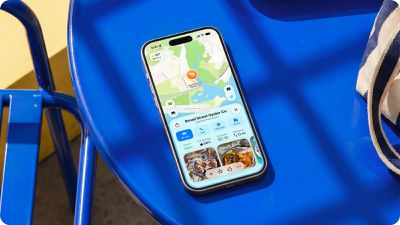
Square today announced a new Apple Business integration that makes it easier for businesses to ensure they have up-to-date information across Apple Maps, Apple Wallet, and Siri AI.
Apple Business is connected to Square's Dashboard: "Rather than managing multiple channels separately, sellers can now maintain their Apple presence alongside the rest of their business in Square."
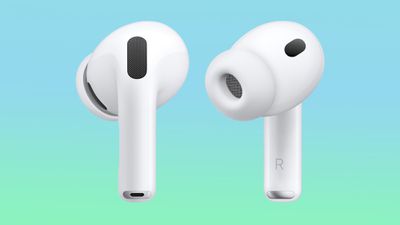
Amazon has the AirPods Pro 3 available for $199.00 this week, down from $249.00. We haven't tracked an all-time low price on this model since Prime Day over the summer, but this is still a solid $50 markdown.
Note: MacRumors is an affiliate partner with some of these vendors. When you click a link and make a purchase, we may receive a small payment, which helps us keep the site running.
This model of the AirPods Pro launched in September 2025 and has 2x better Active Noise Cancellation than the previous generation, better audio quality, a revised fit that's meant to improve comfort and stability, Live Translation for in-person conversations, and heart rate sensing for workouts.
Head to our full Deals Roundup to get caught up with all of the latest deals and discounts that we've been tracking over the past week.
Deals Newsletter
Interested in hearing more about the best deals you can find in 2026? Sign up for our Deals Newsletter and we'll keep you updated so you don't miss the biggest deals of the season!
Qualcomm today announced the renewal of its global patent licensing agreement with Apple, effective April 1, 2027. No further details were provided.
This patent agreement is separate from Qualcomm's agreement to supply Apple with cellular modems for smartphone launches through 2026, so we expect Apple's transition to its own custom-designed modems to continue. Among the latest iPhone models, only the U.S. version of the iPhone 18 Pro Max still has a Qualcomm modem.
The smaller iPhone 18 Pro and the iPhone Duo are equipped with Apple's C2 modem worldwide, as is the iPhone 18 Pro Max in all countries beyond the U.S., while cellular models of the latest iPad Pro and iPad Air use Apple's previous-generation C1X modem.
Following a legal battle, Apple and Qualcomm reached a settlement that included a six-year patent licensing agreement beginning April 1, 2019. A two-year extension option was exercised, pushing the agreement's expiry date to March 31, 2027. Reutersreported that another two-year extension option was available, so it is possible the agreement now runs through March 31, 2029, but the length of the latest extension was not disclosed.
A 47-minute video of the Q&A session from Apple's 2010 iPhone 4 "antennagate" press conference has surfaced on YouTube, showing Steve Jobs, Tim Cook, and Bob Mansfield answering reporters' questions.
The recording was highlighted by Daring Fireball's John Gruber, who attended the event. Apple called the July 16, 2010 press conference amid complaints that holding the iPhone 4 in a particular way could reduce its cellular signal.
Jobs used his prepared presentation to announce free cases for eligible customers and a 30-day return option. Apple later posted video of that presentation, but left out the Q&A, which was documented at the time through written reports and photographs.
Among the exchanges now visible is a question from Gruber at about 18:45 asking whether the three executives used cases on their own iPhone 4s. Jobs, Cook, and Mansfield each hold up an uncased phone. Jobs later gives a lengthy answer about what Apple learned from the controversy, including why the company waited to gather more data before holding the press conference.
Near the end of the recording, Jobs explains Apple's strategy of owning or controlling the core technology behind its products, and why the growing importance of software made that approach valuable for consumer electronics. Gruber says he does not know where the recording came from or why it has surfaced only now.
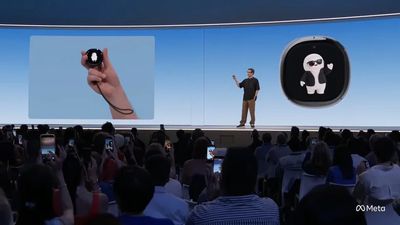
Apple has reportedly shelved plans to launch an AI pendant, while Meta appears to be going all out in the nascent hardware space with a new handheld AI companion. Mark Zuckerberg used his "one more thing" moment at the company's annual Connect event on Wednesday to unveil the Muse Charm, a puck about the size of an Apple Watch featuring a tamagotchi-like, interactive avatar that can be used to chat with the company's Muse AI.
"Muse Charm is a delightful and fun device built for you to talk and interact with your Muse. It brings the power of Muse with a state of the art real-time voice model into a device that fits in your pocket.
"We packed the whole Muse experience, including the whole real-time voice and avatar stack, into something that fits on a keychain and is always available to talk to. You just go ahead and tap here in the fingerprint sensor in the corner, and you can start talking without having to unlock a phone or open an app.
"So if you're not wearing glasses, this is going to be by far the fastest way to talk to your Muse and to show what's going on around you."
We'll have more to share later this year."
That's all we got about the device, which Meta is aiming to have on sale by the holiday season.
Otherwise, Connect was mostly about the company's new Meta VR Glasses. They have a tethered puck for the storage and battery, and the headset is five times lighter than the Meta Quest 3 at 100 grams, with full-color passthrough video support and a 5K display. (For context, M5 Apple Vision Pro weighs 750–800 grams depending on the configuration.)
Meta says the glasses will offer "cinema-grade clarity" with support for Dolby Vision and Dolby Atmos spatial audio, and they can deliver up to three hours of continuous high-resolution media playback on a single charge.
The device runs every game available for Quest headsets, and supports Xbox Cloud Gaming. You can also connect it to a PC or Mac and control things with a virtual keyboard and trackpad on a desk. Meta VR Glasses are set to launch in the spring with a $1,300 starting price.
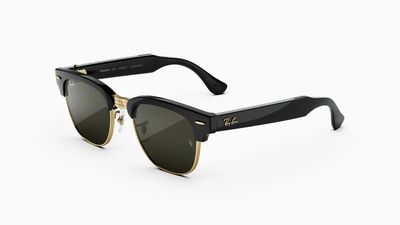
Meanwhile, in an apparent bid to throw off the "pervert glasses" label, Meta also announced an audio-only version of its Ray-Ban smart glasses. The new model supports media playback and calls, and runs for up to 12 hours on a single charge, while the charging case adds up to 48 hours of battery life. Pre-orders are open and the glasses ship on October 13, starting at $349.
Meta hasn't abandoned its camera-equipped Ray-Ban smart glasses, though. Far from it. The company is refreshing its Ray-Ban Meta with a slimmer design and a button that activates Meta AI. The third-generation model is said to have a longer nine hours of battery life (versus eight on the second-gen model) and a new six-microphone array that the company says can cut out over 90 percent of background noise. The 12MP camera supports 3K video capture, with Dolby Atmos Spatial Audio support coming soon. There are multiple styles to choose from, and prices start at $449.
Meta's AI Glasses are also getting a new FDA-cleared hearing enhancement feature later this year. Users can access it as part of a Meta One subscription, or they can pay a one-time cost of $149. A 30-day free trial will also be available.
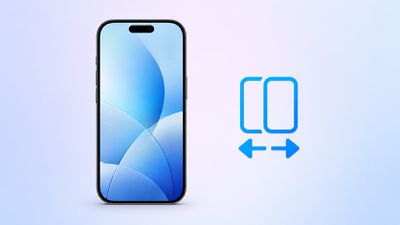
Apple in iOS 27 introduced iPhone Handoff, a new eSIM feature that allows you to use the same number on two iPhones and seamlessly swap between them. The number is only active on one iPhone at a time, so it's not like having two independently active lines.
It's also different from Apple's existing Handoff feature for continuing an app task on another Apple device. Here's what you need to know about the new iPhone Handoff feature.
What Moves Between the Two iPhones?
When you switch phones with iPhone Handoff, your calls, voicemail, messages (including iMessage, RCS, SMS, and MMS) and Find My location move to the active iPhone. You'll see a "Switched to this iPhone" message on the screen to confirm the change.
Other data synced with iCloud will automatically update across your devices, and third-party apps work across both devices, though some third-party apps may require a separate sign-in or take time to sync. Any banking apps you use may also ask you to approve access on the other device.
What Do You Need for iPhone Handoff?
Both iPhones must be running iOS 27 or later. They'll also need to be:
Connected to Wi-Fi
Sharing the same Apple Account
Using Messages in iCloud for messages sync
Signed into FaceTime and iMessage with the same Apple Account
iPhone Handoff works with Dual SIM as long as both eSIMs are from carriers that support iPhone Handoff. Both eSIMs must be set up for iPhone Handoff separately, one at a time. Once set up, both eSIMs switch together simultaneously when you unlock your iPhone.
Which Carriers Support iPhone Handoff?
iPhone Handoff is available through T-Mobile in the United States and Telekom in Germany. Verizon (U.S.) and EE (U.K.) will support iPhone Handoff later this year.
AT&T has so far not committed to supporting iPhone Handoff, with a company spokesperson recently pointing to the carrier's existing eSIM activation and transfer options instead.
How Much Does iPhone Handoff Cost?
T-Mobile is charging customers $5 per month to use iPhone Handoff.
In Germany, Deutsche Telekom is charging €6.95 per month for iPhone Handoff, but only on plans that do not already include multi-SIM functionality. An added multi-SIM costs €6.95 per month (one is included with the current MagentaMobil L plan and two with XL).
No other carriers have announced pricing yet.
How Do You Set It Up?
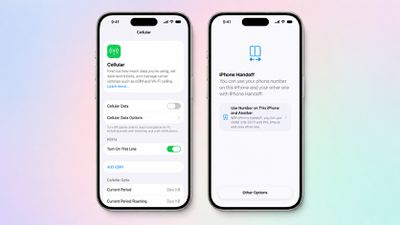
iPhone Handoff can be enabled when setting up a new iPhone. At the "Set Up Cellular" screen, choose "Use Number on This iPhone and Another," then follow the prompts on both phones.
If both iPhones are already set up, open Settings ➝ Cellular on the phone you want to add. Tap Set Up Cellular or Add eSIM, choose Use Number on This iPhone and Another, and follow the prompts. You then get to choose which device is your main iPhone (ideally, the one you use most often) and which is your secondary iPhone.
After setup, unlock either phone to make your number active on it.
What Should You Know Before Switching?
If you have an Apple Watch, it won't switch its pairing to the other device when your phone number moves, so make sure you pair it with the iPhone you expect to use most. Also, some Wallet items, including certain transit passes and IDs, may only work on one device at a time.
Carrier account management and some services like Call Forwarding and Caller ID will remain tied to your main iPhone.
Can I Replace an iPhone That Uses iPhone Handoff?
Yes, but you need to transfer the eSIM from either iPhone to the replacement device. The below steps should be followed while your new iPhone is placed next to your existing devices that use iPhone Handoff.
On your new iPhone (replacement), open the Settings app.
Tap Cellular and then tap Set up Cellular or Add eSIM.
Select an iPhone and tap Continue.
Tap Transfer. (If your carrier doesn't support eSIM transfer from a companion iPhone, you must enroll in iPhone Handoff again: On your iPhone that you are transferring the eSIM from, tap Continue, and follow the onscreen prompts.)
Tap Continue.
Follow the onscreen prompts on both devices.
The eSIM will deactivate on the old iPhone you transferred from.
What If I Want to Stop Using iPhone Handoff?
If you want to stop using iPhone Handoff at any time, you need to contact your carrier. Simply deleting an eSIM from your iPhone may not stop the carrier from charging you for the service.
Apple's first foldable iPhone, with a book-style design featuring a 5.4-inch outer display and a 7.6-inch inner display with a minimal crease down the middle.








 Square today
  Note: MacRumors is an affiliate partner with some of these vendors. When you click a link and make a purchase, we may receive a small payment, which helps us keep the site running.
 Apple has confirmed