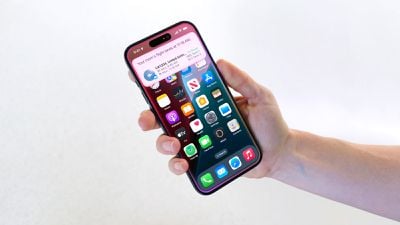
iPhone apps with Google Analytics for Firebase integration were briefly crashing on Monday due to an issue with the analytics platform that has since been resolved. Affected apps should no longer be crashing, with no action required from developers.
While the issue began shortly after Apple released iOS 27.0.1, the timing was coincidental, as apps were crashing on other iOS versions too.
An indie developer has built an app that turns Apple's upcoming iPhone Duo into a virtual Sony Walkman by using the foldable's hinge to mimic the classic cassette player's flip-open door.
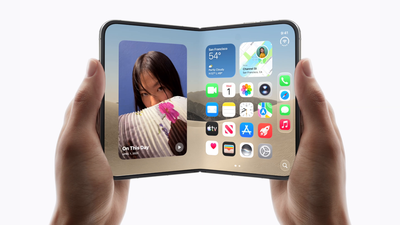
Creator Vidit Bhargava is calling the app Duo-Man, which was designed in BitRig's new iPhone Duo development environment. Bhargava's app lets users open the device to pick their music and "insert" a cassette on the 7.6-inch inner display, then snap it shut to start playback, 80s-style.
Bhargava told TechCrunch he wanted to make the experience feel authentic, so he went so far as to record button clicks and static from a real Walkman for use in the app.
Duo-Man won second place at the recent Bitrig hackathon in San Francisco, and his post about the app on X (Twitter) has gained more than 2.1 million views.
Duo-Man offers the complete walkman experience on the iPhone Duo. Open the Duo to pick and 'insert' the cassette, Close the Duo to start listening.
Yes, I actually recorded the button clicks and static noise from a real Walkman!
It was fun making this at @bitrig hacks today. pic.twitter.com/juSrLhofrH
— Vidit Bhargava (@viditb) September 27, 2026
The enthusiastic response has led Bhargava to turn the project into a proper release, and the finished app will support Apple Music and local files, as well as an Apple Pencil feature for "rolling" the cassette loop (a common battery-saving Walkman hack). Depending on its popularity, Spotify support may also be on the cards.
No release date has been announced for the app, but we know when the iPhone Duo is coming: Pre-orders begin Friday, October 16, with availability starting October 23.
We've seen previews of iOS 27 running on the iPhone Duo, including a new StandBy mode that activates even when the iPhone isn't charging. Apple showed the mode in press materials, but leaker pdfu today shared a more in-depth look at some of the options.
There are multiple StandBy faces available on the iPhone Duo, five of which we weren't aware of.
A Home Camera view will show a single camera feed or a grid of up to nine camera feeds. There's a Home Modular option that likely shows smart home controls, and a Snoopy-themed face.
Here's a deep dive into StandBy mode on iPhone Duo.
Rushmore, the app meant to host the redesigned faces, is missing from the iOS 27.1 simulator.
But its localization strings reveal unreported faces, and I got some new faces running in the current renderer. 🧵 pic.twitter.com/lDQHOy5R0e
— pdfu (@itspdfu) September 28, 2026
Apple also appears to be adding a face called Flow that could have animations, and there's a face named Fade with no details available. Faces we've seen in marketing materials include Analog, Digital, Classic Calendar, Weather, Photos, Memories, Shared Albums, and Modular.
A face editor will let users adjust the StandBy mode interface, choosing different styles and colors, similar to the existing iPhone StandBy customization screens. Swipe gestures are available for quick visual adjustments.
There are five widget layouts to choose from for clock faces that support widgets. The layouts include StandBy, Stacked, Top, Middle, and Bottom.
The iPhone Duo will be available for pre-order on October 16 ahead of an October 23 launch, and we'll likely see more details come out as we approach the release date.
Apple's release notes say only that the update "provides bug fixes for your Apple Watch" and the company does not list any security fixes, so it's unclear what exactly is addressed with the update.
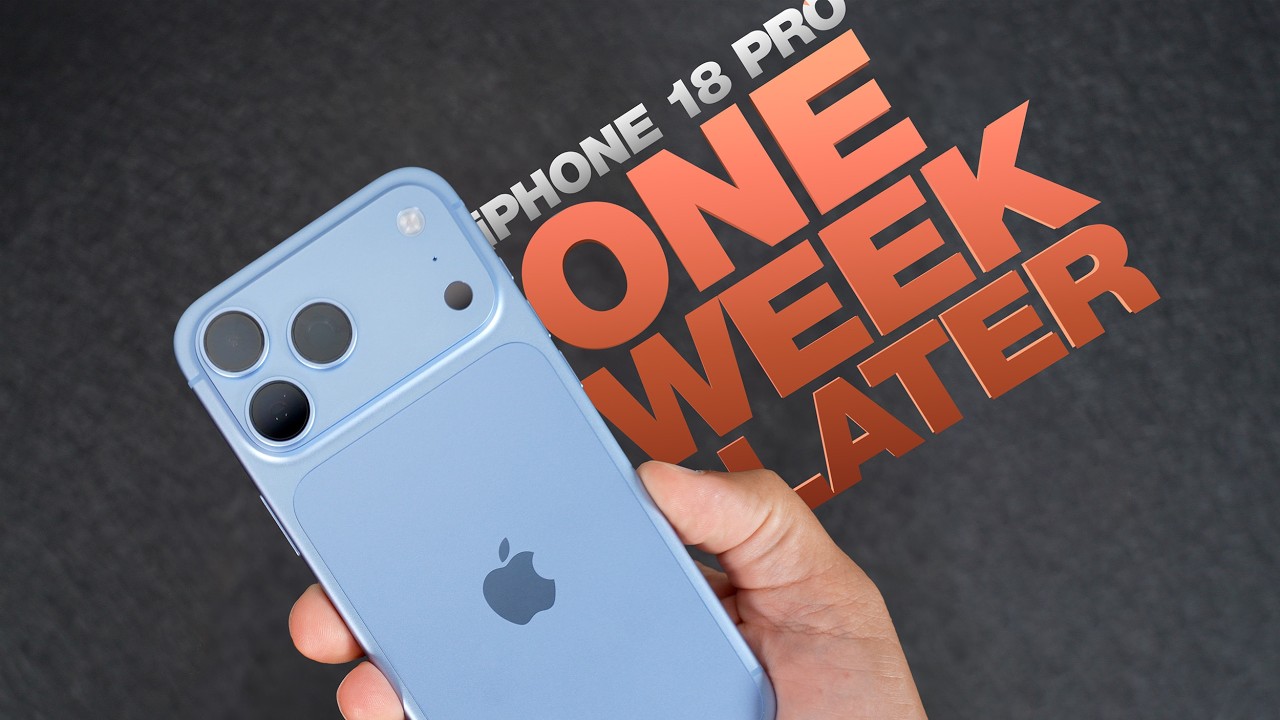
It's been a little over a week since the iPhone 18 Pro models launched, and we want to hear from MacRumors readers. What do you think of Apple's newest iPhones?
If you upgraded from an older phone, was it worth it? What about upgrading from an iPhone 17 Pro? What problems are you running into? Anything you love so far?
MacRumors readers have already been sharing early opinions on the MacRumors forums, and there are interesting discussion threads to read through. For early reviews and hands-on images, make sure to check out the first impressions and photos thread.
People have been taking excellent photos with the iPhone 18 Pro and sharing results in a dedicated image thread. If you're still thinking about getting the iPhone 18 Pro and want to know how the new variable aperture lens performs, the thread includes useful real-life examples.
Apple's security support pages say there was a CoreGraphics out-of-bounds write issue that could be exploited with a maliciously crafted file, allowing for arbitrary code execution. It has been fixed with improved bounds checking.
Apple says the flaw was exploited in an "extremely sophisticated attack" on targeted individuals running older versions of iOS. Apple's latest operating systems don't appear to be affected, and the iOS 27.0.1, iPadOS 27.0.1, and macOS Golden Gate 27.0.1 updates that came out today have no published CVE entries.
While the attack wasn't widespread, if you're still running a version of iOS 26, iPadOS 26, macOS Tahoe, or macOS Sequoia, you should install the new updates as soon as possible. Now that the vulnerability is public, it could be further exploited against users who aren't protected.
Anker and Jackery have introduced big discounts across their most popular portable power stations, both of which are in preparation for Prime Big Deal Days next week. We're tracking Anker's best deals at both its own website and on Amazon, while Jackery's discounts can be found on the retailer's website.
Anker SOLIX
Note: MacRumors is an affiliate partner with Jackery and Anker. When you click a link and make a purchase, we may receive a small payment, which helps us keep the site running.
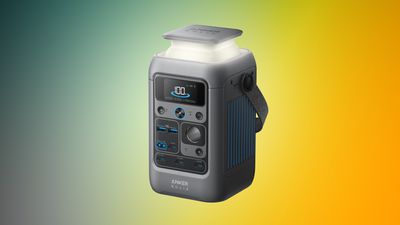
Anker's SOLIX brand is hosting an early Prime Day sale with early bird deals, free gifts, and more. This sale is focused on Anker's high-end SOLIX portable power stations, with options that range from 1-2 days of backup to 3-5 days of backup.
For cheaper options, Amazon has notable markdowns on lower-cost SOLIX batteries, like the popular SOLIX C300 Portable Power Station with Lantern for $199.99 ($50 off). If you're shopping on Anker's website, be sure to make your purchases before October 5, when the sale ends.
Over on Jackery's website, you'll find up to 65% off a wide array of portable power stations, solar generators, add-on batteries, and more. This is another Prime Big Deal Days early access event, and is set to run through October 3.
If you're on the hunt for more discounts, be sure to visit our Apple Deals roundup where we recap the best Apple-related bargains of the past week.
Deals Newsletter
Interested in hearing more about the best deals you can find in 2026? Sign up for our Deals Newsletter and we'll keep you updated so you don't miss the biggest deals of the season!
iOS 27.0.1 can be downloaded over the air by going to Settings > General > Software Update. Apple has also released iPadOS 27.0.1 and visionOS 27.0.1 updates, as well as iOS and iPadOS 26.7.1 updates for devices not updated to iOS and iPadOS 27.
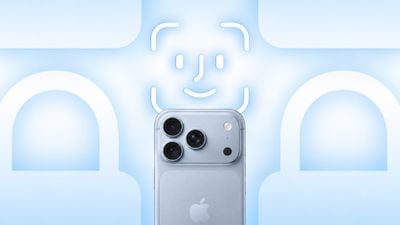
According to Apple's release notes, iOS 27.0.1 addresses an issue that could cause Face ID not to work properly on the iPhone 18 Pro.
Some iPhone 18 Pro users have complained that authentication can fail to work for things like unlocking a locked app. In some cases, the device freezes up and then reboots. Other users have seen a "Face ID is Not Available" message when attempting Face ID setup, and others have experienced issues with the Require Attention for Face ID setting. Apple's release notes for the update are below.
This update provides bug fixes for your iPhone, including fixes for the following issues:
- iPhone 18 Pro and iPhone 18 Pro Max may unexpectedly restart when Face ID fails to authenticate - A color artifact may appear on photos captured at 2x under certain lighting conditions at f/1.48 on a small number of iPhone 18 Pro and iPhone 18 Pro Max devices - Opening Notification Center and Control Center simultaneously may cause the touchscreen to become unresponsive
The iPhone 18 Pro models have an infrared camera that's under the display for the first time, but it's unclear if the hardware has been causing a problem. Apple said last week that it would be able to address the Face ID bugs with a software update.
While the iOS 27.0.1 update has multiple iPhone 18 Pro bug fixes, it is available for all iPhones able to run iOS 27.
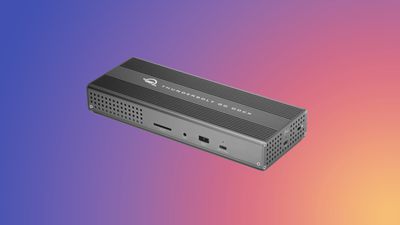
MacRumors has partnered with OWC to bring our readers big savings on the retailer's best Thunderbolt docks, USB-C cables, and external storage enclosures. These exclusive deals will run through this Wednesday, September 30 at 12:00 a.m. CST, so you have just a few more days to shop.
Note: MacRumors is an affiliate partner with OWC. When you click a link and make a purchase, we may receive a small payment, which helps us keep the site running.
All discounts have been applied automatically, so all you need to do is follow the links below and add one of the accessories to your cart to see the savings. To be clear, many of these products are already on sale, but you need to add them to your cart and then go to your cart or checkout page to see the extra MacRumors discount.
There are 13 total items on sale, including docks, hubs, enclosures, and USB-C cables.
Notable accessories on sale include the OWC Thunderbolt Go Dock for $179.99 ($119 off), and the OWC ThunderBay 4 External Storage Enclosure for $299.00 ($99 off). For anyone looking to upgrade their desktop setup, there are six total enclosures on sale for our readers, with as much as $104 in savings.
If you're on the hunt for more discounts, be sure to visit our Apple Deals roundup where we recap the best Apple-related bargains of the past week.
Deals Newsletter
Interested in hearing more about the best deals you can find in 2026? Sign up for our Deals Newsletter and we'll keep you updated so you don't miss the biggest deals of the season!
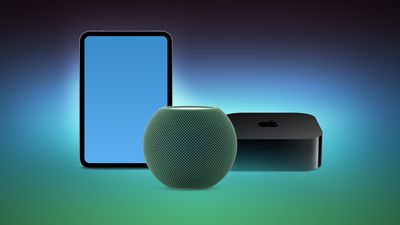
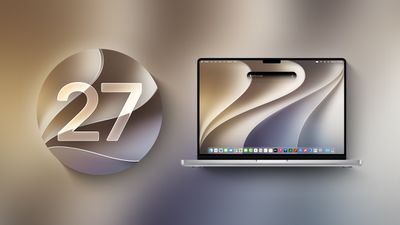
October will be an especially busy month for Apple this year, with the company set to release the iPhone Duo, both iOS 27.1 and iOS 27.2, and a new Mac Studio configuration with 512GB of RAM. In addition, up to six more Apple products may be unveiled next month, such as new iPad mini, HomePod mini, and Apple TV 4K models.
Below, we have outlined 12 new things to expect from Apple this October.
iOS 27.2: Apple jumped ahead to an iOS 27.2 beta because iOS 27.1 is dedicated to the iPhone Duo. iOS 27.2 adds support for the five additional Siri AI languages that Apple promised would be coming in October, so accordingly we can expect iOS 27.2 to be released at some point during the month.
14" and 16" MacBook Pro models with OLED displays: A major MacBook Pro redesign in late 2026 with M5 Pro and M5 Max chips, an OLED display, a touch screen, a Dynamic Island, and a thinner design.
HomePod mini 2: Newer chip, Siri AI support, improved sound quality, Apple's N1 chip with Wi-Fi 7 support, a second-generation Ultra Wideband chip, and new color options, including pink and green. No major design changes.
Home hub: An all-new Apple smart home hub featuring Siri AI, a 6-inch to 7-inch square display, an A18 chip or newer for Apple Intelligence, FaceTime, and more. A new operating system will feature clock faces, widgets, and more. There will be a tabletop version with a speaker base and a wall-mounted version.
homeOS: Apple's smart home hub is expected to run an all-new operating system that may be named homeOS, according to trademark filings.
Apple's AirPods 5 bring Active Noise Cancellation to its $129 earbuds for the first time. The $149 AirPods 5 with Wireless Charging Case add longer battery life, volume controls on the stems, and a case speaker for Find My. The AirPods Pro 3 cost $249.
The AirPods 5 arrived in September 2026, a year after the AirPods Pro 3. They continue to narrow the feature gap between the devices, but the Pro model still offers a sealed in-ear fit, substantially better noise cancellation, and hearing and workout features. Our guide helps to answer the question of how to decide which of these sets of AirPods is best for you.
AirPods 5 (2026)
AirPods 5 with Wireless Charging Case (2026)
AirPods Pro 3 (2025)
Open-ear fit without ear tips
Open-ear fit without ear tips
In-ear fit with foam-infused silicone ear tips in five sizes
Optical in-ear sensor
Optical in-ear sensor
Skin-detect sensor
Open-ear Active Noise Cancellation
Open-ear Active Noise Cancellation
In-ear Active Noise Cancellation; up to 3x more effective than AirPods 5
Up to 4 hours of listening time on one charge with ANC
Up to 5 hours of listening time on one charge with ANC
Up to 8 hours of listening time on one charge with ANC
Up to 20 hours of listening time with ANC using the case
Up to 22 hours of listening time with ANC using the case
Up to 24 hours of listening time with ANC using the case
Case charges via USB-C
Case charges via USB-C, Apple Watch charger, or Qi charger
Case charges via USB-C, Apple Watch charger, Qi charger, or MagSafe charger
Speaker in case for Find My
Speaker in case for Find My
Second-generation Ultra Wideband chip in case for Precision Finding with a compatible iPhone
Charging case is 1.97 inches (50.1 mm) wide
Charging case is 1.97 inches (50.1 mm) wide
Charging case is 2.45 inches (62.2 mm) wide and has a lanyard loop
Starts at $129
Starts at $149
Starts at $249
The AirPods 5 with Wireless Charging Case are the best choice for most buyers. For $20 more than the base model, you get an extra hour of listening time per charge with ANC, volume swipes on the stems, wireless charging, and a speaker that makes a misplaced case easier to find. Choose the $129 model if the lowest price matters most and you are content with its shorter battery life and USB-C-only charging case.
However, the AirPods Pro 3 are worth the extra $100 over the higher-end AirPods 5 if noise cancellation is your priority and you prefer a snug in-ear fit. Apple says they provide up to three times as much ANC as the AirPods 5, since the ear tips create a physical seal. Their eight-hour listening time per charge is particularly useful on long journeys. In our hands-on testing, the AirPods 5 sounded muddier than the Pro 3, particularly in the lower midrange.
The AirPods Pro 3 are also the clear choice if you want their hearing health features or heart rate sensing during workouts without relying on an Apple Watch. Their charging case adds Precision Finding, too. If you dislike silicone ear tips, the AirPods 5 let you keep the open-ear fit while getting nearly all of the everyday listening features shared by the Pro model.
AirPods frequently receive discounts from third-party retailers, which can narrow the AirPods Pro 3's $100 list-price premium over the $149 AirPods 5. Check the latest prices using our Deals roundup before buying.
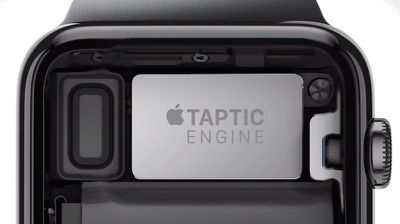
Apple has been ordered to pay $5.7 billion in damages to Taction Technology after a federal jury found it had infringed two of the haptics company's patents, reported CNBC over the weekend.
Taction sued Apple in 2021, arguing that Apple's Taptic Engine in the company's Apple Watches and iPhones uses its inventions without proper license or authority. Apple initially had the case dismissed in 2023, but the Federal Circuit later revived it.
The jury trial began September 14, and seven jurors deliberated for two days after proceedings concluded. They returned on Friday and delivered the verdict in favor of Taction.
"We're happy the jury found for Taction and vindicated its patent rights," the company's lead counsel, Lance Yang, told CNBC. "Taction waited five and a half years for this case to get to trial, so it was a long time coming."
Apple said it intends to appeal the decision.
"While we thank the jury for their consideration, we strongly disagree with today's verdict and the damages awarded, which are entirely unsupported by the facts," Apple told CNBC in a statement. "Apple's Taptic Engine is fundamentally different from Taction's technology, which Taction's own testing of Apple's products confirmed during trial. Apple does not use Taction's technology, and we will appeal."
In Friday's verdict at the U.S. District Court for the Southern District of California, jurors did not find that Apple had infringed the patents willingly.
Apple is working on a "completely revamped" Vision Pro headset that could go in any of four directions and likely won't arrive before late 2028 or early 2029, according to Bloomberg's Mark Gurman.
Writing in his latest Power On newsletter, Gurman said Apple's Vision team is exploring four concepts for the device, codenamed N224, including designs that offload internal components in a similar way to Meta's latest VR Glasses, which are expected to launch next spring.
An external computing module on Meta's device houses the battery and main processor, and can be clipped to the user's waist. Gurman, who has previewed Meta's headset, says the module is about the same size and weight as the current Vision Pro's battery pack, but with a grippy exterior.
Gurman reports that regardless of the Vision team's work, senior Apple decision-makers still consider the external puck concept as a "poor user experience" and want the company to stick with "something closer to an all-in-one design."
If any of this sounds familiar, that's because Gurman reported in June that Apple was still working on a cheaper, lighter successor to its Vision Pro headset. (The device-in-development is distinct from the long-rumored "Vision Air," which was cancelled last year.)
Apple knows it needs to come up with ways to simplify the design and make something cheaper and lighter, and it is said to be actively exploring ways to reduce the headset's weight by experimenting with plastic, titanium, other metals and various materials.
Still, Gurman has been told the work is on "life support" as the company focuses more on smart glasses, which it aims to release in late 2027. Despite the Vision Pro's most senior leaders "pressing their bosses to keep the category alive, funded and growing at Apple," Gurman says there's still no guarantee a new headset will ever launch.
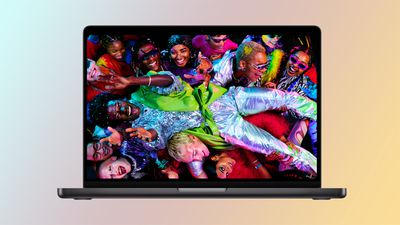
Amazon has introduced a major discount on the 16-inch MacBook Pro with the M5 Max chip, 32-Core GPU, 36GB RAM, and 2TB SSD, now available for $3,499.00, down from $4,399.00. This is a massive $900 markdown on the high-end MacBook Pro, and it's joining a few other MacBook Pro discounts on Amazon this week.
Note: MacRumors is an affiliate partner with Amazon. When you click a link and make a purchase, we may receive a small payment, which helps us keep the site running.
We're also tracking a big discount on the 16-inch M5 Max MacBook Pro with 48GB RAM, available for $4,499.00, down from $4,999.00. Overall, these are some of the best deals we've seen on the 2026 MacBook Pro in the wake of the price hikes over the summer.
If you're on the hunt for more discounts, be sure to visit our Apple Deals roundup where we recap the best Apple-related bargains of the past week.
Deals Newsletter
Interested in hearing more about the best deals you can find in 2026? Sign up for our Deals Newsletter and we'll keep you updated so you don't miss the biggest deals of the season!
The Apple rumor mill never stops, and this week MacRumors was able to break the news of details on several upcoming products.
We're also still learning more about the just-released iPhone 18 Pro and Pro Max plus the upcoming iPhone Duo, while this week saw the debut of new Beats 360 headphones and the start of claim acceptance for the class action lawsuit over Siri AI delays, so read on below for all of the details on these stories and more!
Top Stories
iPad Mini With A20 Pro, New HomePod Mini Colors, and New Apple TV 4K All Just Leaked
Siri AI Settlement Website Now Live: Apple to Pay Some iPhone Owners
In May, Apple agreed to pay $250 million to settle a U.S. class action lawsuit over Siri AI's delayed launch, and the settlement website is now live.
Apple will pay an estimated $25 per eligible iPhone to eligible customers, who can submit a claim via the settlement website between September 21 and December 21 of this year. The exact payment may be higher or lower than $25 depending on the total number of valid claims submitted and other factors, with the maximum amount set at $95.
Apple denies all of the allegations made in the lawsuit, but agreed to the settlement to avoid the costs and risks of a trial.
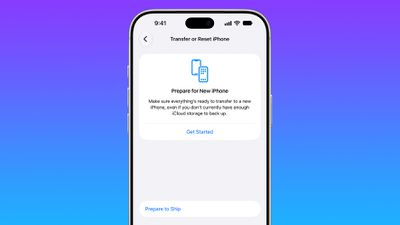
iPhone 18 Pro Max Requires 'Prepare to Ship' Battery Drain Before Shipping
The iPhone 18 Pro Max has a single-cell battery capacity over 20 watt-hours, which means there are additional shipping requirements. If an iPhone 18 Pro Max needs to be shipped somewhere, its maximum battery capacity has to be limited through firmware.
According to Apple, the iPhone 18 Pro Max uses an "innovative battery-firmware solution" that limits battery capacity to below 20Wh between when the iPhone is manufactured and its delivery to a customer. Activating the iPhone removes the limit to make the battery's full charging capacity available.
Customers who need to ship the iPhone 18 Pro Max for repair, trade-in, or other purposes have to use a new Prepare to Ship feature. Prepare to Ship discharges the battery to below 20Wh and sets a charge limit so the iPhone stays below the threshold during the shipping process.
Apple Exec Says 'Hold Us Accountable' on iPhone Duo Crease
The iPhone Duo uses a matte nano-texture display, which is meant to cut down on glare and minimize the visibility of the crease. When asked if the iPhone Duo's crease would be more visible over time, as that's what tends to happen on other foldables, Marieb said the nano-texture display would help. He asked people to hold the company "accountable" on crease visibility.
Marieb also discussed the Duo's innovative hinge, the use of Ceramic Shield 2 on the front display, and more.
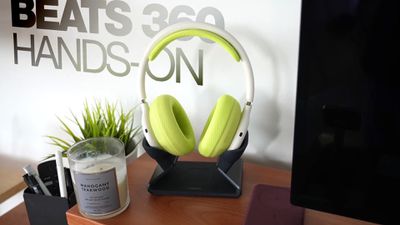
Beats 360 Deliver Customizability and a Revamped Over-Ear Headphone Design
After months of teases and leaks, Apple's Beats brand officially announced its new Beats 360 headphone this week. Priced at $349.99, Beats 360 represents a rethinking of the Beats over-ear headphone design, with an emphasis on sound quality, comfort, and customizability.
Beats 360 is not a replacement for the brand's Studio Pro over-ear headphone, as the Studio Pro will remain part of the Beats lineup at a reduced price point of $299.99, down from the previous $349.99. Compared to Studio Pro, Beats 360 features a completely new acoustic architecture that delivers up to 1.75× more active noise cancellation and a 12dB increase in output while maintaining clarity across all frequencies with low distortion.
Swappable ear and headband cushions let you customize your look by mixing and matching colors and materials, with Beats offering extra cushion kits at heavily discounted prices as part of a launch promo.
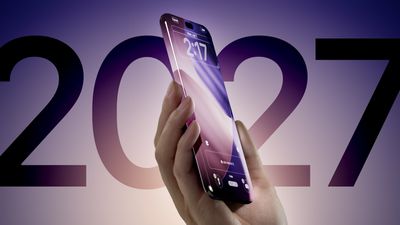
iPhone 20 Pro Display Sizes Leak Ahead of 2027 Launch
Apple's 20th-anniversary iPhone lineup coming next year could feature slightly larger displays than the iPhone 18 Pro models, if a recent leak shared on Weibo is accurate.
Prolific Chinese leaker Digital Chat Station claims that early iPhone 20 Pro display specifications include a 6.41-inch screen with a resolution of approximately 2,686 × 1,236 pixels, while the iPhone 20 Pro Max is said to have a 6.96-inch display with a resolution of around 2,912 × 1,340 pixels.
For comparison, the iPhone 18 Pro and iPhone 18 Pro Max feature 6.27 inches (rounded to 6.3 inches) and 6.86 inches (rounded to 6.9 inches) respectively. Meanwhile, the iPhone 18 Pro and 18 Pro Max resolutions are 2,622 × 1,206 pixels and 2,868 × 1,320 pixels, respectively.
MacRumors Newsletter
Each week, we publish an email newsletter like this highlighting the top Apple stories, making it a great way to get a bite-sized recap of the week hitting all of the major topics we've covered and tying together related stories for a big-picture view.
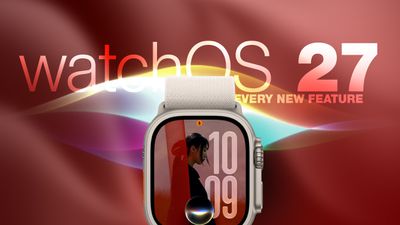
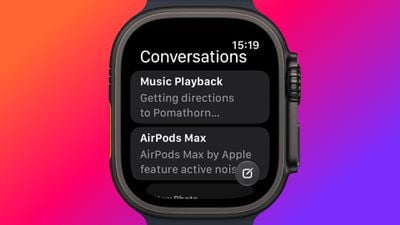
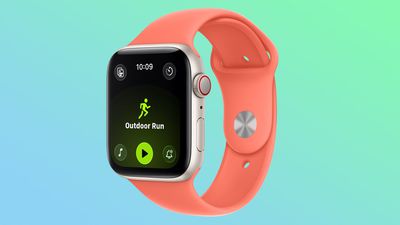
Apple released watchOS 27 on September 14. The features and changes aren't limited to owners of new Apple Watch Series 12 and Apple Watch Ultra 4 models. If you have an Apple Watch model that supports the latest update, here are 12 features and changes to check out after installation.
To do so, open the Watch app on your iPhone, then tap General ➝ Software Update, strap your watch into a charger, and follow the onscreen prompts.
Check Out the Dedicated Siri App
Siri has finally caught up with the AI revolution, and apart from having contextual awareness, it now has an app of its own that collects every conversation in a single view and syncs them privately across your devices over iCloud. Just ask something on your iPhone and you can pick the thread up again on your Apple Watch, as well as pin conversations worth keeping, or even start a new chat directly from your wrist.
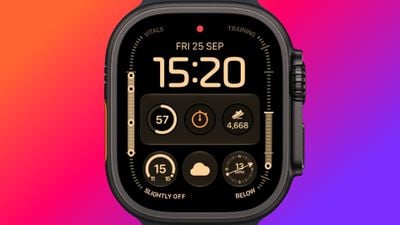
Try Siri Modular Watch Face
The new Siri watch face is a genuinely useful one. Its rectangular complication shows you whatever sits at the top of your Smart Stack, and it automatically updates through the day based on time, location, and other factors.
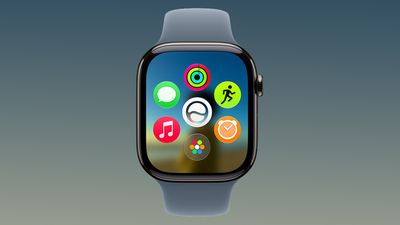
The Dynamic App Grid
Pressing the Digital Crown no longer produces the honeycomb app view by default. Now, watchOS 27 shows a dynamic grid made up of suggested apps, your most-used apps, and your most recently used ones. The Siri app sits in the middle, but the alphabetical list remains available – simply turn the Digital Crown to navigate through all of your apps.
New Tap Gesture
Apple has added a third gesture to Double Tap and Wrist Flick. The new one is simply called Tap. A single tap of your index finger and thumb opens the highlighted widget in the Smart Stack. You can still navigate the Smart Stack with Double Tap and dismiss notifications with Wrist Flick.
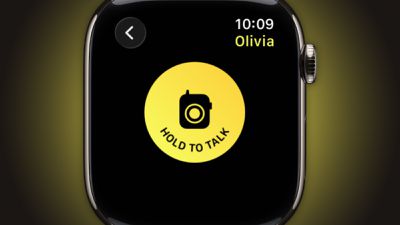
Walkie-Talkie Has Been Deleted
Walkie-Talkie is gone, and not merely hidden. The app is unavailable after updating to watchOS 27 and cannot be reinstalled from the App Store. You can keep the app by staying on watchOS 26, but you won't be able to start a conversation with a contact who has updated.
Live Rewind (Not Yet)
This is the change most likely to catch people out. In watchOS 26 and earlier, a double press of the Digital Crown opens the App Switcher, where you can jump back to the previous app, scroll through recent ones, and swipe to force-quit anything misbehaving.
That's changed in watchOS 27, in which a double press shows the new dynamic app grid instead. The gesture has been reserved for Live Rewind, an upcoming feature (exclusive to Apple Watch Series 12 and Ultra 4) that produces a transcript of the last fifteen seconds of speech in your environment.
Fortunately, the App Switcher will still be available when watchOS 27.2 is released later this year, but it will open with a different gesture. If you're already on the latest beta, simply long press on the bottom of the app that you're in, and that should open the App Switcher.
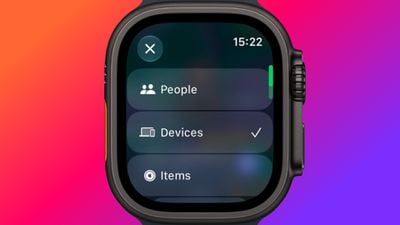
Find My is Now One App
Find Devices, Find Items, and Find People have been folded into a single Find My app with a map-centric layout, which also includes shortcuts for directions and for items nearby.
Workout Buddy No Longer Needs Your iPhone
Introduced in watchOS 26, Workout Buddy previously required your iPhone within range. In watchOS 27, your Apple Watch can run it if Wi-Fi or cellular is available. It also draws new insights from your training history, tracking gradual gains in pace, distance and workout duration, and it now speaks Spanish as well as English.
New Cycle Tracking Features
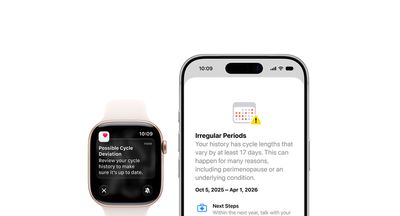
Cycle Tracking in the Health app can now notify you if your logged patterns are suggestive of perimenopause, alongside symptom tracking and educational material. The notifications only draw on your logged cycle history and apply to users aged 40 and over. Apple says the feature is not a method of birth control and is not a diagnosis.
Treadmill Distance Is More Accurate
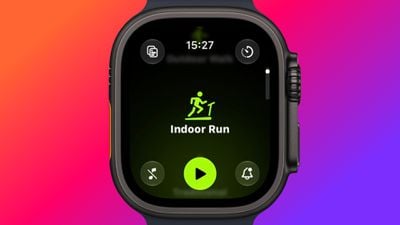
In watchOS 27, new machine learning motion algorithms measure distance more precisely for indoor runs and walks, and Apple says the improvement starts from the first step, as opposed to settling after a few minutes. Fitness route maps are more accurate too, and step counts finally stay in sync between the Fitness and Health apps.
The Smart Stack Gets More to Say
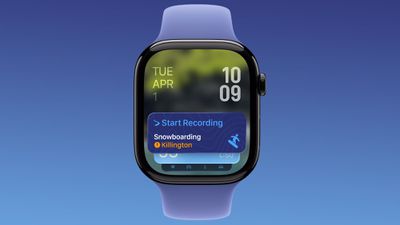
The Smart Stack's contextual suggestions are now a lot smarter. A few examples provided by Apple include new widgets surfacing your parked car's location, a close contact's birthday, a change in your transit card balance, the Noise app immediately after a loud-noise alert, a reminder that Theater Mode is still on, pinned messages, celebrations, and identity cards.
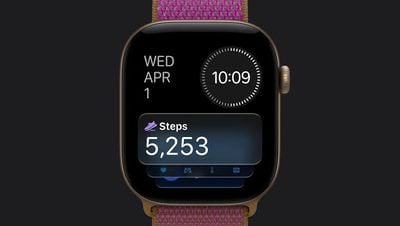
New Models Get a Steps Counter
On Apple Watch Series 12 and Apple Watch Ultra 4, the redesigned pedometer model and S11 chip allow watchOS 27 to provide more accurate step counts. There's also a new Steps complication on the latest models to track your steps in real time, right from your watch face. Will we see the feature come to older devices? Your guess is as good as ours.
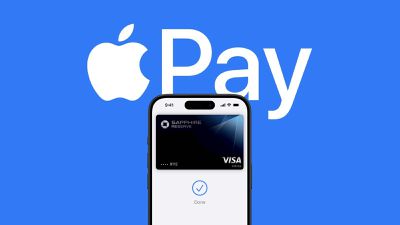
An antitrust lawsuit accusing Apple of blocking tap-to-pay competition is moving forward and will see banks and credit unions able to band together to sue Apple.
U.S. District Judge Jeffrey White this week certified a class in the lawsuit. It will include any U.S. entities that issued any payment card enabled for Apple Pay and paid Apple a fee for Apple Pay transactions on that payment card. He also denied a motion from Apple to exclude expert testimony that plaintiff attorneys allege offers proof Apple has monopoly power over the mobile wallet market.
First filed in 2022, the suit claims Apple illegally collects up to $1 billion annually in fees by preventing rivals from accessing the iPhone's NFC chip to build mobile wallets that would compete with Apple Pay. When an iPhone user buys something with a card linked to Apple Pay, the card issuer has to pay Apple a 0.15 percent fee for credit cards and half a cent for debit cards, according to the lawsuit. If you make a $1,000 purchase via Apple Pay, Apple collects $1.50 from the card issuer.
The complaint alleges that Apple forces card issuers to pay fees by making Apple Pay the only tap-to-pay option. It points to Google's Android, which supports multiple wallets and does not collect a fee from card issuers for contactless payments. It suggests Apple would not be able to continue to charge "substantial fees" if it were forced to support other mobile wallets on Apple devices.
Apple has changed its policies since the lawsuit was filed. As of iOS 18.1, developers are able to offer NFC contactless payments in their apps. Developers have access to the NFC chip in the United States, Canada, Australia, Brazil, Japan, New Zealand, the UK, the European Economic Area, and many other countries.
Attorneys are seeking repayment of the fees card issuers have paid and injunctive relief to "put an end to Apple's policies."
Apple's first foldable iPhone, with a book-style design featuring a 5.4-inch outer display and a 7.6-inch inner display with a minimal crease down the middle.


 iPhone apps with Google Analytics for Firebase integration were briefly crashing on Monday due to an issue with the analytics platform that has since been resolved. Affected apps should no longer be crashing, with no action required from developers.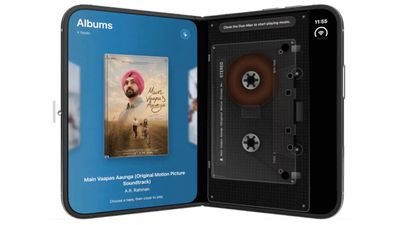

 After releasing
 Image via MacRumors reader
  Image via MacRumors reader
 Note: MacRumors is an affiliate partner with Jackery and Anker. When you click a link and make a purchase, we may receive a small payment, which helps us keep the site running.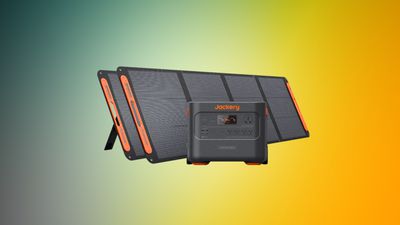
 Note: MacRumors is an affiliate partner with OWC. When you click a link and make a purchase, we may receive a small payment, which helps us keep the site running.


 Note: MacRumors is an affiliate partner with Amazon. When you click a link and make a purchase, we may receive a small payment, which helps us keep the site running.