Amazon today is taking up to $150 off the M5 MacBook Air, with discounts on both 13-inch and 15-inch models. These remain the best prices we've seen on the M5 MacBook Air in the wake of Apple's summertime price hikes.
Note: MacRumors is an affiliate partner with Amazon. When you click a link and make a purchase, we may receive a small payment, which helps us keep the site running.
Amazon has the 16GB/1TB 13-inch MacBook Air for $1,449.00, down from $1,599.00. This one is available in Sky Blue, and it's accompanied by two discounts on the 15-inch M5 MacBook Air.
If you're on the hunt for more discounts, be sure to visit our Apple Deals roundup where we recap the best Apple-related bargains of the past week.
Deals Newsletter
Interested in hearing more about the best deals you can find in 2026? Sign up for our Deals Newsletter and we'll keep you updated so you don't miss the biggest deals of the season!
Bloomberg's Mark Gurman today briefly mentioned that "Apple aims to eventually update its larger HomePod," assuring that the company remains committed to the full-sized speaker, which was discontinued in 2021 and reintroduced in 2023.
The report said a new HomePod mini, new Apple TV 4K, and an all-new Apple smart home hub will all be announced on Tuesday, October 13, but it sounds like a new version of the full-sized HomePod will not be unveiled until a later date. If and when it does finally arrive, expect support for the more intelligent Siri AI to be a key new feature.
Siri AI support would require a faster chip—the current HomePod uses the Apple Watch Series 7's S7 chip. Other likely upgrades include improved audio quality, new color options, and Apple's custom-designed N1 chip with Wi-Fi 7 and Bluetooth 6 support.
The full-sized HomePod is a relatively niche product, but it is a convenient choice for Apple fans with home theater setups. A pair of HomePods can be set as an Apple TV 4K's default audio output, allowing for stereo sound.
In June, Apple raised prices on more than a dozen products, including the full-sized HomePod. In the U.S., the current model is now priced at $349, up from $299 when it was released in 2023. The first-generation HomePod was initially $349 too when it launched in 2018, so the speaker's pricing has come full circle.
Apple apparently plans to expand the HomeKit platform with support for new categories of connected products. The company is also said to be working with third-party manufacturers on new devices designed for the Siri AI-powered smart home platform.
Apple's long-rumored smart home hub will have an iMac G4-style design and a host of unique features, Bloomberg's Mark Gurman reports.
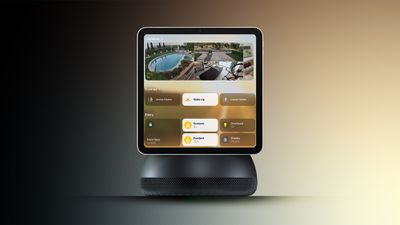
The smart home hub is said to feature a square 6-inch display, with variants that can be placed on a countertop or mounted on a wall. It features a single FaceTime camera on the front, with microphones and speakers in its connected base. Gurman described the design as follows:
The hub is about as thick as an iPhone, and its display is surrounded by a quarter-inch, black bezel reminiscent of older iPads. It has rounded corners and no sharp edges. The device lacks a battery, so it has to be plugged in at all times, and there are no volume or power buttons.
The product comes in Apple's standard gray aluminum finish and includes a USB-C port for power. The screen sits above a metal, round base with multiple rings of perforated speaker holes and connects to it through a polished metal arm. Users can manually tilt the display forward or backward. And the base has a rubberized bottom to help it stay on a table.
The standard version looks reminiscent of the famous iMac G4 from 2002 that has a large display that sits on a half-dome-shaped base.
Apple has also developed a second version, code-named J491, designed to be mounted on a wall. It has a thin, square-shaped base beneath the display that houses the speakers and microphones. The base sits flat on the wall below the screen. This version also must remain connected to power through a USB-C cable.
Apple envisions customers placing several of the devices throughout their homes. Users will be able to control smart home devices, make video calls and intercom-style messages, play audio, and view slideshows of photos. The device will also be able to serve as an information hub for the kitchen, with the ability to watch videos and look up recipes with voice commands.
It will also be able to recognize who is speaking to it or approaching it, and display personalized content and answers accordingly. The interface will change automatically depending on who is using the device, and there will be a mode for visitors that hides personal information.
The smart home hub will identify users by their voice or facial recognition, but the latter system is said to be less reliable than Face ID, and users will be able to enable a secondary authentication method via an iPhone if they wish. The iPhone will also serve as a fallback solution for when the hub cannot identify a user correctly. In dark rooms, a Mac-style Edge Light feature will illuminate the area around the screen to help the camera recognize the user.
The device purportedly blends interface elements of the Apple Watch, Apple TV, and iPad. Siri AI continues to feature the same dark visual style used on other devices. iPhone-style widgets are available and users can choose a wallpaper and rearrange apps and widgets by pressing and holding them, just like Apple's other devices.
The UI is heavily built around slideshows and clock displays, similar to the revamped StandBy Mode on the iPhone Duo. One clock is said to resemble "a lava lamp with an overlay of the time that shows the hour in digital form with minutes listed below." Users can then swipe up from the clock screen or photos to open the app launcher.
The device will include many of Apple's most frequently used apps, including Calendar, Messages, Photos, FaceTime, Notes, Reminders, Music and Podcasts. The Home Screen features Apple Watch-style apps that open into iPad-style interfaces with multiple panels. For example, the Messages app has a two-panel layout like it does on the iPad. When a user taps a thread in their list of conversations, a second pane opens to display the conversation feed. This interface is said to carry over to many of the other default apps.
The device is reportedly set to be introduced on Tuesday, October 13, alongside new HomePod mini and Apple TV models.
Apple plans to introduce a series of new smart home products on Tuesday, October 13, according to Bloomberg's Mark Gurman.
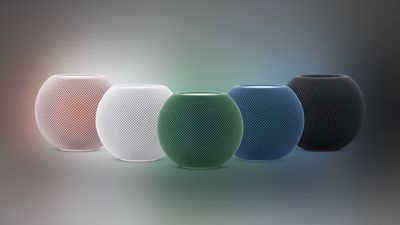
Apple reportedly plans to debut its long-awaited smart home hub device, a new HomePod mini, and a new Apple TV on the date. The new HomePod mini and Apple TV are set to retain their existing designs, but tout faster chips to support Siri AI. The new HomePod mini will also come in new color options, including pink and green.
All three products are set to showcase Siri AI, which apparently explains the delay in their launch. All three were originally planned to launch in 2024.
Apple plans to update the larger HomePod at a later date. A privacy-focused home security camera and sensor is also in the works; the device can detect which room a person is in and does not record video. Apple also continues to work on a higher-end version of the smart home hub, featuring a 9-inch display mounted on a robotic arm that can swivel 360 degrees.
Gurman set out a range of details about the smart home hub device in the report, which we've outlined in another article.
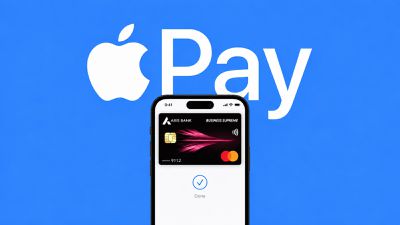
Apple Pay is now available in India, which means customers with an eligible card can add it to the Wallet app on iPhone and Apple Watch for contactless and online payments.
To use Apple Pay in India, users will need an Axis Bank credit card on the Visa or Mastercard network. Earlier today, TechCrunch reported that merchants and payment terminals will need to add Apple Pay support, so the service might not work at every contactless payment location.
RuPay, India's domestic card network, is not compatible with Apple Pay. Major banks such as HDFC Bank, ICICI Bank, and SBI Card have not added support either.
There have been rumors about Apple Pay expanding to India for about a decade, but regulatory issues made it difficult. India already has a popular digital payment option, the Unified Payments Interface (UPI). UPI is a state-backed payment system that allows funds to be transferred instantly between two bank accounts. UPI handles approximately 84 percent of India's digital transaction volume, and it does not work with Apple Pay.
OpenAI today announced the launch of "Dots" to compete with Meta's popular Muse agent. OpenAI describes Dots as always-on agents "built to handle everything."
Dots use the GPT–6 Astra model and have a cloud computer with a web browser, much like Muse. The agents learn from feedback over time, and OpenAI says they can work on the user's goals "24/7" and connect to over 4,000 apps. From the announcement:
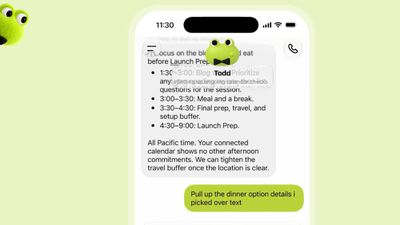
You can ask questions, explore ideas, and give feedback along the way; or you can simply hop on a voice call when you need to talk something out. The more you work together, the more your dot learns your preferences, how you think, and what good looks like to you.
Users can communicate with Dots through ChatGPT or other apps like Slack or Teams, and options to text Dots are planned. Dots can carry context across different channels and will do "proactive research" on projects in the background. Dots follow ChatGPT's permissions and support custom rules for which tasks require approval.
Users can create a "primary dot" and name it starting today, with teams of Dots coming later. Dots are rolling out for Pro, Business Premium, and Enterprise plans in select markets, with other users to get access soon.
Eligible users get one Dot at no extra cost. Conversations with the agent don't count toward ChatGPT usage limits, but tasks will use plan allowances. Dots can be set up in the ChatGPT desktop app and accessed in the mobile app afterward.
OpenAI also introduced GPT–6.1 Sol today, which it says is a major upgrade to GPT–6 Sol with improvements in agentic coding, computer use, and professional work.
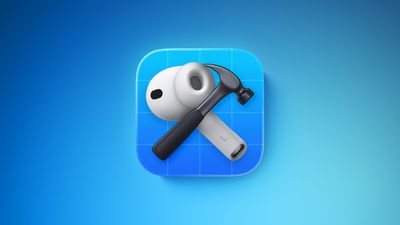
Repair site iFixit today took apart Apple's AirPods 5 for one of its traditional teardown videos. It turns out the new AirPods are slightly more repairable than prior models, but it's still not a simple home fix.
The AirPods 5 use pronged batteries that Apple previously used in the AirPods 3, but not the AirPods 4. The battery can be removed with a "nifty pair of tongs," and iFixit says the component is "intuitive to unplug." When the AirPods 3 used the pronged battery, there was no easy way to get into the earbud, but the AirPods 5 are easier to pry open.
iFixit was able get into the AirPods 5 with a hair dryer to heat the adhesive and a clamp to hold the earbud in place. The left and right earbuds use different batteries with reversed polarity, so the battery from a left AirPod can't be swapped into a right AirPod, and vice versa.
While the earbuds have a better repair score, iFixit said the case is "still a disaster" and difficult to get into without destroying it.
iFixit gave the AirPods 5 a repairability score of 2/10, up from the 0/10 score all previous versions have earned. The site says "skilled technicians and even intrepid DIYers" should be able to replace the AirPods batteries "with a decent success rate."
Some iPhone 18 Pro owners have noticed an unusual crackling sound coming from the speaker of the device, leading to complaints on the MacRumors forums and Reddit.
Users have called it a crackle, a faint tick or pop, or random clicking. Many say the problem is with the earpiece speaker, and both the iPhone 18 Pro and iPhone 18 Pro Max appear to be affected.
Some people hear the sound consistently, while others hear it during app use, scrolling websites, when receiving notifications, when the keyboard pops up, or when making a call using a cellular connection. On affected units, reports suggest toggling Airplane Mode on and off triggers the sound, as does adjusting screen brightness quickly.
Apple released iOS 27.0.1 yesterday to fix a bug that could cause iPhone 18 Pro models to restart when Face ID authentication fails. The release notes didn't mention a speaker fix, and early feedback says the update did not help.
There are reports from people who returned their iPhone 18 Pro models only to get a second iPhone with the same issue. It's not clear what's causing the problem, but if it is a bug, a future software update may address it.
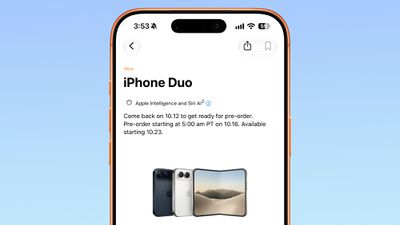
Get Ready lets users select a preferred color and capacity, confirm their carrier status, choose accessories, choose an AppleCare+ plan, select a trade-in, add a payment method, and set a shipping and billing address.
When pre-orders go live, Get Ready is helpful because it allows for one-tap ordering. It will be especially beneficial for the iPhone Duo because supplies are expected to be limited.
Pre-orders could sell out within minutes given reports of production issues leading to supply constraints, and users who have Get Ready will be able to submit orders faster.
iPhone Duo pre-orders will begin on Friday, October 16 at 5 a.m. Pacific Time or 8 a.m. Eastern Time. The device will launch on Friday, October 23. Pricing starts at $1,999.
India already has a popular Unified Payments Interface (UPI) system for digital payments, so the initial rollout of Apple Pay in the country is expected to be limited. HDFC Bank, ICICI Bank, and SBI Bank/SBI Card are not expected to support Apple Pay at launch, the report said.
Apple today released new beta firmware for the AirPods Pro 2, AirPods Pro 3, AirPods 4, AirPods 5, and AirPods Max 2. The firmware has a build number of 9B5042a and is rolling out for developers and public beta testers.
There's no word on what's included in the firmware update because Apple doesn't offer notes for AirPods beta releases.
When the AirPods are connected to an iPhone, iPad, or Mac running iOS 26, iPadOS 26, or macOS 26 or later, there is a beta firmware option that can be accessed in the AirPods settings interface. Toggling on beta updates allows users to install the beta firmware.
Firmware updates can then be downloaded by connecting the AirPods to an Apple device and connecting them to power. It can take a few hours for new firmware to be installed because there is no software update option like there is for other Apple devices.
The six-step guide covers balancing screen time with sleep, exercise, schoolwork, and time with friends and family. It has advice on getting kids on board with screen time limits and using the different parental control features. From Apple's announcement:
Start a conversation about screen time, with tips for parents to approach the topic and establish expectations in a way that helps kids feel included in the plan.
Create a Child Account, which enables age-based safeguards and gives parents access to parental controls to manage their child's experience.
Set safety settings for websites and apps, including Ask to Buy and Ask to Browse, so families can review new apps and websites together.
Make a schedule for device use, using Time Allowances and Schedules to balance time online with sleep, schoolwork, physical activity, and time with family and friends.
Manage communications, with parents deciding who their child can communicate with and Communication Safety, on by default for all users under 18, helping protect kids from viewing or sharing sensitive content.
Continue the conversation as kids grow, with guidance on adjusting the family's plan over time.
The guide includes the AAP's recommendations on screen time by age group, from infants to teens, along with strategies to help children develop healthy screen time habits.
Apple added new parental control options and an overhauled version of Screen Time in iOS 27. Parents can choose which apps children can access, monitor and control website access, keep tabs on approved contacts, and set different screen time schedules based on time of day. Using the new version of Screen Time requires all devices in a Family Sharing group to be running iOS 27, iPadOS 27, macOS 27, watchOS 27, and visionOS 27.
The guide comes as Apple deals with regulatory pressure over child safety in countries like the UK, U.S., and Australia.
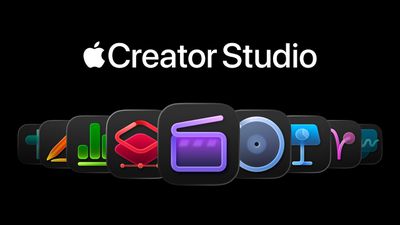
Final Cut Camera, Apple's professional iPhone filming app, now supports the variable aperture feature on the iPhone 18 Pro. Users can tweak aperture and select between aperture priority and shutter priority modes, plus there's support for Cinematic mode effects for video. Apple says the app was also redesigned from the ground up to give creators easy access to pro settings like shutter angle, ISO, and white balance.
There are customizable overlays with false color and clipping indicators for exposure and improved focus peaking with sensitivity control. A tally light activates when recording is happening, and there's a two-finger tap gesture for clearing the viewfinder to focus on the shot. Other new features include support for professional video scopes, clean SDI out, and genlock offset.
Pages, Numbers, and Keynote all have new templates and themes to choose from, along with better tools for collaboration. Keynote supports intelligent slide generation and Numbers has trigonometry, statistics, and logic functions for solving complex problems in a spreadsheet. Pages for Mac has a Screen View that optimizes content for reading and writing.
Pixelmator Pro for iPad has new template collections on Mac and iPad for launching ideas, businesses, or products. There's a Podcasts category with cover artwork options. The iPad app also adopts Select and Mask from the Mac app for precise mask and selection refinements.
Final Cut Pro and Motion on Mac have a new option to add Cinematic mode effects to video captured on the iPhone 18 Pro, so users can adjust focus points and depth of field in the Final Cut Pro timeline. Compressor supports converting video with Cinematic mode effects back into the previous Cinematic mode format, and it has new HEVC and MPEG–4 export presets.
Freeform includes automatic Dark Mode support for boards, folders for better organization, and support for Writing Tools. With Writing Tools, Apple Intelligence is able to rewrite, proofread, and summarize handwritten notes. In visionOS 27, the Vision Pro version of Freeform lets users pull multiple items from a board into their space, with multiple users able to view 3D models together as a group.
All of the updates are available today. Apple Creator Studio is priced at $12.99 per month and it gives access to all of Apple's creative apps like Final Cut Pro, Logic Pro, and Pixelmator Pro. In free apps like Numbers, Pages, and Keynote, it adds premium features that are not available in the free apps.
In a July 2026 letter addressed to U.S. Representative Jamie Raskin (D-MD), Apple said its decision to remove ICEBlock and similar apps that crowdsourced the real-time locations of U.S. Immigration and Customs Enforcement (ICE) agents from the App Store was "prompted by concerns" about "agent safety," according to CNN's Clare Duffy.
The report said the app removals were "prompted by concerns — including those raised by the Trump administration — about agent safety following a fatal shooting that left two detainees dead at a Dallas Immigration and Customs Enforcement office."
Apple removed ICEBlock from the App Store in October 2025, leading Raskin to launch an investigation into the U.S. Justice Department's apparent role in the removal of the apps from the App Store and Google's Play Store, the report said. Apple's letter responding to Raskin had not previously been reported, according to CNN.
When it removed ICEBlock from the App Store, Apple said that the app violated guideline 1.1.1 of its App Review Guidelines:
Information provided to Apple by law enforcement shows that your app violates Guideline 1.1.1 because its purpose is to provide location information about law enforcement officers that can be used to harm such officers individually or as a group. For this reason, your app will be removed from the App Store.
ICEBlock has not returned to the App Store.
Note: This discussion thread is located in our Political News forum with special rules.
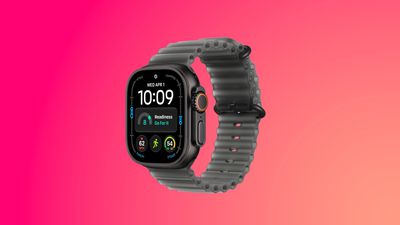
The new Apple Watch Ultra 4 just launched this month, and Amazon is offering the first cash discounts on select models. You can get the Apple Watch Ultra 4 for $779.99, down from $799.00.
Note: MacRumors is an affiliate partner with some of these vendors. When you click a link and make a purchase, we may receive a small payment, which helps us keep the site running.
If you're shopping for the new Apple Watch Series 12, Amazon also has a few markdowns on these devices. You can get the 42mm GPS Series 12 for $389.99 and the 46mm GPS Series 12 for $439.99, both of which are $9 discounts and the best prices we've seen yet.
If you're on the hunt for more discounts, be sure to visit our Apple Deals roundup where we recap the best Apple-related bargains of the past week.
Deals Newsletter
Interested in hearing more about the best deals you can find in 2026? Sign up for our Deals Newsletter and we'll keep you updated so you don't miss the biggest deals of the season!
In macOS 27 Golden Gate, Siri AI is a lot smarter than before, so it doesn't always flail and attempt to hand your questions over to ChatGPT. However, if you still prefer OpenAI's chatbot for certain queries, you can still ask for it explicitly.
In macOS Tahoe, Siri would suggest passing a request to ChatGPT when it thought the chatbot could help. In macOS 27 though, ChatGPT only answers when you specifically ask it. There's also no setting that makes ChatGPT your default assistant – as things stand, you need to choose it for each query. Here's how it's done.
Turn On the ChatGPT Extension
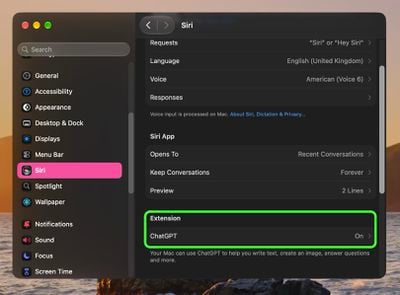
Open System Settings.
Click Siri in the sidebar.
Click ChatGPT under "Extension."
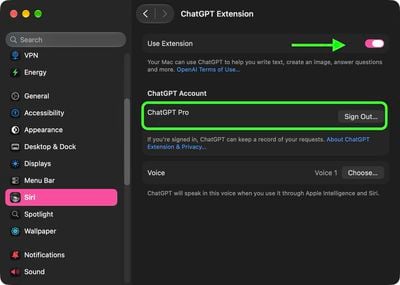
Turn on Use Extension.
Choose whether to sign in with a ChatGPT account.
If you sign in, your requests are saved to your ChatGPT chat history (OpenAI's privacy policies apply). If you skip sign-in, OpenAI receives nothing tied to your Apple Account and it can't store your requests.
Ask ChatGPT in Search or Ask
Press Command-Space to open the Search or Ask bar (formerly Spotlight Search).
Right-click (or Control-click) the field.
Choose Ask ➝ Use ChatGPT.
Type your question, then press Enter.
When an answer comes back, unless there are follow-up questions, the field will switch back to Siri AI for the next query. So if you want to use ChatGPT again, you'll need to manually choose it next time around.
Another way to query ChatGPT directly is to start your spoken Siri request with "ask ChatGPT." The same phrasing works if you type it into the Search or Ask field.
ChatGPT is the only option for now in Golden Gate. Code in macOS 27 suggests that Claude can appear in the same Ask menu, but Apple has yet to make AI provider selection available.
Emergency SOS via satellite is now available in Norway, according to an Apple support document updated today.
Available on the iPhone 14 and newer and the Apple Watch Ultra 3 and newer, Emergency SOS via satellite lets you text emergency services when you are in a supported area without Wi-Fi or cellular connectivity. In Norway, the feature requires iOS 26.4 and watchOS 26.4 or later. Apple warns that satellite connectivity might not work in places above 62° latitude.
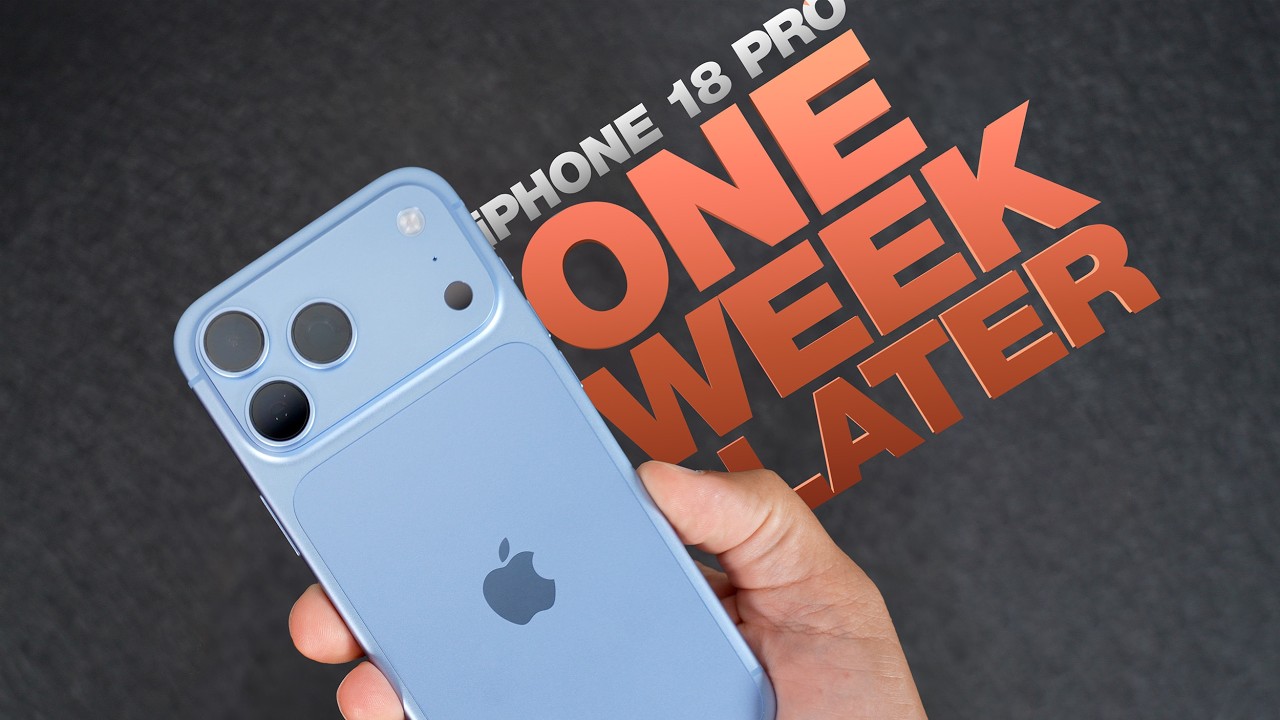
Apple's first foldable iPhone, with a book-style design featuring a 5.4-inch outer display and a 7.6-inch inner display with a minimal crease down the middle.


 Note: MacRumors is an affiliate partner with Amazon. When you click a link and make a purchase, we may receive a small payment, which helps us keep the site running.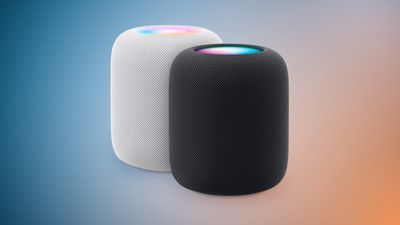






 Note: MacRumors is an affiliate partner with some of these vendors. When you click a link and make a purchase, we may receive a small payment, which helps us keep the site running.

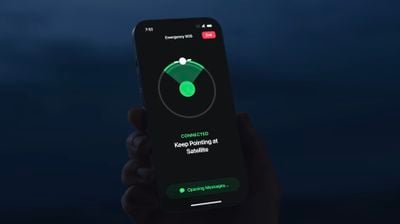 Emergency SOS via satellite is now available in Norway, according to an