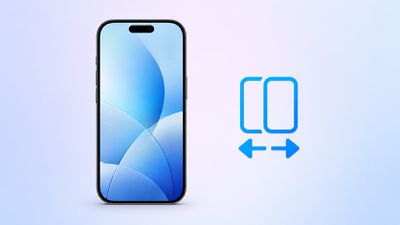
Apple last week announced that Verizon and EE will support iOS 27's new iPhone Handoff feature later this year. The feature allows you to switch between any two iPhones running iOS 27 while using the same phone number on each device.
Apple's press release for the iPhone Duo last week said the device will ship with iOS 27.1, which essentially confirms the software update's release timing.
iPhone Duo launches on Friday, October 23, so we can expect iOS 27.1 to be released by that date at the latest — likely several days earlier.
During its iPhone event last week, Apple announced that Siri AI will be available in French, Japanese, Korean, Portuguese, and Spanish starting in October, and this expanded language support beyond English will likely arrive with iOS 27.1 based on that timeframe, as the software update itself will likely be released in October.
Apple recently said that two new features will not be available in the initial iOS 27 release, including suggestions like "Add to Reminders" and "Add to Notes" in the Messages app and the ability to automatically fix compromised passwords with a single tap in the Passwords app. Apple merely said these features will arrive in a "future software update," and iOS 27.1 will likely be the earliest opportunity for that to happen.
And of course, iOS 27.1 supports the iPhone Duo's unique foldable interface.
This is all that is known for now, but we expect iOS 27.1 to include other new features, bug fixes, and security fixes, so stay tuned.
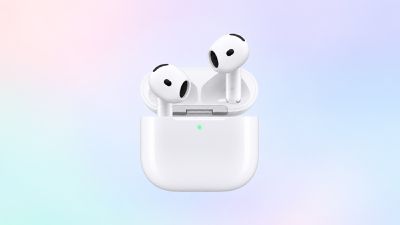
Apple announced the AirPods 5 earlier this month, giving its entry-level earbuds Active Noise Cancellation (ANC) as standard for the first time. The AirPods 5 start at $129, a $149 model adds a Wireless Charging Case, and both versions arrive in stores on Friday, September 18.
The launch also resets the way Apple tiers its cheapest earbuds. With the AirPods 4, the $50 step up from $129 to $179 bought ANC along with a wireless charging case. With the AirPods 5, noise cancellation comes at the entry price and now there is only a $20 step up to the next tier.
Apple has stopped selling both versions of the AirPods 4 directly, but they remain widely available from third-party retailers, where the standard model has already dropped to $99 and the ANC model to $149.
Here's everything that differs between the AirPods 4 and the AirPods 5:
AirPods 4 (2024)
AirPods 4 With ANC (2024)
AirPods 5 (2026)
AirPods 5 With Wireless Charging Case (2026)
Active Noise Cancellation
Active Noise Cancellation that removes up to 50% more external noise
Active Noise Cancellation that removes up to 50% more external noise
Transparency mode
Improved Transparency mode
Improved Transparency mode
Adaptive Audio
Adaptive Audio
Adaptive Audio
Conversation Awareness
Conversation Awareness
Conversation Awareness
Adaptive EQ
Adaptive EQ
Redesigned acoustic architecture and updated Adaptive EQ
Redesigned acoustic architecture and updated Adaptive EQ
Studio-quality audio recording
Studio-quality audio recording
Live Translation
Live Translation
Live Translation
Force sensor
Force sensor
Force sensor
Force sensor with swipe volume controls
Up to five hours of listening time on a single charge
Up to four hours of listening time on a single charge with Active Noise Cancellation enabled (up to five hours with noise control off)
Up to four hours of battery life on a single charge with Active Noise Cancellation enabled (up to six hours with noise control off)
Up to five hours of battery life on a single charge with Active Noise Cancellation enabled (up to seven hours with noise control off)
Up to 30 hours of listening time with the charging case
Up to 20 hours of listening time with the charging case with Active Noise Cancellation enabled (up to 30 hours with noise control off)
Up to 20 hours of battery life with the charging case with Active Noise Cancellation enabled
Up to 22 hours of battery life with the charging case with Active Noise Cancellation enabled
Charging Case (USB-C)
Wireless Charging Case (USB-C) with support for the Apple Watch charger and Qi-certified chargers
Charging Case (USB-C)
Wireless Charging Case (USB-C) with support for the Apple Watch charger and Qi-certified chargers
The AirPods 5 retain the H2 chip that debuted in the AirPods Pro 2 back in 2022, rather than the new headphone chip that had been rumored, and they retain Bluetooth 5.3, the same open-ear design, the same custom high-excursion driver and high dynamic range amplifier, and identical dimensions and weight down to the gram. Personalized Spatial Audio, Adaptive EQ, Voice Isolation, Personalized Volume, and Siri Interactions all came to the AirPods 4 two years ago.
Noise cancellation is the headline upgrade, and now included regardless of which 2026 model you choose. Apple says the AirPods 5 remove up to 50% more external noise than the AirPods 4 with ANC, which it attributes to a redesigned acoustic architecture, and the same architecture underpins the claims of richer sound and a more natural Transparency mode. Durability improves from IP54 to IP57, so the earbuds and case are now rated for immersion rather than just splashes. Studio-quality audio recording is also new.
Should You Upgrade?
If you already own the AirPods 4 with ANC, there is not a strong case to upgrade. You already have Adaptive Audio, Transparency mode, Conversation Awareness, Live Translation, a wireless charging case with a Find My speaker, and the same H2 chip, so the $149 model would give you stronger noise cancellation, a higher IP rating, an extra hour of listening time, and swipe volume controls.
The case is stronger if you own the standard AirPods 4. Noise cancellation, Transparency mode, Adaptive Audio, Conversation Awareness, and Live Translation are all missing from that model, and the AirPods 5 add every one of them at the same $129 you paid two years ago. The same goes for anyone still using the AirPods 3 or AirPods 2, where the jump also brings the newer fit, the H2 chip, USB-C, and Personalized Spatial Audio.
For new buyers, the AirPods 5 are the clear default choice. The AirPods 4 are the better value option only when heavily discounted.
The open-ear fit remains the real dividing line in the lineup. If you want genuine isolation, want to use hearing health features, or want heart rate sensing during workouts, the $249 AirPods Pro 3 are still the earbuds to buy. By contrast, if in-ear tips irritate you or you want to stay more aware of your environment, the AirPods 5 now offer a far more capable version of the design you will prefer.
Both AirPods 5 models are available to pre-order now ahead of their release on Friday, September 18. AirPods frequently see hefty discounts on Amazon and other third-party retailers, so it is always worth seeking the best price using our Deals roundup.
Which AirPods 5 Model to Buy?
The difference between the two AirPods 5 models is significant despite the $20 gap. The Wireless Charging Case works with Qi chargers and the Apple Watch charger, contains a speaker that makes it much easier to find in the Find My app, and comes with an extra hour of listening time on a charge and two extra hours across the case.
The $149 model is clearly the one to buy for most people, unless the AirPods are a secondary device or one that isn't going to be used often. Jumping up to the higher-end model only costs $20, which is a relatively small amount of money for the number of enhancements.
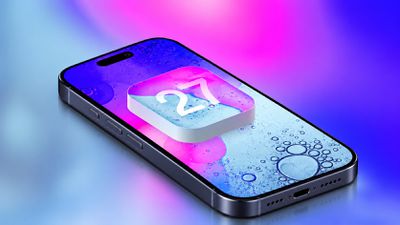
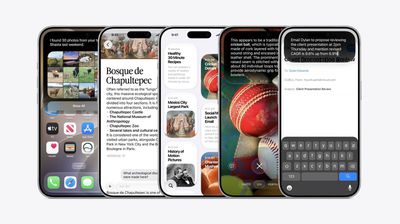
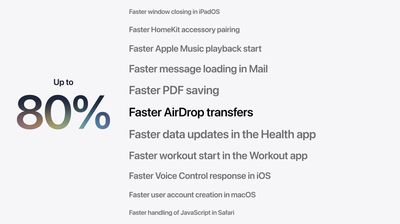
Below, we have highlighted eight new features and changes coming with iOS 27, with the main attraction being a major revamp of Siri.
iOS 27 is compatible with the iPhone 11 series and newer, but Siri AI and other Apple Intelligence features are limited to the iPhone 15 Pro and newer.
New Features
Siri AI
The classic version of Siri has always been useful for basic actions like setting a timer and checking the weather, but it has notoriously struggled with more advanced requests over the years. That all changes with iOS 27, which features a much more intelligent and personalized version of Siri named Siri AI.
Siri AI is essentially a ChatGPT-like version of Siri that can answer pretty much anything. iOS 27 introduces a dedicated Siri app, or you can continue to invoke the assistant by pressing and holding the iPhone's side button. Given it is powered by Apple Intelligence, Siri AI requires an iPhone 15 Pro or newer.
Siri AI can draw on your personal information stored on your iPhone, has on-screen awareness, and can perform actions in more apps that support it.
Apple said Siri AI is limited to English to start, and the feature will be subject to daily usage limits, with expanded access to be available for a fee in the future. Siri AI will not be initially available in the EU on iOS 27, iPadOS 27, and watchOS 27, as Apple is in a regulatory battle with the European Commission.
More Apple Intelligence Features
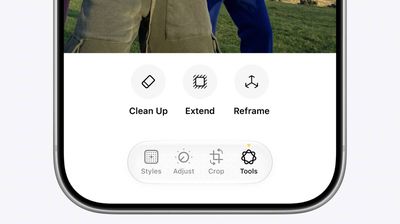
Other new Apple Intelligence features on iOS 27 include new "Extend" and "Reframe" options in the Photos app, the ability to generate "photorealistic" images in the Image Playground app, the ability to create new shortcuts in the Shortcuts app by simply describing them, generated video descriptions for HomeKit Secure Video cameras, and more.
Liquid Glass Design Changes
Apple introduced a new Liquid Glass design on iOS 26, and it has further refined the interface on iOS 27. Apple says Liquid Glass now has "more uniform refraction and improved contrast," and app icons are "sharper and more detailed."
A new slider lets you adjust how clear or tinted Liquid Glass looks.
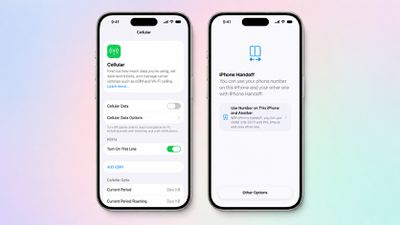
Apple has added a new iPhone Handoff feature to iOS 27 that allows you to switch between two iPhones while using the same phone number on each device.
iPhone Handoff requires support from carriers, which may charge a fee for the feature. T-Mobile in the U.S. and Deutsche Telekom in Germany will be the first carriers to offer iPhone Handoff, with T-Mobile set to charge $5 per month for it. Apple said Verizon and the UK's EE plan to offer the feature by the end of the year, with more carriers to follow.
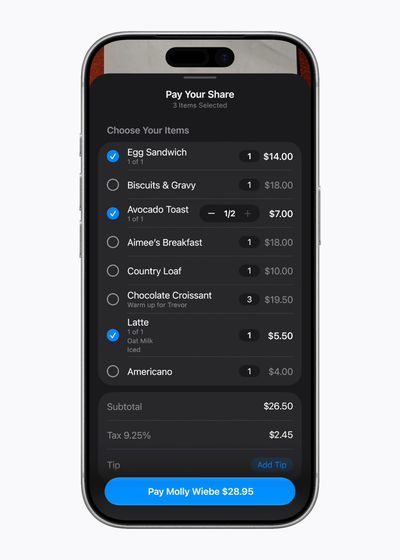
In the U.S. only, iOS 27 allows you to split bills with a new feature powered by Apple Cash and Apple Intelligence. This capability is available in the Apple Wallet and Messages apps, or by using the new Siri mode in the Camera app.
"When users point their iPhone at a receipt using Siri mode, it can surface the relevant action to split a bill with Apple Cash and identify the items on the receipt," said Apple. "As users select their items, their total payment is calculated, including their share of tax and tip, so they can pay back exactly what they owe with Apple Cash."
Hide Location in Find My
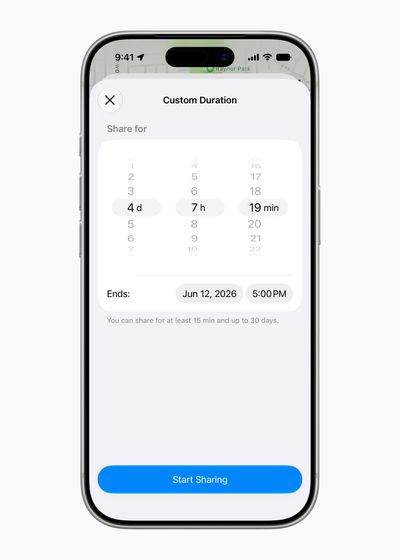
In the Find My app, you can now share your location with others for a custom duration, such as four days and six hours. Or, you can set a set an exact date and time for your location sharing to expire. In addition, you can now pause your location sharing with specific people until the end of the day, without them knowing. The ability to hide your location is meant for things like planning a surprise birthday party for your spouse.
On iOS 26 and earlier, there are only three preset timeframes available for Find My location sharing: indefinitely, until end of day, and one hour.
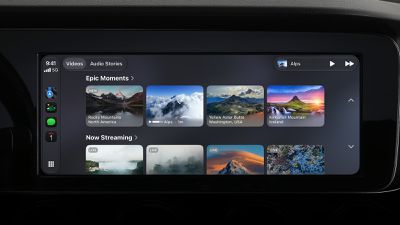
In a WWDC 2026 video aimed at developers, Apple said the CarPlay video feature is available in new vehicles that support it. When playing a video in an iPhone app that supports AirPlay video streaming, users can select the car's display from the AirPlay menu on iOS and watch the video on a compatible vehicle's screen.
New in iOS 27, Apple is allowing developers to create CarPlay apps with video browsing capabilities, so you can find videos to watch right on CarPlay.
This feature can keep you entertained while you are not driving. For example, Apple said you may use it while waiting in your car at the airport, or charging your electric vehicle. For safety reasons, video playback is only enabled when the vehicle is parked.
CarPlay video will likely roll out in new vehicles over time, so stay tuned.
Compatible iPhones
The following iPhone models are compatible with iOS 27:
Apple's new iPhone 18 Pro and iPhone 18 Pro Max launch this Friday, September 18, and if you've already got your pre-order in, it's time to start shopping for accessories for the new device. We've already recapped the best iPhone 18 Pro cases available to order, so today we're looking at all of the best charging accessories compatible with the latest iPhones.
Note: MacRumors is an affiliate partner with some of these vendors. When you click a link and make a purchase, we may receive a small payment, which helps us keep the site running.
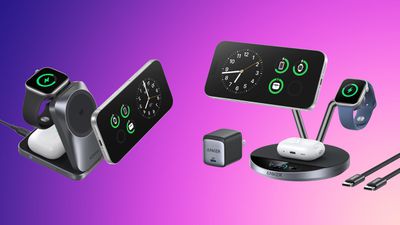
A highlight of the sales is Twelve South's HiRise 2 Deluxe, which is down to $64.00 on Amazon, from $79.99. This device can charge an iPhone 18 Pro and AirPods simultaneously, and this sale is available in the Glacial Blue color option.
For Anker's best chargers, the popular 3-in-1 Prime Foldable MagSafe Charger has returned to its all-time low price of $99.73, down from $149.99. It's available in both Radiant White and Phantom Gray colors at this price.
Another notable accessory company hosting iPhone 18 accessory discounts is Hyper, with 20 percent off a collection of wall chargers, wireless chargers, and more. You can get this discount by adding any item from this landing page to your cart then entering the code APPLE20 at checkout.
If you're on the hunt for more discounts, be sure to visit our Apple Deals roundup where we recap the best Apple-related bargains of the past week.
Deals Newsletter
Interested in hearing more about the best deals you can find in 2026? Sign up for our Deals Newsletter and we'll keep you updated so you don't miss the biggest deals of the season!
iOS 27 code reveals a wave of new Hermès MagSafe wallet designs featuring Find My support, alongside a dedicated attachment animation for the accessories.
The code sleuth known as "pdfu" shared the findings on X, revealing new bandana print card holders in purple, brown, and orange, new tartan stitched designs in purple and brown, plain leather versions in navy and burgundy, a crocodile embossed style, and more. This represents a major expansion of Hermès' MagSafe wallet selection.
iOS 27 RC adds a dedicated Hermès MagSafe wallet attachment animation. There are also new wallet styles with Find My support. pic.twitter.com/oicAPgYQbD
— pdfu (@itspdfu) September 12, 2026
Alongside the new designs, pdfu said that the iOS 27 release candidate adds an animation specifically for Hermès MagSafe wallets, distinct from the standard Apple MagSafe accessory animation that plays for other wallets. The leaker's post shows how the animation appears when a wallet is attached.
Hermès currently sells around half a dozen MagSafe card holder designs through its online store, including the silk Bandana Eperon d'Or, Jean patch, Pencils, and Chaine d'Ancre styles, alongside the Swift calfskin Lad print, with pricing ranging from $510 for the silk designs up to $1,025 for Lad.
Find My support enables owners to locate the wallet in the Find My app and get a notification if it has been left behind.
Apple's own FineWoven Wallet with MagSafe and Find My costs $59. The company recently introduced new color options, and other than the switch from leather to its FineWoven material, the design of the accessory has remained the same since 2020.
Cultured Code today released Things 3.24, adding integration with iOS 27's new Siri AI and system-wide Spotlight search.
The most significant addition is full support for Siri AI, allowing users to create to-dos by speaking naturally to add tasks. Once a to-do is created, users can continue the conversation to append notes, start dates, and alerts without opening the app.
Things 3.24 also indexes a user's entire database in Spotlight, allowing to-dos and projects to be surfaced through system-wide search. Siri AI can draw on that same Spotlight index to fulfill requests. Users who would prefer to keep their task data out of system search can turn the feature off in Things' settings.
The update brings a wider range of snooze intervals for notifications, adding 15 minute, one hour, and three hour options alongside a new "snooze until tomorrow" choice.
Cultured Code also adds an XL Portrait widget, giving users a way to view longer lists directly from the Home Screen. The update includes various other compatibility improvements for the new operating system.
Things 3.24 arrives alongside iOS 27, which Apple launches later today.
Amazon and Best Buy this week have multiple discounts on the M4 iPad Air, providing up to $149 off these 2026 models. These remain the best prices we've seen in the wake of Apple's summer price hikes.
Note: MacRumors is an affiliate partner with Amazon. When you click a link and make a purchase, we may receive a small payment, which helps us keep the site running.
You'll find savings on both the 11-inch and 13-inch models of the M4 iPad Air, with the biggest markdown found on the 1TB Wi-Fi 13-inch tablet. All of these discounts have been automatically applied and do not require a coupon code or a special membership.
The new iPad Air features the M4 chip, C1X modem, and N1 networking chip, which brings support for Wi-Fi 7 and Bluetooth 6. In terms of design, the 2026 models are identical to the 2025 iPad Air tablets, with an edge-to-edge display, slim bezels, and aluminum chassis.
If you're on the hunt for more discounts, be sure to visit our Apple Deals roundup where we recap the best Apple-related bargains of the past week.
Deals Newsletter
Interested in hearing more about the best deals you can find in 2026? Sign up for our Deals Newsletter and we'll keep you updated so you don't miss the biggest deals of the season!
Apple is working on a sweeping retail overhaul that would bring back dedicated Genius Bars to its stores, carve out new spaces for order pickup and Today at Apple classes, and do away with oversized video walls, according to Bloomberg's Mark Gurman.
In this week's "Power On" newsletter, Gurman said that Apple intends to speed up store renovations over the coming years. Apple plans to rework the "Avenue," its term for the side sections of a store where accessories and services are displayed, reinstate standalone Genius Bars, and remove the large video screens installed in many locations.
Pickup and Today at Apple, which typically share a counter and a seating area today, will each get their own compact section along the Avenue, described internally as a "bay" and measuring about 10 feet across.
For pickup, Gurman described plans for an all-wood bay with a faint Apple logo worked into the upper section, with lockable drawers underneath for holding customer orders, fronted by a counter where staff can hand items over. The Today at Apple bay will feature a similar look, topped by a display similar to a large television, with drawers below for stashing iPads, laptops, and other class equipment, plus a fixed instructor table and stools nearby.
The video walls being phased out trace back to the retail vision pursued under former retail chief Angela Ahrendts, who treated Apple stores as public gathering places rather than purely transactional spaces. Gurman frames the current shift as a move away from that toward stores built primarily around service, fulfillment, and everyday shopping needs.
Where those screens come down, most stores will gain a wood finished Genius Bar built to echo the design Apple used before it introduced the open plan "Genius Grove." It includes counters set at two different heights for accessibility, backed by a wall of storage drawers and large product imagery. Gurman added that both the new bars and the Avenue bays are meant to look as though they always belonged in the store, rather than as visible retrofits, and that many renovated locations will also see their break rooms and other back-of-house areas refurbished.
Elements of the redesign are already live in a small number of stores around the world. Gurman expects the fuller version of the proposed store overhaul to reach most newly opened and renovated stores gradually, with the international rollout continuing over several years.
Separately, Gurman reports that Apple has tightened expectations for staff during pre-opening meetings, with employees to be more firmly required to stay on their feet, put away phones and drinks, and remain attentive. Once doors open to customers, timed for five minutes ahead of the posted hour, every staff member on site is expected to applaud as the first shoppers walk in.
iPhone 18 Pro and iPhone 18 Pro Max pre-orders began on Saturday, September 12 at 5 a.m. Pacific Time in the U.S. and many other countries. If you have yet to place a pre-order, though, your wait time will likely be longer at this point.
The first customers who pre-ordered right when pre-orders began will have their devices delivered on Friday, September 18 launch day. If you place your order today, though, all iPhone 18 Pro iPhone 18 Pro Max configurations on Apple's online store in the U.S. currently have estimated delivery dates of September 29 to as late as October 13.
Apple Store pickup may still be an option for September 18 depending on your desired configuration, and some carriers and resellers like Best Buy may still have stock available for launch day, so you might not be entirely out of luck.
Here are the delivery dates shown as of Monday, September 14 at 11:30 a.m. Pacific Time.
iPhone 18 Pro
All Colors and Storage Capacities: September 29 - October 6
iPhone 18 Pro Max
All Colors and Storage Capacities: October 6 - October 13
Inventory may continue to tighten for both delivery and Apple Store pickup over the coming days.
iPhone Duo pre-orders begin Friday, October 16 at 5 a.m. Pacific Time.
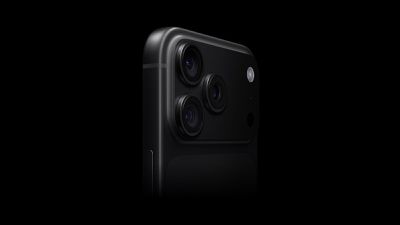
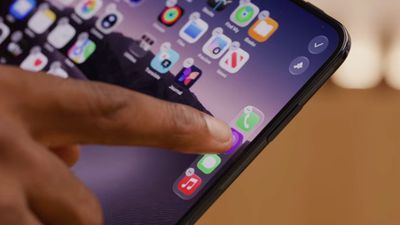
It looks like the iPhone Duo's vertical Dock can currently only house four apps maximum. In his hands-on with the device, Marques Brownlee attempted to add a fifth app to the Dock, but was unable to do so. Apple does not mention the four-app limit in its tech documentation, but those hoping to add a fifth or sixth app to it may be out of luck.
For the iPhone Duo, Apple made the Dock vertical along the right of the screen, with unused space at either end of it. It will likely take some getting used to for iPhone users – especially left-handed ones. We don't know if Apple will provide a left-handed mode for the rest of us.
Code sleuth "pdfu" has uncovered iOS 27 and macOS Golden Gate private frameworks that show Apple has designed its new Siri architecture to work with third-party AI models at what appears to be a surprisingly deep level.
One mechanism called Model Delegation allows Claude to appear as a Siri extension in the same way as the existing built-in ChatGPT extension. In pdfu's video, shared on X, the macOS user brings up the "Search or Ask" bar and chooses Claude as the AI model via an "Ask..." contextual menu.
After enabling the Claude extension, the user asks Siri to "Ask Claude" to set a reminder in Apple's Reminders app. Claude then interprets the natural language reminder request and Siri subsequently creates the reminder. The implication is that if the request requires access to an Apple system feature, Claude hands the task back to Siri.
In another example, Claude can be seen in a Siri app conversation window receiving a request to create a CSV file – something Siri itself cannot handle – and successfully returning the result.
What's more intriguing is the second protocol demonstrated in the video that appears to go considerably further, and could really open up the AI landscape for Apple software requests.
An inference provider in "Model Manager Services" apparently allows Apple's own server-side Siri model to be completely replaced by another model, such as GPT-5.6. In this scenario, ChatGPT receives Apple's Siri planner prompt and tool definitions, which enables it to request system actions, receive the resulting personal data, and formulate an answer that Siri presents using its own interface and voice.
And here's an app extension replacing Siri AI's server model with GPT-5.6 Terra. It uses the Inference Providing protocol in Model Manager Services.
GPT-5.6 receives Apple's native Siri planner prompt and tool definitions. It can make tool calls that perform system actions, and... pic.twitter.com/cz88kyq3io
— pdfu (@itspdfu) September 13, 2026
In the demonstration video, the user asks the ChatGPT model (within the Siri app) to find emails about a specific topic, summarize their contents and action points, then send a message to a person in the user's contacts via the Messages app. The response is then shown as logged in OpenAI's platform web interface.
The European Union's Digital Markets Act may have helped shape Apple's approach here, as it requires Apple to give third parties effective access to iOS hardware and software features available to Apple's own services, and the European Commission has specifically said this principle extends to Siri.
The "Ask..." implementation is currently limited to the ChatGPT extension in the macOS 27 Golden Gate Release Candidate (which is effectively the final version of the software set to be released later today), so Claude is not yet available. Meanwhile, Apple has not yet opened up the model delegation entitlement to third parties and it isn't front-facing to users, but it at least shows how extensively Apple has engineered Siri for future model interoperability.
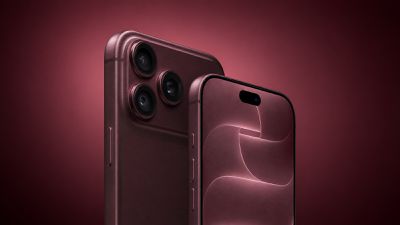
Apple recently unveiled the iPhone 18 Pro and iPhone 18 Pro Max, featuring a new Main camera with a variable aperture, new Pro camera controls, the A20 Pro chip, and more. With the foldable iPhone Duo now sitting above them in the lineup, the two Pro models are no longer the most expensive iPhones Apple sells, but they remain the most fully-featured traditional iPhones available.
The iPhone 18 Pro starts at $1,199 and the iPhone 18 Pro Max starts at $1,299. Both see a $100 increase over the equivalent iPhone 17 Pro models, and the increases grow steeper further up the storage ladder, with a 1TB iPhone 18 Pro now costing $300 more than a 1TB iPhone 17 Pro did last year.
Both phones have the same OLED Super Retina XDR always-on display with ProMotion and the Dynamic Island, the A20 Pro chip, 5G connectivity, a 48 megapixel Pro Fusion camera system, and the same four color options. Both are also offered in the same four storage tiers, including a 2TB option that is available on the smaller Pro model for the first time. Although the two phones share the vast majority of features, there are eight differences between the devices.
Our guide highlights the crucial differences between the iPhone 18 Pro and iPhone 18 Pro Max, and helps to answer the question of how to decide which of these two iPhone models is best for you. Both models share the same thickness of 0.34 inches (8.75 mm), but otherwise have very different sizes and weights.
iPhone 18 Pro
iPhone 18 Pro Max
Height
5.91 inches (150.0 mm)
6.43 inches (163.4 mm)
Width
2.83 inches (71.9 mm)
3.07 inches (78.0 mm)
Weight
7.44 ounces (211 grams)
8.78 ounces (249 grams)
Other differences essentially come down to display size and battery life. As was the case last year, there are no camera differences between the two devices at all for this generation, with the variable aperture Fusion Main camera and the new manual Pro controls appearing on both models.
iPhone 18 Pro
iPhone 18 Pro Max
6.3-inch display
6.9-inch display
2622-by-1206-pixel resolution
2868-by-1320-pixel resolution
4,056 mAh battery
5,391 mAh battery
Up to 36-hour video playback
Up to 45-hour video playback
Up to 33-hour streamed video playback
Up to 40-hour streamed video playback
Apple C2 modem in all countries
Apple C2 modem outside the U.S., Qualcomm modem in the U.S.
Apple does not advertise battery capacities on its product pages, but energy labels published in Europe confirm the exact figures for models that retain a SIM card tray. The capacities above apply to those models. eSIM-only versions, including all iPhones sold in the United States, have slightly larger cells because there is no tray taking up internal space, and Apple has not yet disclosed those figures.
Apple lists its own C2 modem in the iPhone 18 Pro in every country, but the iPhone 18 Pro Max only uses the C2 outside the United States. U.S. units of the larger model instead contain a Qualcomm modem, and iOS code seen points to the same radio used in last year's iPhone 17 Pro models, which would make it the Snapdragon X80.
The C2 supports both sub-6GHz and mmWave 5G, as the Qualcomm part does, and Apple says it is faster and more energy efficient than the C1X while adding AI-driven improvements to cellular quality and reliability. Real-world comparisons will not be possible until reviewers test both radios on the same networks. The clearest hint that the hardware genuinely differs is in the band listings, where the U.S. iPhone 18 Pro supports LTE Band 106 and the U.S. iPhone 18 Pro Max does not.
Pricing is also a key area of difference, with the iPhone 18 Pro Max reaching $2,499 when configured with 2TB of storage.
256GB
512GB
1TB
2TB
iPhone 18 Pro
$1,199
$1,399
$1,799
$2,399
iPhone 18 Pro Max
$1,299
$1,499
$1,899
$2,499
The iPhone 18 Pro Max represents the most you can get out of a traditional iPhone with the best possible battery life, but that does not necessarily translate into a worthwhile purchase for all users. At 8.78 ounces (249 grams), it is heavier than any iPhone Pro Max that came before it, and with a 6.9-inch display it is a large and hefty device.
Some may find the iPhone 18 Pro Max's size excessive or uncomfortably large to hold, while others will love the larger display for consuming media. Screen size is ultimately a matter of personal preference, and since the iPhone 18 Pro and iPhone 18 Pro Max share all of their other features, it comes down to individual taste.
Battery life is the one area where the gap between the two models has widened meaningfully this year. The iPhone 18 Pro Max gained six additional hours of video playback over the iPhone 17 Pro Max, while the iPhone 18 Pro gained three. The result is a nine-hour advantage for the larger model, up from six hours in the previous generation. If getting through a long day without reaching for a charger is your priority, the case for the Pro Max is more persuasive than it has been for some time.
The added $100 in price for the iPhone 18 Pro Max seems fair for its additional display area and battery life, but it is important to weigh up these factors in your personal use-case. That $100 premium holds at every storage tier, so the larger model never becomes proportionally more expensive as capacity rises. Both devices become costly quickly with added storage, though, and the 1TB and 2TB tiers now carry surcharges that are considerably steeper than in previous years.
U.S. buyers have one extra factor to bear in mind. Choosing the iPhone 18 Pro Max in the United States means giving up Apple's own modem, and while the day-to-day difference is likely to be very small, it is an unusual position for the more expensive device to be in. If you specifically want the C2 and you are buying in the U.S., the smaller model is the only way to get it.
The most important decision point when choosing between the iPhone 18 Pro and iPhone 18 Pro Max is undoubtedly screen size, but comfort, pocketability, weight, battery life, and now the modem are also important considerations that will depend based on your preferences. If you are hesitant about the size and weight of the iPhone 18 Pro Max, it may be better to stick with the iPhone 18 Pro, which no longer forces you to give up the largest storage option to get the smaller body. If size is not a concern, the iPhone 18 Pro Max is otherwise unlikely to disappoint, especially if price is not an issue.
Apple will prioritize adding Face ID and a telephoto lens to future iPhone Duo models, argues Bloomberg's Mark Gurman. The device debuted with Touch ID and dual rear cameras, likely owing to physical constraints.
In his latest Power On newsletter, Gurman says his guess is that Apple will use a combination of component miniaturization and advances in AI to eventually fit them into the iPhone Duo by its third-generation, "allowing Apple to use smaller, less sophisticated depth-sensing and camera hardware while making up some of the difference computationally," he writes. The iPhone Duo officially launches on October 23.
Apple's new iPhone Duo has a special option in its display settings that adds a narrow black border to the left side of the front screen.
Blogger Nicolas Lellouche discovered the setting in the Display & Brightness menu during his hands-on time with the device shortly after Apple's iPhone event stream last week.
The idea behind the "Shift Left Edge" setting – which roughly doubles the width of the black border – is to accommodate cases that slightly cover that edge of the iPhone Duo's display while making the iOS back swipe gesture work as expected.
It's unclear if either of these cases covers the left edge of the display, but it seems unlikely that Apple would design them to do so. What's more likely is that Apple is trying to accommodate bulky protective third-party cases that tend to cover the left edge.
We'll know for sure when the first reviews of the iPhone Duo hit the web. Pre-orders for the iPhone Duo go live October 16, with availability starting October 23.
The first iPod touch went on general sale on September 14, 2007, nine days after Steve Jobs unveiled it at Apple's "The Beat Goes On" media event. The device brought the iPhone's multi-touch interface, Wi-Fi, and Safari browser to the iPod lineup for the first time, but it lacked cellular phone functionality and a camera.
iPod touch launched at $299 for 8GB and $399 for 16GB, and was pitched as a pocket-sized way to browse the web and buy music wirelessly through the iTunes Wi-Fi Music Store. It went on to see seven generations, before Apple discontinued it in 2022.
Bloomberg's Mark Gurman has suggested Apple will release an "iPhone Duo Max" in the coming years, highlighting why Apple chose the "Duo" moniker over other names.
In the months leading up to Apple's iPhone Duo unveiling, Gurman reported that employees within Apple had begun referring to the device as the "iPhone Ultra," possibly having been influenced by media coverage of the device and leaker speculation.
In the end, however, Apple chose to go with a three-letter "Duo" suffix, which Gurman says matches Air and Pro, and leaves room for additional suffixes that wouldn't have worked with "Ultra."
Writing in his latest Power On newsletter, Gurman foresees the company releasing an "iPhone Duo Max" in the future, which would likely feature a larger display, and perhaps even a "Duo SE" or "Duo Mini," with stripped-down specs and a clamshell design, respectively.
Gurman says he fully expects the iPhone Duo to become the "predominant foldable phone on the market," thanks to its software adaptations, high-quality hardware, and durability compared to other foldables. Indeed, he argues that the device is "so impressive" that it will "turn foldables into the new normal." Do you agree? Let us know in the comments.
Earlier this month, references to two unreleased Apple game controllers were allegedly spotted in macOS 26.7 beta code, and now Bloomberg's Mark Gurman has shared more details.
In his Power On newsletter today, Gurman said the controllers have been in development for more than a year, are for the iPhone, and will likely have Beats branding. Acquired by Apple in 2014, Beats has expanded beyond headphones and now sells charging cables, iPhone cases, and more.
"Apple sees this as a growing market and wants in," he wrote. No word on pricing or availability.
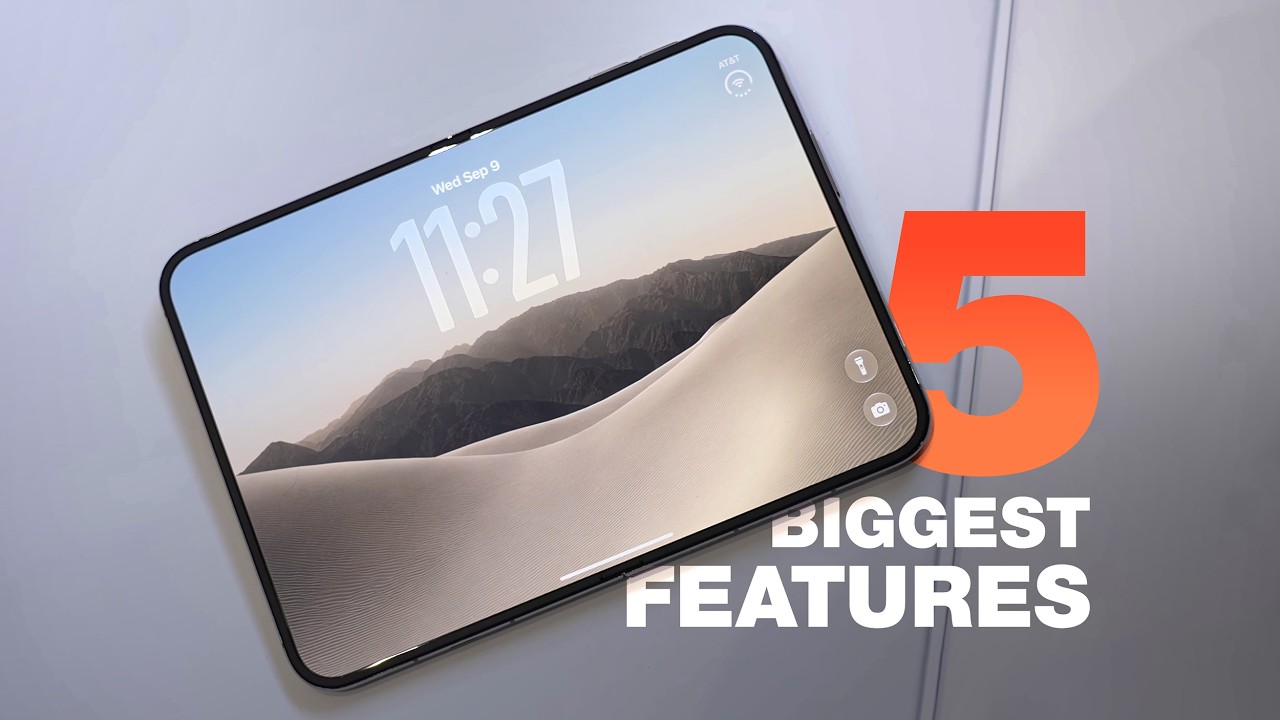
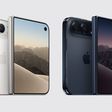
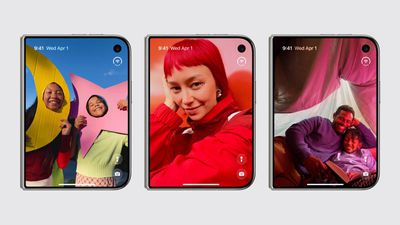
Apple's first foldable iPhone, with a book-style design featuring a 5.4-inch outer display and a 7.6-inch inner display with a minimal crease down the middle.


 Apple last week announced that Verizon and EE will support iOS 27's new iPhone Handoff feature later this year. The feature allows you to switch between any two iPhones running iOS 27 while using the same phone number on each device.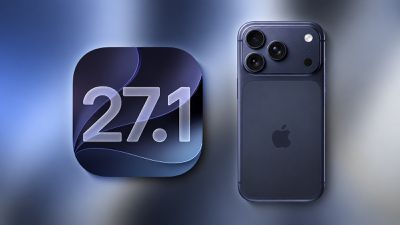


 Note: MacRumors is an affiliate partner with some of these vendors. When you click a link and make a purchase, we may receive a small payment, which helps us keep the site running.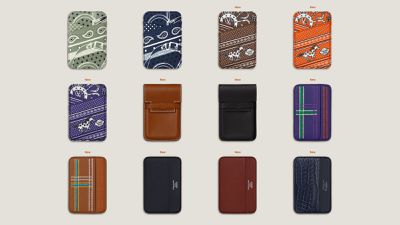

 Note: MacRumors is an affiliate partner with Amazon. When you click a link and make a purchase, we may receive a small payment, which helps us keep the site running.
 It looks like the iPhone Duo's vertical Dock can currently only house four apps maximum. In his hands-on with the device,
 Apple will prioritize adding Face ID and a telephoto lens to future iPhone Duo models, argues Bloomberg's Mark Gurman. The device debuted with Touch ID and dual rear cameras, likely owing to physical constraints.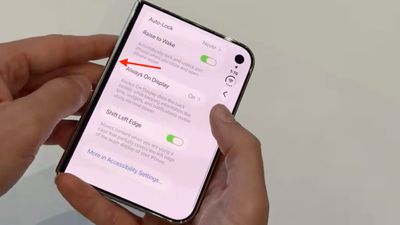
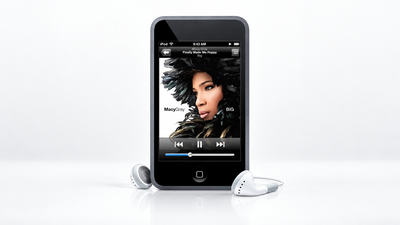 The first iPod touch went on general sale on September 14, 2007, nine days after Steve Jobs unveiled it at Apple's "The Beat Goes On" media event. The device brought the iPhone's multi-touch interface, Wi-Fi, and Safari browser to the iPod lineup for the first time, but it lacked cellular phone functionality and a camera.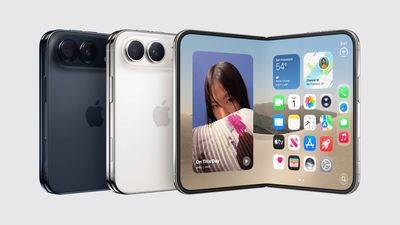
 Earlier this month, references to two unreleased Apple game controllers were allegedly