







Meta today launched Muse Code, a terminal coding agent available for macOS and Linux. Muse Code is in beta, and it is powered by Muse Spark 1.2, Meta's newest model.
Meta CEO Mark Zuckerberg said Muse Code can accomplish complete software engineering tasks across large repos. It can plan out changes, write code, and validate results using multiple persistent subagents.
Muse Code is Meta's equivalent of OpenAI's Codex and Anthropic's Claude Code, and it is Meta's first major push into agentic coding.
There are several default skills available, such as /plan for turning a task into an approval-gated plan, /grill for stress testing a plan, and /goal for working toward the successful completion of an objective. Muse Code maintains an append-only local event log of every model call, tool run, approval, and edit, so it can resume where it stopped if it crashes.
Muse Code can be used through the Mac's terminal after a one-command install, and there is no dedicated app available. The model is priced at $1.25 for 1 million input tokens and $4.25 for 1 million output tokens, but Meta is offering a discount for users who give the company permission to use their prompts and completions to train future AI models.
With the Contributor tier enabled for Meta model training, Muse Spark 1.2 is priced at $0.10 for 1 million input tokens and $0.20 for 1 million output tokens. The Standard tier costs more and does not let Meta use prompts to train its models.
The more affordable Contributor tier is rate limited at 60 requests per minute and 2,100,000 tokens per minute, while the Standard tier allows for 3,000 requests per minute and 4,000,000 tokens per minute.
Disney could introduce an ad-supported Disney+ free tier in the future, according to comments Disney CEO Josh D'Amaro made during the company's latest earnings call (via The Wrap).
D'Amaro said Disney is considering a free tier that could allow it to reach people unwilling to pay for a subscription, but no launch plans were shared.
First, we see it as a way to expand our reach to a customer segment that's more price-sensitive. Expanding our reach is, as we've talked about before, one of our strategic priorities. Second, unlike a lot of our AVOD competitors, we're fairly well sold, meaning more inventory would actually help us accelerate our ad revenue growth. And then finally, as you mentioned in your question, a free offering could help us drive top-of-funnel Disney+ subscriber growth. So nothing specific to announce today, but definitely something that we're considering.
Disney+ competitors like Apple TV and Netflix don't have a completely free tier, but services like Tubi and The Roku Channel offer free content, as does YouTube. Disney+ has approximately 130 million global subscribers and is one of the most-watched streaming services in the United States.
Disney also signed a deal with TikTok, which will see TikTok creators use characters and scenes from Disney movies and shows for short-form videos. The videos will be available on TikTok and on the Disney+ Verts section for vertical video.
SpaceX shared plans to create a cellular service during its first earnings call after its IPO, reports Reuters. SpaceX president Gwynne Shotwell said the company will "build out terrestrial" with the spectrum that it acquired from EchoStar.
She added that SpaceX intends to make Starlink a "true mobile service" that will win "quite a few" customers from Verizon, AT&T, and T-Mobile. Shotwell declined to discuss the costs involved in the endeavor and said SpaceX had "great and new ideas" on how to build a mobile service, such as a large number of lower-cost base stations paired with Starlink dishes instead of cell towers.
SpaceX agreed to pay $19.6 billion to acquire 65 MHz of wireless spectrum licenses from EchoStar in 2025. The spectrum will allow SpaceX to expand its direct-to-cell Starlink satellite service to include ground-based infrastructure.
Analysts told Reuters that without an MVNO (Mobile Virtual Network Operator) agreement with a major carrier, it would be extremely difficult for Starlink to compete with AT&T, Verizon, and T-Mobile. 65 MHz is tiny compared to the spectrum owned by the big U.S. mobile operators, and they're unlikely to lease capacity to a competitor.
SpaceX plans to launch its next-generation Starlink Mobile satellites in 2027, and upgraded service that's "100 times better" than current direct-to-cell service is targeted for the end of that year. Shares of AT&T, T-Mobile, and Verizon fell 2 to 4 percent following the SpaceX earnings call.
SpaceX already has a partnership with T-Mobile to power T-Mobile's T-Satellite feature that offers direct-to-cell satellite connectivity to customers.
Note: Due to the political or social nature of the discussion regarding this topic, the discussion thread is located in our Political News forum. All forum members and site visitors are welcome to read and follow the thread, but posting is limited to forum members with at least 100 posts.
Comedy series Ted Lasso is back, with the first episode of season 4 available to stream as of today. It's been three years since the season 3 finale aired, and many expected it to be the last.
The show returns to its underdog roots in season 4, with titular character Ted Lasso (played by Jason Sudeikis) moving back to Richmond to coach a second-division women's football team.
Fan-favorite actors like Hannah Waddingham, Juno Temple, Brett Goldstein, Brendan Hunt, and Jeremy Swift return, with new cast members Tanya Reynolds, Jude Mack, Faye Marsay, Rex Hayes, Aisling Sharkey, and Abbie Hern. Most of the actors who were on the men's AFC Richmond team will not be returning, including Phil Dunster's Jamie Tartt.
Ted Lasso is one of Apple's most popular TV shows, and it won back-to-back Emmy Awards for Outstanding Comedy Series for the first two seasons.
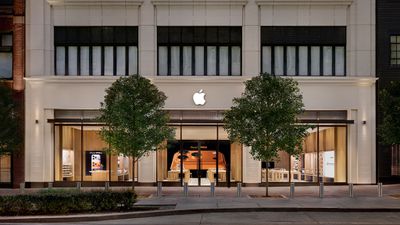
Season 4's initial episode can be streamed now, with a new episode set to be released each Wednesday through October 7. To celebrate the new season, Apple is hosting a Ted Lasso look-alike contest at its Fifth Avenue location tomorrow.
Apple TV is priced at $12.99 per month, and it can be watched across Apple devices, on popular smart TVs, on set-top boxes like Roku, on gaming consoles, and on the web. Apple TV is also included in Apple One subscription bundles.
Sunbird Messaging today reintroduced its app that brings iMessage to Android users. Sunbird is now available on the Google Play Store following an early access testing period. The app allows Android users to send "blue bubble" messages to iPhone users instead of the standard green bubbles. It incorporates iMessage, RCS, and SMS/MMS messages in one app.
Sunbird was previously available from late 2022 through late 2023, but the company shut it down due to security concerns. The app was sending a user's Apple ID credentials to a Sunbird server to function, with the information sent unencrypted over HTTP. An attacker could intercept all Sunbird messages and media attachments, and Sunbird employees had access to a platform that stored all message content.
The app returned in an invite-only beta in April 2024, but it hasn't been publicly available until now.
Sunbird says messages are encrypted on-device and in transit, and are not stored on Sunbird servers. An Apple ID is required to use Sunbird, and the company claims passwords are used once to set up a session and are then destroyed. More security information is available on Sunbird's website.
Back when Sunbird launched, it promised features Android users didn't have, like typing indicators, read receipts, and higher-quality media. Those features are now available for Android to iPhone chats because Apple has adopted RCS, so Sunbird is mostly offering a different bubble color. iMessage through Sunbird does not register a phone number, and users will appear to contacts by email address.
Android users can try the app free for 14 days. A subscription is priced at $2.99 per month or $24.99 per year.
Apple's paid Safari protection feature that promises to keep your IP masked doesn't always work, according to security researchers Tommy Mysk and Talal Haj Bakry. It turns out iCloud Private Relay can expose your real IP to websites that use or pretend to use passkeys.
iCloud Private Relay is a service included with paid iCloud+ plans. It is supposed to hide your IP and DNS information when you browse the web using Safari, but it is not a VPN that masks all traffic from a device. Passkeys use the WebAuthn standard, which stores a private key on your device, not the Safari browser. The request the system sends to the website isn't protected by Private Relay and can leak your IP address.
WebKit hands WebAuthn ceremonies to the operating system's credential service, which issues the HTTPS request itself, directly from the device and unaware of any proxy the host app configured. A page can set rpId to a host of its choosing, and the fetch fires even without user interaction: with mediation: "conditional" and no UI ever appears. [...]
Because the fetch is issued by the operating system's credential service rather than by Safari, it never enters Private Relay's proxied path. The destination server sees the device's real IP address either way.
An attacker who wants to find someone's protected IP can do so by setting up a website that uses WebAuthn. There is no visible passkey prompt and no other indication that an IP address has been accessed in the background.
The researchers also found two other WebKit features that can leak IP addresses and DNS data. DNS prefetching (added in iOS 26) reveals a user's real DNS servers, while WebTransport (added in iOS 26.4) can reveal an IP address.
Apple told 404 Media that it is investigating the report.
Mysk and Haj Bakry created a website to let you test whether Apple's service is leaking your IP address. Since the issue is baked into how WebKit works, some third-party browsers are affected too. Apple will need to address the issue, and in the meantime, users can opt for a VPN for more protection.
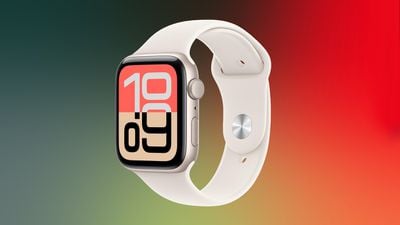
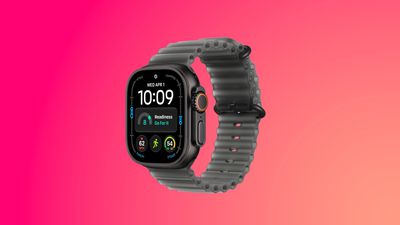
Amazon today has a few deals on the Apple Watch Ultra 3, providing $99 discounts on select models. We did track these models at $149 off during Prime Day this year, but those discounts are long gone and Amazon's prices today are still solid second-best options for anyone who missed those sales in June.
Note: MacRumors is an affiliate partner with some of these vendors. When you click a link and make a purchase, we may receive a small payment, which helps us keep the site running.
You can get the Apple Watch Ultra 3 for $699.99 in Natural and Black color options, down from $799.00. There are also a few Milanese Loop models on sale for $799.99, down from $899.00.
We've collected some of the Apple Watch Ultra 3 models currently on sale on Amazon in the list below. Amazon provides an estimated delivery date of August 10 for most of the watches, although Prime members should see same-day delivery in many locations.
If you're on the hunt for more discounts, be sure to visit our Apple Deals roundup where we recap the best Apple-related bargains of the past week.
Deals Newsletter
Interested in hearing more about the best deals you can find in 2026? Sign up for our Deals Newsletter and we'll keep you updated so you don't miss the biggest deals of the season!
Surgeons who wore an Apple Vision Pro as their primary display during a tear duct procedure finished operations 19% faster than surgeons using a traditional monitor, according to a peer-reviewed study by UC San Diego.
The study, published in the journal AJO International (via iPhone in Canada), looked at 32 endoscopic surgeries to clear blocked tear ducts. In half the cases, surgeons wore Vision Pro headsets that streamed the endoscopic video feed directly into their field of view instead of looking at a monitor across the room, letting them keep a natural forward-facing posture throughout.
Average operative time came in at 34.4 minutes with the Vision Pro, compared to 42.7 minutes with the traditional monitor. Every case in both groups succeeded with no complications, and all five surgeons involved said they preferred operating with the headset, reporting lower physical and mental workload.
The researchers also found the Vision Pro was cheaper and far smaller than the monitor setup it replaced, though they caution the study is small and preliminary, and call for larger trials to confirm the results.
Best Buy is still hosting its big Back to School sale this week, with notable markdowns on Apple devices, TVs, headphones, monitors, and much more. This event is set to last for the rest of this week, and you don't need to be a My Best Buy Plus or Total member to see the deals.
Note: MacRumors is an affiliate partner with Best Buy. When you click a link and make a purchase, we may receive a small payment, which helps us keep the site running.
In terms of Apple devices, you can find solid deals on AirPods Pro 3, iPhone Air, Beats accessories, and MacBook Pro. You can get the AirPods Pro 3 for $199.99 ($50 off), as well as up to $500 off M5 Pro and M5 Max MacBook Pro, starting at $2,499.00 for the 2TB 14-inch model.
If you're on the hunt for more discounts, be sure to visit our Apple Deals roundup where we recap the best Apple-related bargains of the past week.
Deals Newsletter
Interested in hearing more about the best deals you can find in 2026? Sign up for our Deals Newsletter and we'll keep you updated so you don't miss the biggest deals of the season!

Global foldable smartphone shipments are expected to grow 20% in 2026 compared to last year, with Apple's first entry into the category cited as one of the factors driving the increase, according to industry sources cited by DigiTimes.
The report notes that the broader smartphone market is contending with tighter supply of upstream logic chips and higher memory prices, but says the foldable segment is expected to keep expanding regardless. Samsung is expected to retain its lead in the category, while Apple, Huawei, and other brands are described as helping to drive growth, with the fourth quarter of 2026 flagged as the year's most important sales period.
Industry sources told the publication that wider foldable designs and Apple's move into foldables are giving the category a further lift. Nearly eight years of product development, along with a growing number of brand launches and a broader range of devices for buyers, have made foldables more mature and given manufacturers added momentum to expand shipments.
Apple is expected to unveil its first foldable iPhone alongside the iPhone 18 Pro models this September, and has reportedly told suppliers to prepare to build around 10 million units this year. Supply chain analyst Ming-Chi Kuo has suggested the device may not be available to pre-order until the fourth quarter of 2026, a timeline that lines up with DigiTimes' framing of that quarter as the category's key growth window.
According to the report, Samsung's own experience shows that early preorder campaigns can generate strong launch-period sales, but the bigger growth phase is expected to arrive in the fourth quarter, once foldable launches from multiple brands are already on the market. That period is seen as a key opportunity to expand overall demand and drive shipment growth. DigiTimes added that that most consumers already expect device prices to rise, so demand should hold up as long as increases stay reasonable.
MasterCraft Boat Holdings today said it is adding CarPlay to its upcoming Crest and Balise Pontoons. The company is working with Savvy Navvy to bring CarPlay and on-water navigation to boaters.
Boaters who purchase select 2027 Crest or Balise pontoons will have access to CarPlay, with many of the same features that are available in a car. The Savvy Navvy mobile app will integrate with CarPlay to show nautical charts, GPS tracking, smart routing, and live weather forecasts right alongside other CarPlay apps.
Savvy Navvy will provide water navigation, a feature that is not available through the Apple Maps CarPlay integration.
"Boaters have been asking for a modern infotainment system for years," says Jelte Liebrand, Founder and CEO of Savvy Navvy. "Plan your trip on the couch, step aboard, and it is already at the helm. No complicated ways to synchronise things; it just works. Savvy Navvy for CarPlay works on iOS and Android with any compatible display. I'm thrilled to see Crest and Balise put CarPlay in front of their boaters."
Starting with the 2027 model year, Apple CarPlay with Savvy Navvy will come standard on all new Balise and Crest Conquest and Caribbean models. A limited Savvy Navvy Premium subscription is included.
The Savvy Navvy app is available for CarPlay worldwide starting today, and it works with any compatible CarPlay display, including aftermarket marine head units.
Apple is going to announce at least five new devices next month at its annual iPhone-centric event, though it's possible we'll also get devices that were waiting on Siri AI. Here's what's coming.
iPhone 18 Pro
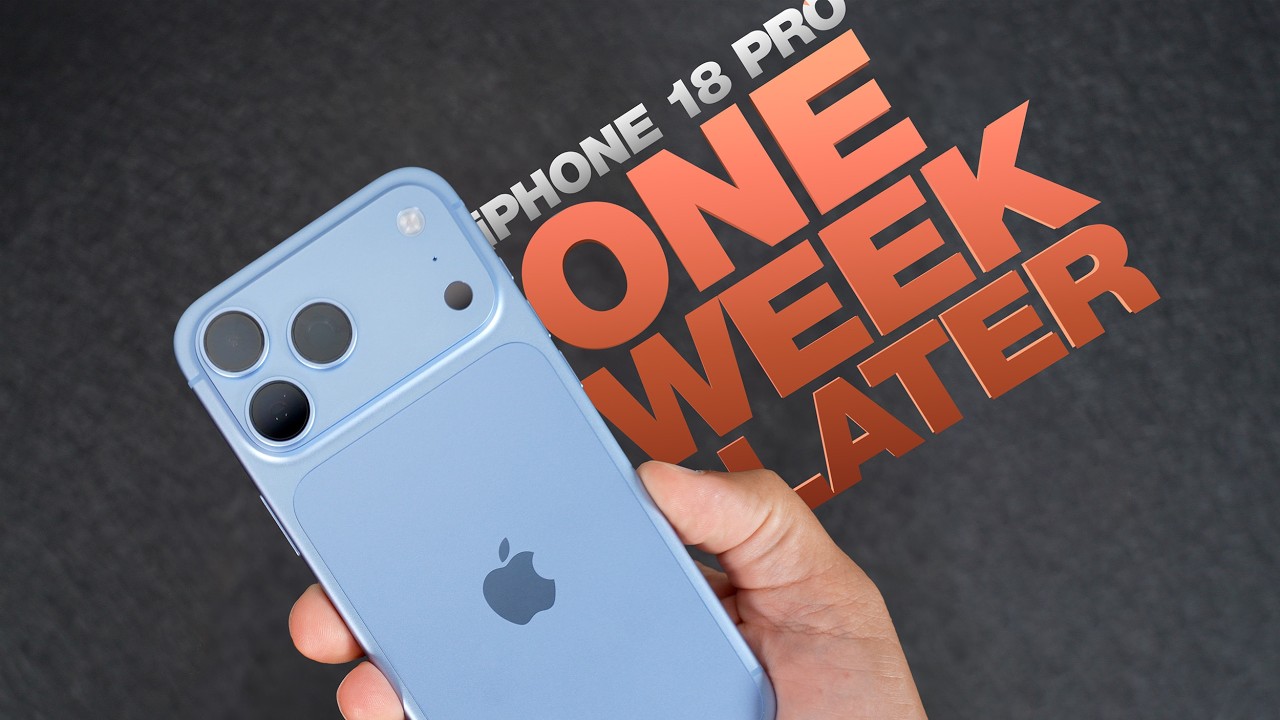
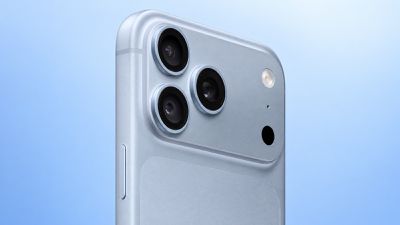
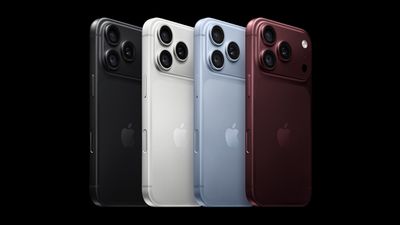
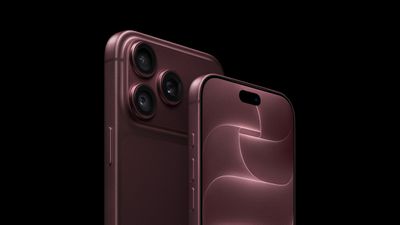
Rumors suggest the iPhone 18 Pro is going to look a lot like the iPhone 17 Pro, but with a smaller Dynamic Island. It's getting a new Wide camera with a variable aperture for more control over lighting and background blur, plus a faster A20 Pro chip. Battery life could improve with the new chip and an upgraded LTPO+ OLED display, plus Apple might launch a new C2 modem and an N2 networking chip. Dark Cherry is supposed to be this year's special color.
iPhone 18 Pro Max
The iPhone 18 Pro Max is just like the iPhone 18 Pro, but bigger. It'll get all the 18 Pro features listed above. Multiple rumors indicate the iPhone 18 Pro Max will be slightly thicker than the iPhone 17 Pro Max and the iPhone 18 Pro because it is slated to get a larger battery.
Both the iPhone 18 Pro and the iPhone 18 Pro Max could be $100 to $200 more expensive than the iPhone 17 Pro and the iPhone 17 Pro Max. Apple raised prices on Macs and iPads, but appears to be waiting for the September refresh before upping iPhone prices.
Foldable iPhone
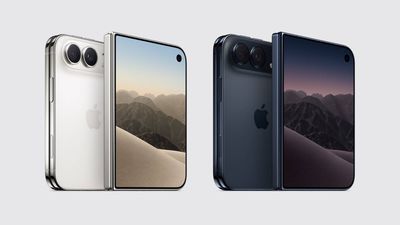
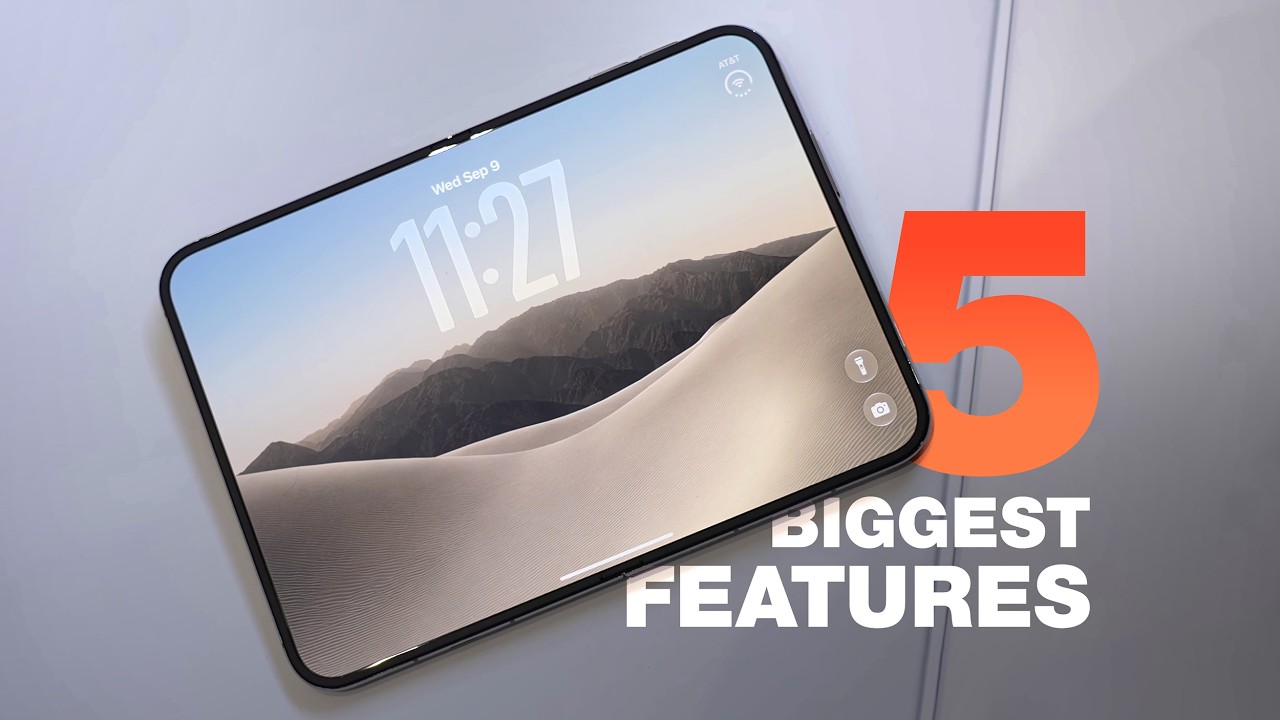
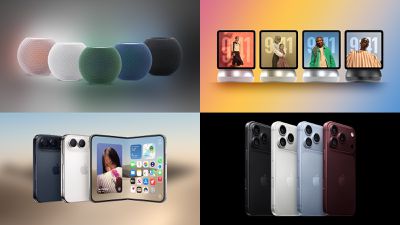
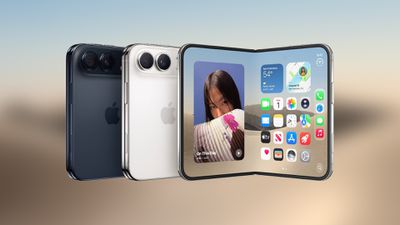
Apple's first foldable iPhone is almost ready to launch. The rumored "iPhone Ultra" is expected to have a 5.5-inch display when closed and a 7.8-inch display when open. It'll have a 4:3 aspect ratio like an iPad, so when unfolded, it will be similar to using an iPad mini. It will have a design that minimizes the visibility of the crease, and it'll get a 2nm A20 chip.
The foldable iPhone is expected to have dual batteries, but it will be limited to a two-lens rear camera system. The device is too thin for the TrueDepth camera system, and it is rumored to have Touch ID instead of Face ID. The new iPhone could cost somewhere between $2,000 and $2,500.
We've seen some reports of foldable iPhone manufacturing issues, and rumors that it could launch after the iPhone 18 Pro and iPhone 18 Pro Max. Apple could introduce it in September, and then launch it a bit later, which is what the company did for the iPhone X back in 2017.
Apple Watch Series 12
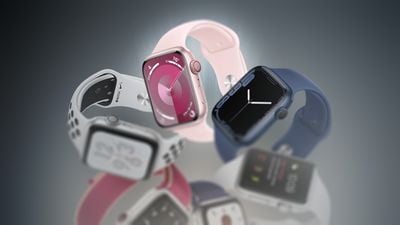
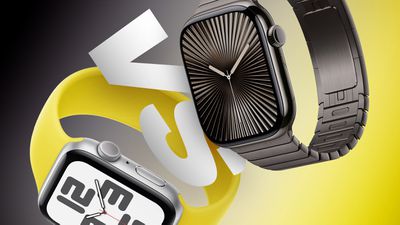
Apple will refresh the Apple Watch this year, but it's sounding like a boring update. No design changes are expected, but it could get a faster S-series chip, and the upgrade could add improvements to some health and fitness features. It could also have a bigger battery for longer battery life.
Apple Watch Ultra 4
There's going to be an Apple Watch Ultra 4, and it will get the same chip upgrade as the Series 12. DigiTimes claimed the Ultra 4 will be thinner with an upgrade to sensing functions, but the site isn't always accurate.
Other Possibilities
There are home products and Macs Apple could launch before the end of the year, but it's possible Apple will hold a second event sometime in October or November. There are quite a few home devices in development, plus Apple is expected to introduce an all-new home hub, so a smart home event would make sense.
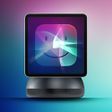
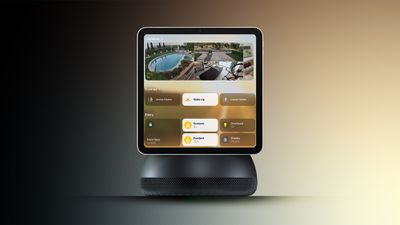
Home Hub - Apple is working on a home hub with a 7-inch square display. It can be used to control smart home products, view photos, make video calls, and display information. It will have full Siri AI integration, and it will run Apple apps. The hub could come as soon as 2026, but Apple might also hold it until early 2027.
Apple TV 4K - Apple plans to refresh the Apple TV 4K with a new chip, more RAM, and a new networking chip.
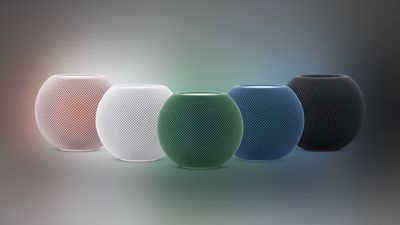
HomePod mini - Apple will refresh the HomePod mini this year, adding a faster chip and new color options.
HomePod - The full-size HomePod could also get a new chip.
Smart Home Camera - Apple has its own security camera in development, and it could launch alongside the home hub.
Other late 2026 possibilities include an OLED iPad mini, a refreshed 14-inch MacBook Pro with M6 chip, an iMac with an M6 chip, a high-end OLED MacBook Pro with touchscreen, a new Mac mini, and a new Mac Studio, but it's very doubtful these products would debut at the September iPhone event.
What's Not Launching
Apple isn't going to release a standard iPhone 18 in September 2026. The lineup will instead focus on more expensive iPhones. The iPhone 18, iPhone 18e, and iPhone Air 2 will come out in spring 2027 instead. Apple does not plan to refresh the Apple Watch SE this year.
Likely Event Dates
Given historical iPhone event dates, this year's presentation is most likely going to happen on Tuesday, September 8 or Wednesday, September 9. September 7 is Labor Day, and Apple may not want to make members of the media travel on a holiday. That said, Tuesdays are the most frequent event day, so either option is possible.
If the event is held on September 9, pre-orders would take place on September 11 or September 12 with a launch to follow on September 18.
Telegram was subject to a "takedown extortionist" who planted AI-modified child sexual abuse material (CSAM) to get Apple to remove the app from the App Store, Telegram CEO Pavel Durov said today. Apple removed Telegram from the App Store for about 40 minutes on Monday night after discovering CSAM, but reinstated the app after Telegram removed the content.
The attacker was a takedown extortionist: someone who demands ransom from group owners in exchange for not targeting their communities. These extortionists use automated accounts to plant illegal content in public groups and then report it directly to Apple, attempting to trigger the removal of legitimate communities whose owners refused to pay them.
Durov said the attacker used a "technical trick" to evade moderation tools, editing an old message in an active group chat to add illegal content. The attacker was able to bypass moderation because group members didn't see the message to report it. Durov said illegal pornographic content in public groups is not a systemic problem because Telegram has effective moderation, and this was an edge case where an attacker used "backdated, effectively invisible content."
Apple pulled Telegram from the App Store before contacting the company, according to Durov. He said Apple was manipulated into overreacting, and he warned of a "potential systemic risk for every mobile app that hosts user-generated content."
After removing Telegram from the App Store, Apple said a content review found child sexual abuse material that violated the App Store guidelines. Apple further said Telegram "promptly removed the content and banned the user," leading to the app's return to the App Store. Apple has not commented on Durov's extortionist claim.
Apple limited the number of vulnerabilities security researchers can submit to its bug bounty program because of an uptick in reports about fake bugs hallucinated by AI, according to The Financial Times.
Apple said its bug review system was seeing a high volume of poor-quality submissions from amateur bug hunters using AI to locate vulnerabilities. In some cases, there is no actual vulnerability, and real submissions are lost in the deluge.
The Financial Times learned of the limit after cybersecurity startup Bynario used ChatGPT to locate more than 50 macOS bugs in three weeks. Bynario found a privilege escalation exploit that could let an attacker get unrestricted access to a Mac, but was unable to report it because Apple limited the number of bug reports Bynario could submit. Bynario sent eight reports to Apple in 2025, and another five in 2026 before hitting a restriction.
Bynario's founder said it is a "very difficult time in the industry" because companies are being "flooded by the sheer amount of bugs." Apple has since been in contact with Bynario and is reviewing the company's submissions.
While Apple now has a cap on the number of open submissions a researcher can have, researchers can request an increase to make sure Apple's security team doesn't miss a critical vulnerability.
AI has overwhelmed Apple because it primarily uses humans to check reports, but Apple too has turned to AI for parsing submissions. AI has also helped Apple find a huge number of bugs. Apple's recent iOS 26.6 update fixes almost 90 security vulnerabilities, some of which are credited to Anthropic's Claude and OpenAI's Codex Security.
Apple's bug bounty program offers rewards up to $2 million for exploit chains used for sophisticated, real-world attacks, plus bonuses that can increase rewards to over $5 million. Apple boosts reward totals for bugs found in betas and for bugs that bypass Lockdown Mode.
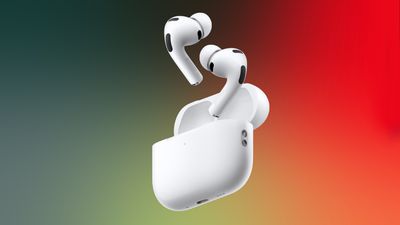
Apple today released a fourth version of the beta firmware it is testing for the AirPods Pro 2, AirPods Pro 3, AirPods 4, and AirPods Max 2. The firmware is available for developers and has a build number of 9A5336b.
In iOS 27, iPadOS 27, and macOS Golden Gate, Apple is adding a new AirPods interface, a slider for Adaptive mode, and support for custom EQ, so the firmware adds support for those features. AirPods are also compatible with the new Siri AI.
When the AirPods are connected to an iPhone, iPad, or Mac running iOS 26, iPadOS 26, or macOS 26 or later, there is a beta firmware option that can be accessed in the AirPods settings interface. Toggling on beta updates allows users to install the beta firmware.
Firmware updates can be downloaded by connecting the AirPods to an Apple device and connecting them to power. It can take a few hours for new firmware to be installed because there is no software update option like there is for other Apple devices.
Apple is getting ready for its big September iPhone event, which is expected to see the debut of the iPhone 18 Pro, iPhone 18 Pro Max, and an all-new foldable iPhone.
Ahead of the event, Apple is holding an Event Support Experience Program lottery for U.S. retail employees who want to travel to its Apple Park campus to staff the in-person media gathering. According to Bloomberg, Apple will bring in employees to organize lines, check in guests, offer directions, greet attendees, and support security teams.
Employees were told the iPhone event will take place during the first half of September, but Apple declined to offer more specific information. It's likely Apple will hold its event on Tuesday, September 8 or Wednesday, September 9. September 7 is Labor Day and Apple often gives members of the media a day to travel, so September 9 could be the target date this year.
Apple presumably pays for travel and lodging for employees who are invited to Apple Park to work the media event. Retail workers who were at the Worldwide Developers Conference or the iPhone launch in 2025 are not eligible to enter the lottery. Employees can enter the lottery until August 8, and Apple plans to notify winners on August 17.
Apple is prototyping a second new iPhone display, this one measuring around 6.4 inches, that could be destined for the 20th anniversary iPhone, according to a Chinese leaker.
In a recent post on Weibo, the leaker known as "Digital Chat Station" said Apple is currently sampling two new display panels. One measures roughly 6.4 inches and has a chance of being used in the "iPhone 20 Pro," while the other is the approximately 7-inch panel previously reported for the larger "iPhone 20 Pro Max."
According to the leaker, physical screen sizes across the entire 20th anniversary lineup are set to increase while the aspect ratio stays the same as before, and the devices may adopt an all-new borderless design with curves on all four edges. That would line up with earlier claims that the lineup will feature an edge-to-edge display with curved glass on all sides for a nearly borderless visual effect.
A 6.4-inch screen would be a modest step up from the 6.3-inch displays on the current iPhone 17 Pro and the upcoming iPhone 18 Pro, which is not expected to change size this year. Apple last grew its premium iPhone displays with the iPhone 16 Pro lineup in 2024, when the iPhone 16 Pro increased from 6.1 to 6.3 inches and the iPhone 16 Pro Max grew from 6.7 to 6.9 inches.
The claim follows a Bloomberg report from last month that said Apple had ramped up work on two sizes of the 20th-anniversary iPhone.
In addition to the new design and larger displays, Apple's 20th anniversary iPhone models are expected to feature under-display Face ID technology, a custom Apple image sensor, haptic buttons, the A21 chip, higher bandwidth memory, and a pure silicon battery.
Apple Card users now have a new benefit available to them at Booking.com, with users automatically being upgraded to Genius Level 2 after completing just one eligible stay or car rental rather than the usual standard of five bookings within a two-year period.
Genius is Booking.com's free loyalty program, with Level 2 unlocking a number of benefits including discounts of 10–15% on select stays and car rentals as well as free breakfast and/or room upgrades at select stays.
Booking.com has been a premier Apple Card partner for some time now, with users receiving enhanced 3% Daily Cash when booking stays and car rentals using Apple Card with Apple Pay, and users also receiving 2% in Booking.com Travel Credits.
Apple's first foldable iPhone, with a book-style design featuring a ~5.5-inch outer display and a ~7.8-inch inner display with a minimal crease down the middle.